Rechercher dans ce blog

Wednesday, April 1, 2020

Why Outdoor Farmers’ Markets Matter More Than Ever - The New York Times

Tenzing Chime now has one job to do at the vegetable stand where he works, a measure of how much the coronavirus has changed the simplest rituals of neighborhood life.

He only touches the cash.

Like him, all his co-workers wear masks, plastic eye shields and gloves. One slides leafy greens into clear plastic bags. Customers point at the bagged vegetables from behind a rope, as if choosing diamonds from a jewelry case. Another worker puts their selections in plastic bins and slides them down the table toward the register, like handbags at an airport security check.

The city’s 50 outdoor farmers’ markets have always been a precious commodity for New Yorkers, providing fresh produce for urbanites and supporting the quiet work of local farmers.

But now, during the coronavirus crisis, some shoppers said the greenmarkets were more important than ever. They said they felt safer shopping outdoors than inside grocery stores.

“I’m not going into the supermarket, around people,” said Sioux Nesi, 52, who was shopping at a market in Carroll Gardens in Brooklyn after running out of vegetables and finding that delivery services were backed up for days.

But the festival-like atmosphere of outdoor markets, which traditionally have throngs of people browsing, chatting and tasting free samples, had recently become a risk: In several locations they were drawing crowds too packed for the social distance that public health now requires.

So the markets are transforming into laboratories for new communal safety habits, a shift from the community building they were originally designed to do.

Last week, GrowNYC, the organization that operates the markets, issued a set of stricter guidelines to prevent the crowding that alarmed officials at Union Square and other large markets earlier this month.

On Saturday, market staff twice used movable barriers to close the entrance to the Union Square market, which in the high season can attract tens of thousands of shoppers. As shoppers dispersed, new customers were gradually allowed in.

Among the other rules: Shoppers cannot touch the produce and must stay six feet from one another. Tables must have plastic coverings. Workers must wear protective gear.

“Going to the market felt like a social thing to do, before this outbreak, but right now we are an essential business, keeping the city fed as safely as possible,” said Marcel Van Ooyen, the president and chief executive officer of GrowNYC, who helped patrol a market in Brooklyn on Sunday.

“Families do still come together, and they’ll talk to other families from six feet away,” he added. “So there is still that communication, but from a safe distance.”

Visits to three markets over the weekend found some of the most rigorously distanced public spaces in the city — and evidence of New Yorkers’ ability to adapt to almost anything. GrowNYC employees kept an eye on vendors, who appeared to be following the rules.

Shoppers policed themselves — and each other.

“Please step away from me,” one older woman urged a group of fellow shoppers at Grand Army Plaza, near Prospect Park in Brooklyn. “I’m in the age group that is most at risk.”

“Distance, please!” boomed a masked customer at a market in Carroll Gardens, Brooklyn, extending a raised palm like a stop sign.

Ms. Nesi, with a yellow bandanna over her face, considered Walnut Hill Farms’ artisanal sausages — soppressata, fennel, juniper and a new variety with pork liver, citrus and clove. She took three from John Burton, 35, who said customers had already learned the rules, and he no longer needs to rope off his wares.

“People seem to have internalized the distancing,” he said.

Mr. Burton had counted $600 in revenues by noon.

“Not bad for a rainy day in March,” he said.

Mr. Chime, 30, the vegetable vendor, said the new situation was tougher on produce sellers.

“With vegetables and herbs, you need to smell them and touch them,” he said.

But customers appeared willing to take a chance, buying delicate lettuces and bright radishes as well as more adventurous fare: chrysanthemum greens, fresh turmeric and Jerusalem artichokes.

Mr. Chime said all the protective equipment was provided by his employers at Lani’s Farm in Bordentown, N.J.

“Good boss,” he said.

About half the usual 10 vendors sat the week out as they reorganized to get the staff and equipment needed to comply with the new GrowNYC rules, said Caroline Hiteshew, a regional coordinator who was at the Carroll Gardens market.

GrowNYC can also help provide safety equipment, Mr. Van Ooyen said. And while some greenmarket stands cater to the wealthy — with $5 baggies of herbs and $15 sausages — the organization also provides food boxes for lower-income communities, where it also operates its own stands.

A few markets have been closed for now, mainly ones in Lower Manhattan business districts. Others have been relocated or changed their hours. Food-scrap drop-off has been suspended.

The biggest challenge, Ms. Hiteshew said, is “redesigning the markets so that it’s easy and intuitive for people to stay six feet apart.”

In Carroll Gardens, that meant getting permission from the community board and police to allow the market to place tents in the street and close it if needed; otherwise there would be just five feet of space in places for people to pass between tables and houses.

“We’re essential for both farmers and residents,” she said. “It’s rewarding to still be able to feed people.”

James Sprankle contributed reporting.

Let's block ads! (Why?)


"Market" - Google News
April 01, 2020 at 08:03PM
https://ift.tt/343aCEN

Why Outdoor Farmers’ Markets Matter More Than Ever - The New York Times
"Market" - Google News
https://ift.tt/2Yge9gs
Shoes Man Tutorial
Pos News Update
Meme Update
Korean Entertainment News
Japan News Update

5 things to know before the stock market opens Wednesday - CNBC

1. Dow set for sharp drop after worst first quarter ever

A pedestrian wearing a protective mask walks along Wall Street in front of the New York Stock Exchange (NYSE) in New York, U.S. on Monday, March 30, 2020.

Michael Nagle Bloomberg | Getty Images

Dow futures pointed to a drop of more than 800 points at Wednesday's open on the first day of April and the second quarter on Wall Street. White House officials are projecting 100,000 to 240,000 U.S. deaths from COVID-19, with fatalities peaking over the next two weeks. The Dow Jones Industrial Average on Tuesday closed out its worst first-quarter ever with a 410-point decline. The Dow's plunge in March was the worst of any month since October 2008 during the financial crisis. Amid the Q1 carnage, Amazon stock was a standout, gaining 5.4% with online shopping for household essentials surging as states issued stay-at-home orders. Gilead Sciences shares were up 15% in the first quarter as its experimental drug against the coronavirus, remdesivir, showed promise.

2. Coronavirus impact on employment emerges in data

Private companies in the U.S. shed 27,000 employees in early March, according to ADP and Moody's Analytics. Actual losses for the entire month were much worse. ADP reported a gain of 179,000 jobs in February. On Thursday, the government's look at weekly jobless claims is expected to show a second week of over 3 million people filing for unemployment insurance for the first time. On Friday, the government releases its monthly employment report, with expectations for 10,000 fewer nonfarm jobs in March and the nation's unemployment rate rising to 3.7%. However, those March jobs numbers reflect the employment picture only from the first half of the month — before the worst of the social distancing started.

3. Trump says US faces 'very, very painful two weeks'

President Donald Trump, in a grim news conference Tuesday evening, sought to prepare Americans for a coming surge in coronavirus deaths, calling COVID-19 a plague and saying the America faces a "very, very painful two weeks." The president said that according to modeling, a U.S. death toll of 100,000 is a "very low number."

Confirmed cases across the nation rose to nearly 190,000 — nearly double the next worst country — with 4,081 deaths, according to Johns Hopkins University data. New York state's over 76,000 known cases are the most in the U.S. by far. The Empire State's death toll of 1,714 accounts for over 40% of all fatalities in the country.

4. US tops global cases followed by Italy, Spain, China

A worker moves part of a delivery of 64 hospital beds from Hillrom to The Mount Sinai Hospital during the outbreak of the coronavirus disease (COVID-19) in Manhattan, New York City, March 31, 2020.

Andrew Kelly | Reuters

Global coronavirus cases surged to over 870,000 with 43,287 deaths and about 176,000 recoveries. The U.S. has the most cases of any country and the third-most deaths. Italy's over 105,000 infections were second highest, but the death toll of 12,428 was the worst. Fatalities in Spain were the world's second worst at 9,053. Its 102,000 infections ranked third highest. In China, where the outbreak started in December, has over 82,000 cases, the fourth most in the world. China's death toll of 3,316 was the fourth worst among the over 200 countries and territories reporting cases.

5. CDC looks at risks of underlying health conditions

An elderly patient wearing a mask is seen being wheeled out of an ambulance at Bellevue Hospital in New York City, US on March 30, 2020.

John Nacion | NurPhoto | Getty Images

In its first report looking at underlying health conditions that could make COVID-19 worse, the Centers for Disease Control and Prevention said people with diabetes, chronic lung disease, heart disease or those who smoke may be at increased risk of developing severe complications if they were to get infected. The CDC analyzed data from confirmed cases in all 50 states and four U.S. territories between Feb. 12 and March 28. About 78% of intensive care unit patients suffering from COVID-19 and 71% of hospitalized patients had one or more reported underlying health conditions.

Let's block ads! (Why?)


"Market" - Google News
April 01, 2020 at 07:54PM
https://ift.tt/3bIrunc

5 things to know before the stock market opens Wednesday - CNBC
"Market" - Google News
https://ift.tt/2Yge9gs
Shoes Man Tutorial
Pos News Update
Meme Update
Korean Entertainment News
Japan News Update
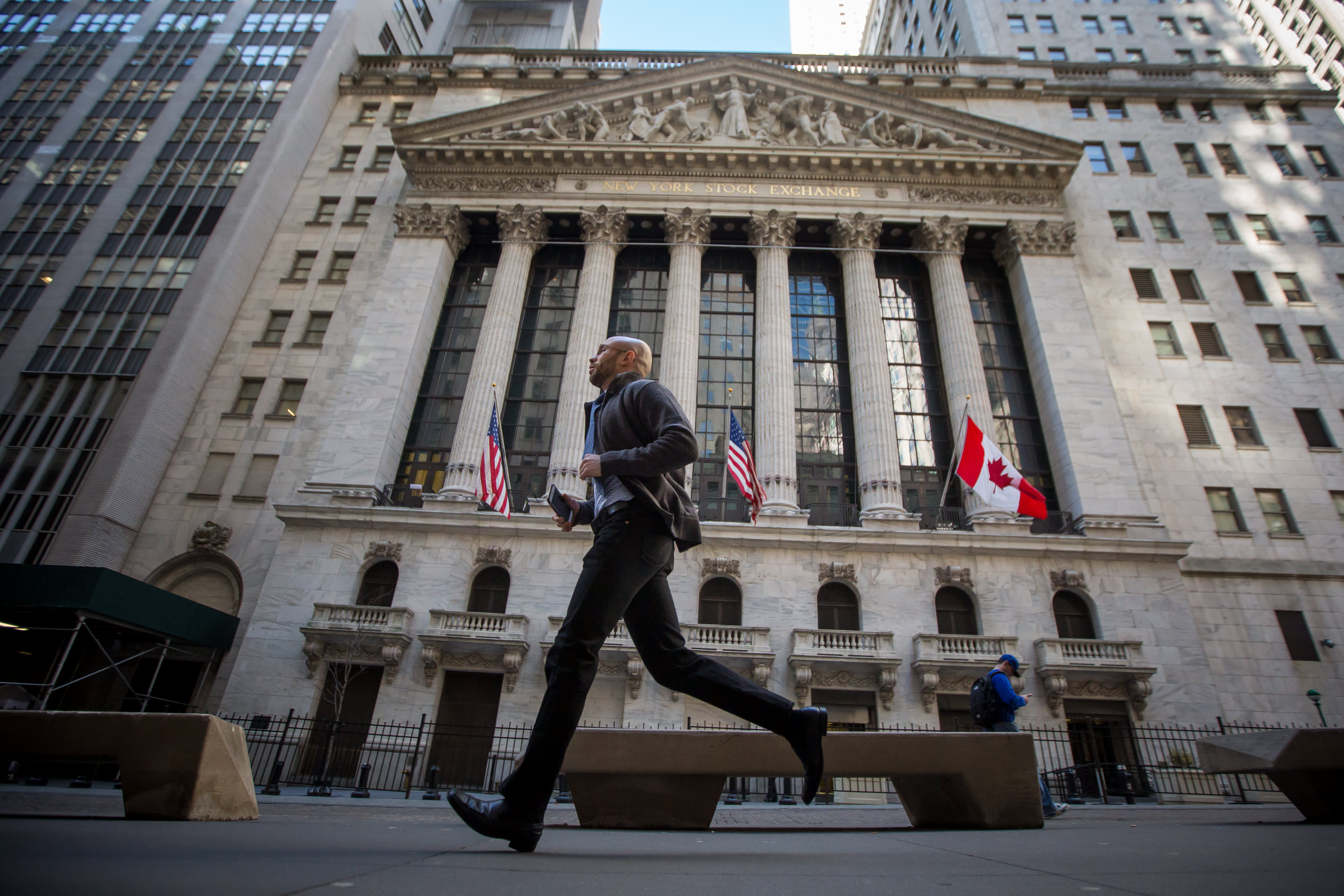
Stock market live updates: Dow futures down 700, second quarter begins, Trump's warning - CNBC

A man runs past the New York Stock Exchange (NYSE).

Bloomberg

This is a live blog. Check back for updates.

8:50 am: Second worst start to the quarter ever?

 The S&P 500 is poised to open down over 3.5% this morning and if those numbers hold through the close it would be the second worst start to a quarter in the history of the S&P 500, according to Bespoke Investment Group. The only quarter that was worse was the first trading day of 1932 when the S&P 500 kicked off the quarter with a decline of 6.9%. The only other quarter where the S&P 500 declined more than 3% was in October 1998 during the Russian debt crisis and the collapse of the hedge fund Long-Term Capital Management. The Dow Jones Industrial Average and S&P 500 secured their worst first quarter on record on Tuesday. – Fitzgerald

8:28 am: What typically happens after the Dow suffers such a bad first quarter

The Dow Jones Industrial Average just posted its worst first quarter on record after the coronavirus pandemic sparked a historic sell-off. CNBC looked at the top 15 worst first quarters in history for the 30-stock benchmark, to get an idea of how markets fare the rest of the year after a brutal first three months. On average, the Dow managed to pare most of the first-quarter losses during the remainder of the full year. However, the blue-chip average tends to still finish the year in the red, with a median annual loss of 3.5%, according to CNBC's analysis. — Li

8:22 am: US companies cut 27,000 jobs before the worst of the coronavirus shutdown hit, ADP report shows

8:17 am: Oaktree Capital's Howard Marks says its time to buy, but moderation is key

Oaktree Capital co-chairman Howard Marks is leaning toward a more negative outlook because of the uncertainty from the coronavirus pandemic, but still, he said investors can do some buying as "things have gotten cheap enough." The billionaire investor said, "I personally think that securities are low enough to buy a little. Somebody said to me, 'is this the time to buy?' I say no, 'this is a time to buy.'" He urged investors to take a moderate approach in these uncertain times, adding that his approach "is not black or white, buy or sell." — Tan, Fitzgerald 

8:07 am: Jeffrey Gundlach says the coronavirus sell-off will worsen again

DoubleLine Capital CEO Jeffrey Gundlach believes the coronavirus sell-off is not over yet and the market will hit a more "enduring" bottom after taking out the March low. "The low we hit in the middle of March … I would bet that low will get taken out," Gundlach said in an investor webcast on Tuesday. "The market has really made it back to a resistance zone and the market continues to act somewhat dysfunctionally in my opinion. ... Take out the low of March and then we'll get a more enduring low." The S&P 500 tumbled into a bear market at the fastest pace ever as the coronavirus pandemic caused unprecedented economic uncertainty. The equity benchmark hit a three-year closing low of 2,237.40 on March 23, more than 30% from its record high reached in February. – Li

8:03 am: Virus cases continue to climb

There are more than 873,000 confirmed cases of the coronavirus globally, including at least 189,633 in the United States. More than 4,000 people have died in the U.S. Cases in Spain surged past 100,000 on Thursday, with 7,719 new cases and 864 deaths in 24 hours. — Pound

7:58 am: Mortgage applications to buy a home drop 24% annually

Mortgage applications to purchase a home fell 11% last week and were 24% lower than last year as the coronavirus dents the spring housing market. Real estate agents and homebuilders have reported a sharp drop in buyer interest, and open houses and model homes are shuttering. While potential home buyers are backing away, more borrowers are refinancing to save money on monthly payments. Driven entirely by refinancing, total mortgage application volume increased 15.3% last week compared with the previous week, according to the Mortgage Bankers Association's seasonally adjusted index. Volume was 67% higher than one year ago, when interest rates were higher. After rising for two weeks, mortgage rates plunged to the lowest level in the MBA's survey. —Stevens, Olick

7:56 am: Trump tells Americans to brace for 'very, very painful two weeks' ahead

President Donald Trump warned Americans of "very, very painful two weeks" ahead as the coronavirus cases are expected to surge in the U.S. "This could be a hell of a bad two weeks. This is going to be a very bad two, and maybe three weeks. This is going to be three weeks like we've never seen before," Trump said at a White House press conference Tuesday. White House officials are projecting between 100,000 and 240,000 deaths in the U.S. with coronavirus fatalities peaking over the next two weeks. "When you look at night, the kind of death that has been caused by this invisible enemy, it's incredible." —Li

7:20 am: Stock futures dive to start the second quarter

U.S. stock futures fell sharply on Wednesday, the first day of the second quarter, as investors fretted over the latest White House projections on the coronavirus outbreak. Dow Jones Industrial Average futures were down more than 700 points, or 3.4%. S&P 500 and Nasdaq 100 futures slid 3.4% and 2.8%, respectively. Those losses come after the Dow and S&P 500 notched their worst first-quarter performance ever in the previous session. They also follow a warning from President Donald Trump, who said the U.S. should prepare for a "very, very painful two weeks" as White House officials project between 100,000 and 240,000 virus deaths in the U.S. —Imbert

—CNBC's Diana Olick, Jesse Pound, Maggie Fitzgerald and Jeff Cox contributed reporting. 

Subscribe to CNBC PRO for exclusive insights and analysis, and live business day programming from around the world.

Let's block ads! (Why?)


"Market" - Google News
April 01, 2020 at 07:54PM
https://ift.tt/3bK7u3g

Stock market live updates: Dow futures down 700, second quarter begins, Trump's warning - CNBC
"Market" - Google News
https://ift.tt/2Yge9gs
Shoes Man Tutorial
Pos News Update
Meme Update
Korean Entertainment News
Japan News Update

Stock Market Today: Dow, S&P Live Updates for Apr. 1, 2020 - Bloomberg

[unable to retrieve full-text content]

Stock Market Today: Dow, S&P Live Updates for Apr. 1, 2020  Bloomberg

"Market" - Google News
April 01, 2020 at 07:28PM
https://ift.tt/2xAHp8e

Stock Market Today: Dow, S&P Live Updates for Apr. 1, 2020 - Bloomberg
"Market" - Google News
https://ift.tt/2Yge9gs
Shoes Man Tutorial
Pos News Update
Meme Update
Korean Entertainment News
Japan News Update

Five ‘Ps’ That Will Help Determine If the Market Has Bottomed - Yahoo Finance

(Bloomberg) -- Bulls and bears remain at loggerheads about whether risk assets have hit a bottom. The following five “Ps” may provide an answer: pandemic, production, policies, positioning and prices.

Investors have fled emerging markets in record numbers since the outbreak of the coronavirus, even though central banks and governments have piled on stimulus to counter the impact of the deadly pathogen. While strategists at companies such as JPMorgan Chase & Co. have concluded that most risk assets have seen their low points, others at firms like Deutsche Bank AG say it’s too early to sound the all-clear.

The following charts may give an insight into the elusive turning point:

Pandemic

Markets have shown some signs of recovery now the rate of change in the global caseload has begun to ease. Seven-day growth slowed to about 107% as of March 31, from 123% on March 27, according to data from Johns Hopkins University. One caveat is that these numbers depend on the availability of testing kits and how infections are defined, while a number of epidemiologists have also suggested that once lockdowns are relaxed, the world will be at risk of rates of infection rising again.

Production

Markets appear to believe that global production has hit its nadir. During the global financial crisis, the MSCI World Index rebounded from its low even though the world economy was still contracting rapidly. The markets troughed when the JPMorgan Global PMI reading was around 36.8 on March 9, 2009. The key cause for optimism was that the rate of deterioration had abated. In the current situation, it does appear as if Chinese production is recovering more rapidly than economists forecast, for example.

The key difference now though is that there may be new waves of coronavirus infection once production resumes, which could lead to additional shutdowns. This makes the identification of a trough less meaningful, because the global recovery may stutter rather than enjoy a clear take-off path as it did after March 2009.

Policies

Policy makers in Group-of-10 nations have already reacted on a greater scale and more rapidly than they did during the global financial crisis. But for emerging markets especially, further policy convergence from the People’s Bank of China may be needed to stabilize the situation. As shown in the chart below, U.S. and Chinese policy became aligned fairly quickly during the global financial crisis. On this occasion however, China’s macro response continues to lag behind that of the U.S.

Positioning

The surge in foreign outflows from emerging Asian markets last month was unprecedented. The combined net foreign withdrawal from the stock markets of India, Indonesia, Malaysia, the Philippines, South Korea and Thailand climbed to a record. At the same time, the sales only amount to around 44% of the cumulative total reached during the period from August 2007 through February 2009, according to data compiled by Bloomberg.

Prices

As yet, stocks haven’t suffered the scale of declines they have seen in past recessions. The S&P 500 Index will fall to 2,000 but then rally to end the year around 3,000, according to David Kostin, Goldman Sachs Group Inc.’s chief U.S. equity strategist in New York. A more simplistic benchmarking of the decline in the index against the drawdowns that took place after 2000 and 2008 makes it appear that further downside is still possible.

Looking at the situation as a whole, the overwhelmingly most-important measure -– that of the rate of increase in the pandemic caseload -- appears to vindicate the market’s rebound. So too does the very aggressive actions taken by global policy makers.

That said, there remains a significant risk of further waves of infection. Such episodes are likely to be met with further lockdowns and interruptions in production, and probably lead to further reduction in risk positioning and a further decline in prices.

Read: Stop-Start Lockdowns a Threat to Global Equity Rally: Macro View

NOTE: Simon Flint is an emerging-market strategist at Bloomberg News. The observations he makes are his own and not intended as investment advice

For more articles like this, please visit us at bloomberg.com

Subscribe now to stay ahead with the most trusted business news source.

©2020 Bloomberg L.P.

Let's block ads! (Why?)


"Market" - Google News
April 01, 2020 at 11:22AM
https://ift.tt/3bHqu2s

Five ‘Ps’ That Will Help Determine If the Market Has Bottomed - Yahoo Finance
"Market" - Google News
https://ift.tt/2Yge9gs
Shoes Man Tutorial
Pos News Update
Meme Update
Korean Entertainment News
Japan News Update

Asian markets mixed as coronavirus, recession fears weigh on sentiment - MarketWatch

Pengusaha Ritel Kipas-Kipas, Corona Bikin Omzet Melejit - CNBC Indonesia

Jakarta, CNBC Indonesia - Sektor ritel khususnya yang menyediakan kebutuhan pokok dan produk kesehatan di toko-toko swalayan kena dampak positif dari pandemi corona yang melanda Indonesia. Adanya permintaan kebutuhan tinggi saat masa pandemi mendorong omzet pelaku ritel melejit.

Ketua Umum Asosiasi Pengusaha Ritel Indonesia (Aprindo) Roy Nicholas Mandey mengakui ada lonjakan penjualan dari ritel saat ini. Lonjakan ini disebut-sebut sebagai imbas dari perilaku masyarakat yang mulai mempersiapkan stok pangan berlebihan dari kekhawatiran adanya karantina wilayah atau lockdown akibat pandemi virus corona. Namun, Roy menyebut ada faktor lainnya menjadi pemicu yaitu berkaitan jelang momen Puasa.

"Sebetulnya peningkatan di Ramadhan udah umum. Kalau di ritel modern karena mereka belanja sesuai peningkatan kebutuhan untuk bulan Ramadhan. Jadi bukan hanya karena COVID-19 saja," katanya kepada CNBC Indonesia, Senin (31/03).

Roy menyebut setiap tahun ada sekitar 10-15% kenaikan omzet jelang momen bulan Ramadhan. Jika ditambah dengan kondisi pandemi virus corona saat ini, tentu pertumbuhannya makin membesar. Namun, justru kondisi ini membuat ketidakpastian bagi peritel karena sulit diprediksi.

"Tahun ini kita belum tau kan karantina wilayah mengaturnya seperti apa. Jadi sangat tergantung pada situasi," ungkap Roy.

Apalagi, sempat terjadi kejadian panic buying. Tidak bisa dipungkiri, kejadian ini menambah pemasukan bagi ritel. Namun di sisi lain sangat mengkhawatirkan, karena ditakutkan masyarakat lain tidak mendapat kebagian pasokan bahan pokok.

Momen tersebut juga sempat viral di media sosial beberapa waktu lalu. Ada beberapa kali momen, yakni pada 2 Maret 2020 saat kali pertama Presiden Jokowi mengumumkan dua kasus positif corona di Indonesia.

Kedua, panic buying pada tanggal 14 Maret 2020, saat ada imbauan kerja di rumah dan diliburkan kegiatan belajar selama dua pekan. Ketiga, pada 19 Maret, saat pengumuman kasus positif corona di Indonesia mencapai 308 kasus dan 25 orang meninggal. Namun, Roy menyebut saat ini kondisinya sudah mulai relatif normal.

"Info yang kita dapat memang hanya awal-awal saja. Panic buying karena korban hoax saja sebenarnya. Kita senantiasa ingatkan jangan termakan hoax, karena ritel modern anggota Aprindo tetap membuka tokonya. Jadi nggak ada yang kekurangan, tidak ada pasokan yang berkurang, bahkan ditingkatkan dari distributor atau pabrik. Jadi nggak ada alasan panic buying," katanya.

[Gambas:Video CNBC]

(hoi/hoi)

Let's block ads! (Why?)


"ritel" - Google Berita
March 31, 2020 at 05:09PM
https://ift.tt/3dNp0Wf

Pengusaha Ritel Kipas-Kipas, Corona Bikin Omzet Melejit - CNBC Indonesia
"ritel" - Google Berita
https://ift.tt/36sqiC4
Shoes Man Tutorial
Pos News Update
Meme Update
Korean Entertainment News
Japan News Update

Search

Featured Post

Politics - The Boston Globe

unitedstatepolitics.blogspot.com Adblock test (Why?) "politic" - Google News February 01, 2024 at 03:47AM https://ift.tt...

Postingan Populer