Asian stocks were steady Thursday as investors await key U.S. employment data to assess when the Federal Reserve may start paring the substantial stimulus that has bolstered financial markets.
Equities rallied in Hong Kong amid a continuing rebound in Chinese technology stocks on bets that the pressure from Beijing’s regulatory crackdown has peaked. China’s market climbed, with traders assessing a central bank
step to cushion the economy by helping smaller firms. Commodity-reliant Australia’s stock index slid on weakness in materials like iron ore.
We’ve all seen the Hurricane Ida aftermath images—fallen trees, high waters and leveled homes across the state. But there’s another type of property that was hit especially hard by the storm, too: Louisiana farms.
“This has been a very difficult year for farmers, with the freeze and the unprecedented rainfall, and now a Category 4 hurricane,” says BREADA executive director Darlene Adams Rowland.
BREADA, which oversees theRed Stick Farmers Marketand other local programs, has been trying to get in contact with farmers across the state. It wasn’t able to reach many until Tuesday.
“Our farmers to the east and south have suffered significant damage, with some still yet to be seen,” Rowland says.
And the worst could be yet to come.
“With the rising of the Tangipahoa River, it is very likely that at least one of our vegetable farmers will completely flood, losing their entire fall crop planting,” Rowland adds.
Baton Rouge Area Foundation’s Louisiana Small Farm Fund is collecting donations to support impacted farmers.
Those looking to help can also donate to BREADA and add a note that their donation should be directed to the Small Farm Fund.
“We will do all we can to raise funds to assist our farmers so that they continue to stay on the farm and grow food for our community,” Rowland says.
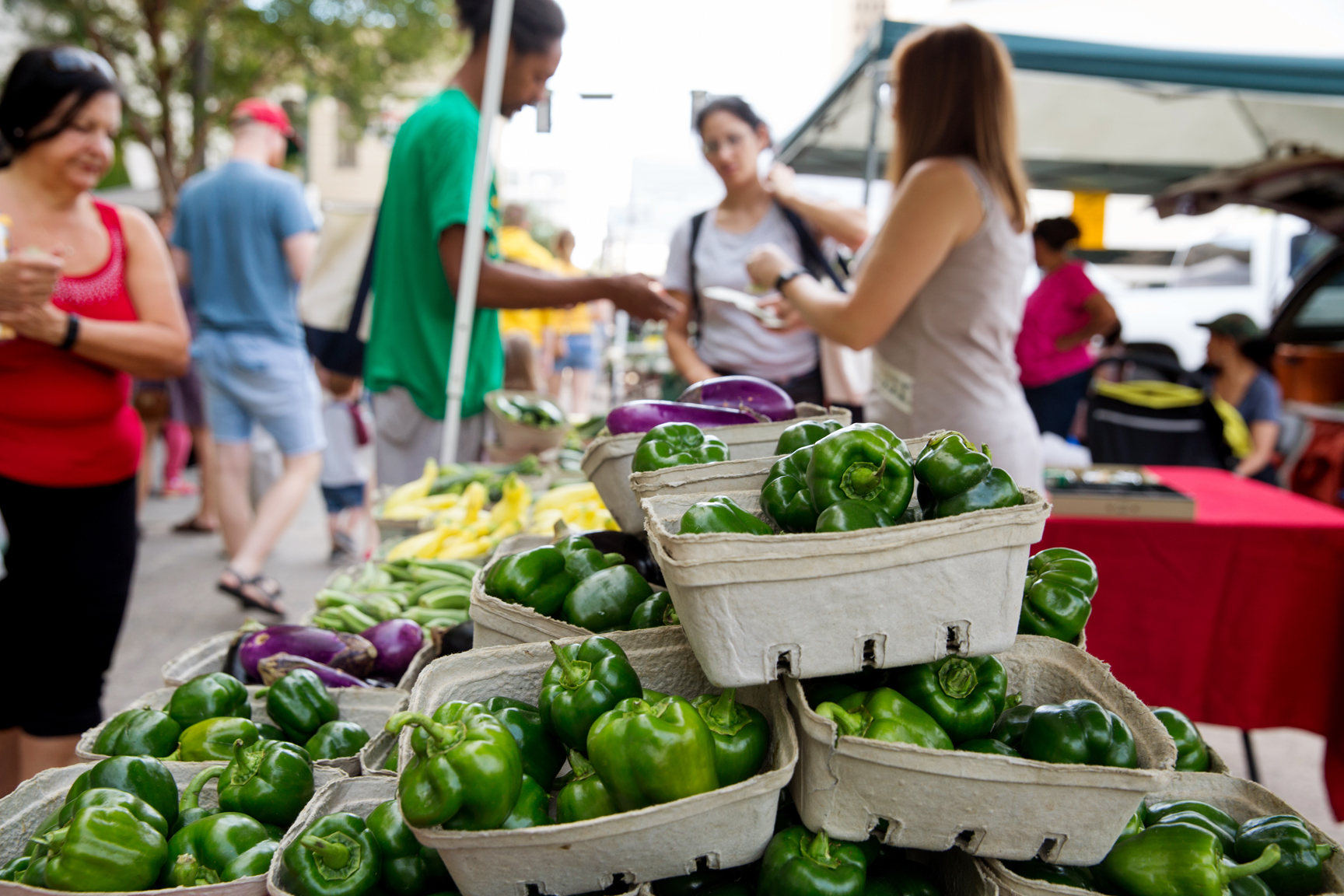
BREADA’s Thursday market at Pennington Biomedical Research Center has been canceled this week. But the market will reopen this Saturday in downtown Baton Rouge. Baton Rougeans are encouraged to stop by and refill their fridges with fresh local produce and goods ahead of the Labor Day holiday.
“Our farmers to the west, of course, fared much better. So we will have some vegetables Saturday,” Rowland says.
At this weekend’s market, expect to find okra, squash, cucumbers, dandelion greens, peppers, mushrooms and potatoes.
Feliciana’s Best Creamery will have fresh, locally produced milk and eggs—which are not always easy to find in the aftermath of a storm.
Other vendors will be stocked up on beef and pork products (steaks, ground meat, sausage and more), bread, baked goods, honey, jams, jellies, preserves, honey, corn flour, grits and other specialty goods.
The downtown Red Stick Farmers Market is at Fifth and Main streets. It will be open Saturday, Sept. 4, during its regularly scheduled time slot of 8 a.m. to noon.
"Market" - Google News
September 01, 2021 at 09:30PM
https://ift.tt/3DHQQjC
Local farmers see 'significant damage' from Hurricane Ida; farmers market returns this weekend - 225 Baton Rouge
"Market" - Google News
https://ift.tt/2Yge9gs
https://ift.tt/2Wls1p6
Tom Cruise in “Top Gun: Maverick.” Theater owners were counting on the movie to help salvage their year.Paramount Pictures, via Associated Press
Maverick is disengaging.
Paramount Pictures on Wednesday scrapped a plan to release a much-anticipated “Top Gun” sequel in theaters in November, citing uncertainty about the willingness of moviegoers to brave the fast-spreading Delta variant of the coronavirus, particularly overseas.
“Top Gun: Maverick,” with Tom Cruise returning to the rebel fighter pilot role that made him a superstar, was rescheduled for theatrical release in May.
To make room, Paramount pushed back the release of “Mission: Impossible 7,” another sequel starring Mr. Cruise, from May to September 2022. Paramount also removed “Jackass Forever” from its fall release calendar.
Theater owners were counting on “Top Gun: Maverick” to help salvage their year, which has been filled with one pandemic-related setback after another. Several movies scheduled for the summer were rerouted to streaming services or made available simultaneously in theaters and online, cannibalizing ticket sales. North American multiplexes have sold about $1.9 billion in tickets this year, compared with $7.7 billion for the same period in 2019. (Many theaters were closed for most of 2020.)
Just last week, theater owners gathered for a convention in Las Vegas and used the moment as a type of pep rally: The big screen is back. Paramount even showed 13 minutes of “Top Gun: Maverick” to attendees.
Other studios may follow Paramount. The biggest movies that remain pointed toward exclusive theatrical releases in 2021 are “Venom: Let There Be Carnage” (Sony), “Eternals” (Marvel-Disney), “Ghostbusters: Afterlife” (Sony), “No Time to Die” (Metro-Goldwyn-Mayer), “West Side Story” (Disney) and “Spider-Man: No Way Home” (Sony).
Studios have been paying close attention to moviegoer surveys by National Research Group, a film consultancy. On July 11, about 81 percent of American ticket buyers said they felt comfortable (“very or somewhat”) sitting in a movie theater. By late August, with the Delta variant surging, only about 67 percent said they felt comfortable.
Mothers have been particularly reticent, surveys have shown, imperiling movies aimed at families. As a result, studios have been trying to figure out what to do with films like “Clifford the Big Red Dog,” which Paramount pulled from its fall release calendar on Aug. 4, and “Hotel Transylvania: Transformania,” which Sony is selling to Amazon for streaming.
“The business has what it takes to recover, but as long as Covid persists, moviegoing will remain sluggish,” David A. Gross, who runs Franchise Entertainment Research, wrote in a recent client note.
A Tesla Model S. The National Highway Traffic Safety Administration asked Tesla to deliver data by Oct. 22, noting that it could impose fines of up to $115 million if the company does not comply.Lucas Jackson/Reuters
In a letter dated Tuesday, the National Highway Traffic Safety Administration told the electric carmaker to produce detailed information on how Autopilot works, how it ensures drivers are paying attention to the road and whether there are any limits on where it can be turned on.
The safety agency is also seeking detailed data on how many cars Tesla has sold in the United States, any arbitration proceedings or lawsuits related to Autopilot crashes that the company has been involved in, and the complaints Tesla has received about Autopilot from customers.
The agency asked Tesla to deliver the information by Oct. 22, noting that it could impose fines of up to $115 million if the company fails or refuses to comply. The letter is signed by Gregory Magno, chief of the vehicle defects division in the agency’s Office of Defects Investigation.
The safety agency informed Tesla weeks ago that it was looking into the spate of crashes in which Tesla vehicles operating on Autopilot failed to detect stopped emergency vehicles with flashing lights. The regulator originally said it was looking into 11 such crashes. A 12th occurred on Saturday, when a Model 3 hit a police cruiser that had stopped behind a car that had broken down on an interstate in Orlando, Fla.
The driver told the police that the Model 3 had been in Autopilot mode, according to the Florida Highway Patrol. The Tesla narrowly missed hitting a state trooper.
The request for data suggests that the safety agency’s investigation is moving quickly. Safety experts have criticized the agency for doing little to investigate a growing number of crashes, injuries and fatalities involving Tesla vehicles operating with Autopilot turned on over the last five years. The safety agency said this summer that it was looking into about 30 Autopilot-related crashes, including eight that resulted in 10 deaths.
Safety experts and another federal agency, the National Transportation Safety Board, have pointed out that Autopilot lacks effective safeguards to ensure drivers keep their eyes on the road and hands on the wheel while using the system. It is supposed to be used only on divided highways but lacks mechanisms for prohibiting use on local roads — features that General Motors, Ford Motor and other automakers have built into similar systems.
The Consumer Financial Protection Bureau is stepping up its scrutiny of small-business lending.Eric Risberg/Associated Press
The Consumer Financial Protection Bureau proposed a new rule on Wednesday that would compel lenders to provide detailed information on the small-business loans that they approve and deny, a step toward scrutiny for a segment of lending that has faced limited regulatory attention for decades.
Lenders would be required to disclose the size and terms of their small-business loans, along with details such as the borrower’s industry, work force size, race and gender. Regulators hope to use that information to enforce fair-lending laws and spot signs of discrimination, as well track lending broader patterns.
Dave Uejio, the bureau’s acting director, said the data would help identify barriers that hold back small businesses.
“After homeownership, small-business ownership is the primary means by which families and communities build wealth,” he said in a statement. “Yet too often, small-business development is starved for want of access to responsible, fairly priced credit.”
The proposal, which will be open for a 90-day comment period, has been slow to arrive: Congress ordered increased collection of small-business lending data more than a decade ago as part of the Dodd-Frank Act.
Mr. Uejio compared the proposed rules to the Home Mortgage Disclosure Act, a 1975 law that requires financiers to publicly report data on their mortgage lending. Those reports “show how lenders are serving the housing credit needs of their communities” and have helped improve access to fair home loans, Mr. Uejio said during a news conference.
Lenders’ trade groups responded cautiously to the proposal.
The Consumer Bankers Association said it planned to submit comments about the “complexities” of collecting small-business data, which will require “significant changes to their systems and processes” for many financial institutions.
Ian McKendry, a spokesman for the American Bankers Association, said the group supported the proposal’s goals, but it would need careful execution.
“The complexity of collecting and reporting the data may reduce access to credit for those who need it the most,” he said in a statement.
Prince Abdulaziz bin Salman, the Saudi oil minister and chair of the OPEC Plus meetings. The group’s last production agreement followed an arduous series of negotiating sessions.Saudi Press Agency, via Reuters
Officials from OPEC, Russia and other oil-producing countries decided on Wednesday to stick with their hard-won July agreement of increasing production each month by 400,000 barrels a day, a modest amount equivalent to less than 1 percent of global supply.
OPEC Plus meetings can sometimes go on for days, but this decision was reached in about an hour. Analysts say the group is concerned about the future health of oil market as the pandemic continues to inject uncertainty into the global economy, but officials did not see an urgent need to make changes.
A time when summer vacations are ending and schools are just beginning to resume is not the most opportune for making a statement in the financial markets, analysts said.
“They are taking the path of least resistance in the short term,” said Richard Bronze, head of geopolitics at Energy Aspects, a research firm.
In a brief statement issued after the meeting, OPEC Plus said that although the effects of “the pandemic continue to cast some uncertainty, market fundamentals have strengthened.”
When it came down to it, the oil officials did not have enough clarity about the direction of demand for oil to make changes that might have irritated members of the group, like Russia and the United Arab Emirates, that want more production. Officials are worried about the impact of the Delta variant of the coronavirus on the economies of their customers, but the global recovery has not yet derailed.
OPEC Plus has also come under pressure from the Biden administration to pump more oil. Last month, Jake Sullivan, the national security adviser, said that higher gasoline prices “risk harming the global recovery” and that OPEC Plus “must do more.”
In addition, oil prices are at comfortable levels. They have risen through much of this year as pandemic lockdowns eased and economies began a boisterous expansion.
Prices fell sharply after the July agreement, causing concern that the production increase was too much, but they have recovered to about $71 a barrel for Brent crude, the global benchmark. Shutdowns in the Gulf of Mexico caused by Hurricane Ida as well as a large fire at a Mexican offshore facility have restricted supplies.
With memories of that messy episode still vivid, OPEC Plus officials had little incentive to tamper with their agreed program.
If the supply increases continue as planned, OPEC Plus will add about two million barrels a day of oil to the market by year end. But there is doubt about whether the member states will have the ability to add the full amount. The group will also continue to meet monthly, giving itself time to react to a deterioration in demand.
A common scene across corporate America.John Muggenborg for The New York Times
Companies including Amazon, Apple and Starbucks have rescheduled with similar frequency, and it’s becoming difficult to take new announcements about back-to-office plans seriously. The New York Times, Twitter and others have decided not to set a new date for reopening their offices.
Before the latest surge of coronavirus cases, few companies had announced vaccine mandates. But according to a survey released Wednesday, most companies now have plans to require that employees get vaccinated by the end of the year. Conducted by Willis Towers Watson, the survey polled nearly 1,000 companies that together employ almost 10 million people:
52 percent plan to have vaccine mandates by the end of the year (including 21 percent that already do).
78 percent plan to track employees’ vaccination status (55 percent already do).
17 percent are considering health insurance premium rewards or surcharges to encourage vaccination (2 percent already do).
On employee expectations:
Creating and putting these policies in place takes time. Companies may also be responding to their employees’ shifting expectations (and fears) about returning to the workplace. Another report released Wednesday, conducted by the Conference Board, surveyed 2,400 U.S. workers:
42 percent said they were worried about returning to work for fear of contracting Covid-19 or exposing family members to the virus, up from 24 percent of respondents in a survey in June.
29 percent said they were unsure if they would remain at their current job for the next six months. Among those looking for jobs, 80 percent said that their employer’s stance on flexible work arrangements was very or moderately important in their decision to look elsewhere.
On business travel:
After the pandemic, one of the things that workers can probably count on is less business travel, according to a survey out Tuesday by Bloomberg of 45 large companies around the world:
84 percent of companies plan to spend less on travel after the pandemic, with a majority of those planning cuts of 20 to 40 percent of their prepandemic budgets. Put another way, all of those Zoom meetings aren’t going away.
Edgard Garrido/Reuters
Two Canadian railroads — Canadian National Railway and Canadian Pacific — have for months been jockeying to acquire Kansas City Southern, which would allow them to become the first Canadian company with tracks through Canada, the United States and Mexico. On Tuesday, the Surface Transportation Board, a U.S. agency that approves freight mergers, dealt a blow to Canadian National’s attempt to get that done.
The board, in a unanimous decision, declined to approve a voting trust, which would have allowed shareholders of both Canadian National and Kansas City Southern to reap the benefits of a deal while the companies waited for regulatory approval to complete their merger. The decision complicates the already complex situation and threatens to derail Canadian National’s $30 billion bid, which had trumped an earlier bid by Canadian Pacific.
Voting trusts have a long history in railroad deals, and the board had approved such a trust for Canadian Pacific’s proposed takeover before Canadian National outbid it. The denial of the voting trust for the Canadian National deal indicates that regulators could have concerns and that it may not be approved. It could also send Kansas City Southern back to Canadian Pacific.
In a May letter to the board, the Justice Department wrote that its concerns about use of a voting trust in the proposed Canadian Pacific transaction “apply with greater force to Canadian National’s proposed acquisition of Kansas City Southern because it raises additional potential competitive concerns.”
The Surface Transportation Board wrote that it had found “that using a voting trust, in the context of the impending control application, would give rise to potential public interest harms relating to both competition and divestiture.”
Kansas City Southern may consider itself lucky for having options. In a 2016 paper on voting trusts in railroad mergers, Russell Pittman, an economist at the Department of Justice’s antitrust division, wrote that these trusts served a purpose, protecting the interests of the acquired and acquiring parties. When the board rejects a trust proposal, it can make it harder for the target company to find a new acquirer, but with Canadian Pacific waiting and watching to see what happens, getting another offer may not be a problem.
Canadian Pacific last offered $27 billion for the American railroad this month. That number may be more appealing to Kansas City Southern now.
Kansas City Southern shares fell on the denial, while Canadian National shares rose and Canadian Pacific shares fell.
The stock market continued its quietly remarkable year in August, posting its seventh straight monthly rise.
The S&P 500 index is up more than 20 percent for 2021 and has more than doubled in value since it hit bottom in March 2020. The market has closed at a record high 53 times — the most by this point of the year since 1964, according to LPL Financial.
“I hate to say it,” said Ed Yardeni, a longtime market analyst and president of the stock market research firm Yardeni Research. “But it looks like we’re learning to live with this virus, and the market certainly has.”
The lingering pandemic has lifted the stock prices of companies whose profits are tied to it directly — Moderna’s 260 percent rally this year has made it the S&P 500’s best performer — and those positioned to gain from the messy economic recovery, like metals manufacturers, energy companies and semiconductor makers.
The breadth of the boom was clear in July. Second-quarter earnings results were expected to be generally strong, but trounced expectations: Nearly 90 percent of companies exceeded analyst forecasts, the highest such level of “beats” on record, according to Refinitiv data going back to 1994.
When the S&P 500 this month rose to double its pandemic low on March 23, 2020, it was the fastest 100 percent rise for the index since World War II, according to Yardeni Research. In roughly 17 months, the rally created nearly $20 trillion in stock market wealth.
Besides the sheer angle of the ascent, analysts have been struck by the smoothness of the rally. The S&P hasn’t suffered a 5 percent pullback since October, according to Mr. Detrick. Even with a 0.1 percent decline on Tuesday, the market is just a day removed from its most recent record high.
Not everybody expects the rally to continue unabated. Any disruption of interest rates and governmental supports could alter the persistently sunny outlook. READ THE ARTICLE →
“With the pandemic and labor shortages — the fact that for once we’re not totally disposable, they need us — it was the perfect time,” said Alexis Rizzo, right, a shift supervisor at a Starbucks in the Buffalo area.Mustafa Hussain for The New York Times
Starbucks workers in the Buffalo area are asking the National Labor Relations Board to hold elections on union representation in one of the most serious union campaigns ever to confront the company.
Last week, the workers announced that they were forming a union called Starbucks Workers United, and on Monday they filed petitions for elections at three stores in the area. They proposed a vote in two weeks, our labor reporter, Noam Scheiber, reports.
Alexis Rizzo, a shift supervisor at one of the stores, said that she had had periodic conversations over several years with organizers for Workers United, the union with which the Starbucks workers hope to affiliate, but that until recently the timing for a union campaign had not felt right.
“With the pandemic and labor shortages — the fact that for once we’re not totally disposable, they need us — it was the perfect time,” Ms. Rizzo said.
She and several other workers said the pandemic exacerbated longstanding issues, such as the stress of understaffing, which became more acute as turnover and absenteeism increased and as workers were given additional responsibilities like sanitizing surfaces. The workers also said they felt pressure to come in when sick unless they could find a co-worker to replace them.
Despite periodic commitments by Starbucks to revise its policies, complaints lingered and appeared to intensify during the pandemic. READ THE ARTICLE →
The S&P 500 was little changed, while the Nasdaq composite rose 0.3 percent.
The S&P 500 has climbed more than 20 percent so far in 2021 and has more than doubled in value since it hit bottom in March 2020.
European markets gained on Wednesday, with the Stoxx Europe 600 closing 0.5 percent higher. Asian markets rose.
Oil prices dropped after officials from OPEC, Russia and other oil-producing countries decided to continue increasing oil production each month by 400,000 barrels a day. Futures for West Texas Intermediate, the U.S. crude benchmark, fell 0.3 percent to $68.23 a barrel.
Shares of the Campbell Soup Company rose 2.1 percent after the company reported profit of $288 million for its 2021 fiscal year, compared with $86 million in 2020.
The view of Manhattan in June, looking south from the Top of the Rock observation deck at Rockefeller Center.Gabriela Bhaskar/The New York Times
Mayor Bill de Blasio of New York City has directed all of the city employees who are currently working from home to return to the office full-time starting in less than two weeks, a signal that he is intent on resurrecting the city’s office-dependent central business district despite the Delta variant of the coronavirus.
In a Wednesday email to agency heads acquired by The New York Times, the mayor’s reopening task force said the roughly 80,000 office workers employed at city agencies would “resume pre-March 2020 work schedules in the office beginning September 13.” There are more than 300,000 city workers overall, but many of them are essential employees who have already been reporting to job sites.
The move represents an escalation of the city’s requirements for its workforce, and is bound to discomfit employees who are concerned about the spread of the highly contagious Delta variant, or who have grown accustomed to the conveniences afforded by working from home.
Mr. de Blasio has sought to push forward New York City’s reopening, despite the arrival of the variant. In August, he mounted a major concert in Central Park designed to signify the city’s reopening. Bad weather forced the concert to end early.
Mr. de Blasio first required city workers to return to the office in person starting May 3, but he instituted 50 percent occupancy limits on buildings, which necessitated a hybrid schedule — on some days, employees worked from home, and on others, they reported to the office.
The Wednesday email noted that “telework will only be allowed in limited circumstances.” It also said employees would be subject to an executive order, signed by the mayor on Tuesday after he announced the plan in July, that requires all employees to be vaccinated against the coronavirus or undergo weekly testing.
All employees and contractors will be required to wear face coverings in all communal spaces.
“As the city finishes its return to office process, the mayor’s message remains the same: We know how to make workplaces safe, and public servants can deliver more for New Yorkers when they’re working together,” said Mitch Schwartz, a spokesman for the mayor. “City workers will have all the resources they need to complete this final step safely. There’s no time to waste in building a recovery for all of us.”
The S&P 500 closed the first trading day of September near the flatline as the strength in technology shares faded, while investors digested a disappointing employment report.
The broad equity index gained just 1.41 points on Wednesday to 4,524.09 as losses in energy offsets gains in utilities and real estate. The tech-heavy Nasdaq Composite advanced 0.3% to 15,309.38 to eke out a record close after trading 0.8% higher earlier in the day. Apple jumped as much as 2% to an all-time high, but pared gains to about 0.5%. The Dow Jones Industrial Average dipped 48.20 points, or 0.1%, to 35,312.53.
U.S. companies created far fewer jobs than expected in August with private payrolls rising just 374,000, according to payroll services firm ADP. That is well below the Dow Jones estimate of 600,000.
"With so much pressure on improvement on the labor market front coming from the Fed, this could send a signal that jobs growth is stagnating," said Mike Loewengart, managing director of investment strategy at E-Trade. "That's likely a good thing for the markets though as it means easy money policy continues."
The ADP report is a precursor to the official August U.S. non-farm payrolls data, which will be released Friday. Economists polled by Dow Jones expect 720,000 jobs were created in August and the unemployment rate fell to 5.2%.
Solar stock Sunrun surged more than 6% after JPMorgan predicted a comeback that would take the shares 90% higher.
Zoom Video shares rebounded slightly following a 16% plunge Tuesday after Cathie Wood revealed she bought nearly 200,000 shares on the dip.
The major averages just wrapped up a winning August. The S&P 500 rose 2.9% for the month, posting its seventh straight positive month and its best winning streak since 2017. The Nasdaq Composite gained about 4% for its third positive month and while the Dow lagged, it still added 1.2%.
The S&P 500 has had a pretty smooth ride so far in 2021, up more than 20% without even a 5% pullback. The benchmark has closed above its 200-day moving average, a measure of the long-term trend, for 296 days in a row.
So some strategists are on the lookout for a correction in September given that stocks haven't had a significant one since last October, combined with the highly anticipated meeting of the Federal Reserve Bank in September and the continued worry about the delta Covid variant.
"Although this bull market has laughed at nearly all the worry signs in 2021, let's not forget that September is historically the worst month of the year for stocks," said LPL Financial Chief Market Strategist Ryan Detrick. "Even last year, in the face of a huge rally off the March 2020 lows, we saw a nearly 10% correction in the middle of September."
He added any weakness could be short-term and contained in the 5% to 8% range.
"This bull market is alive and well and we would view any potential weakness as an opportunity," he said.
"Market" - Google News
September 01, 2021 at 05:03AM
https://ift.tt/3DxihNd
S&P 500 closes flat on first day of September, Nasdaq ekes out a record close - CNBC
"Market" - Google News
https://ift.tt/2Yge9gs
https://ift.tt/2Wls1p6
Financials led the market in a red-hot rally in August.
The sector gained 5% last month, narrowly edging out communications services as the top performer of the S&P 500.
"The financials have been incredibly strong. The interest rate situation is very beneficial," Danielle Shay, director of options at Simpler Trading, told CNBC's "Trading Nation" on Tuesday.
The spread between the U.S. 10-year yield and 2-year, which impacts banks' profitability, has widened to roughly 110 basis points, far higher than a year earlier.
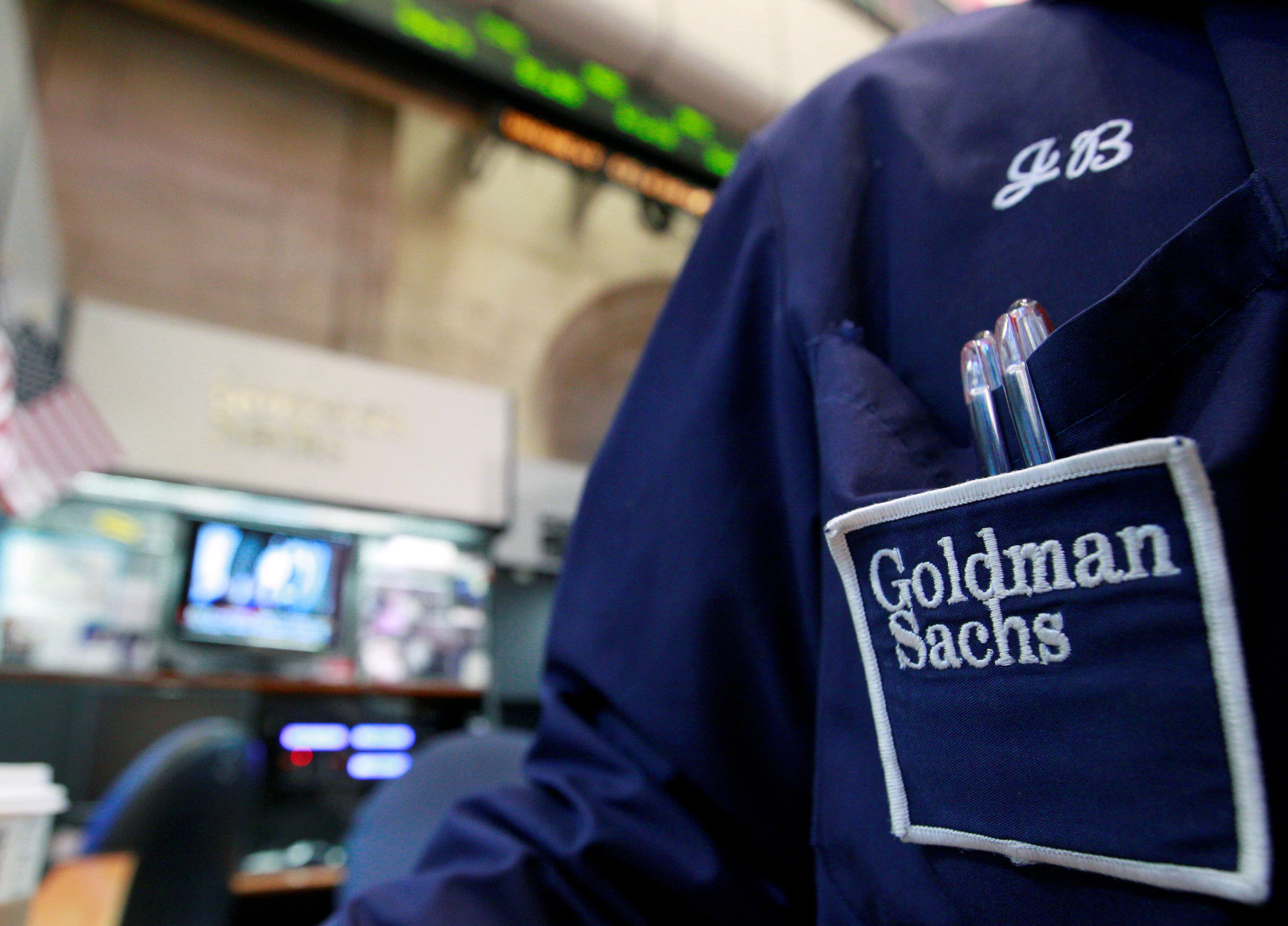
"More importantly, companies like JPMorgan and Goldman Sachs … they've been doing really well on their investment side. You've had a lot of retail traders come into the market. Obviously, the stock market's been incredibly, incredibly strong this year so they also have some added benefits there as well," said Shay.
Shay highlights JPMorgan as one stock exhibiting strength in the space and targets a move up to $175 in "the next month or so." The shares traded Wednesday just above $160.
Nancy Tengler, chief investment officer at Laffer Tengler Investments, prefers a different name.
"JPMorgan is one of our largest holdings, but I would actually go with Goldman Sachs," she said during the same interview. "Goldman has about 38.5% of their revenue coming from noninterest income, much lower than JPMorgan, but they have a lot more levers to pull in terms of trading revenue and asset management as well as wealth management and investment banking."
"Although JPMorgan has those aspects as well, we think Goldman is in a position of many years of underperformance, recent outperformance, a huge dividend increase from $1.25 to $2 a share," Tengler said. "If you hold it, you certainly hang on, you wait for dips to step back in."
Disclosure: Laffer Tengler Investments holds GS and JPM.
"Market" - Google News
September 02, 2021 at 12:06AM
https://ift.tt/3BCAeIx
Financials took S&P 500 leadership in August, and traders see continued strength in two stocks - CNBC
"Market" - Google News
https://ift.tt/2Yge9gs
https://ift.tt/2Wls1p6



/cloudfront-us-east-1.images.arcpublishing.com/bostonglobe/VNG7YMZTRWJ5WBFTJ5NVETPCQI.jpg)


