Rechercher dans ce blog

Tuesday, February 8, 2022

What Is 'Legitimate Political Discourse,' And Does It Include The Jan. 6 Attack On The Capitol? - Texas A&M University Today

unitedstatepolitics.blogspot.com
crowd of trump supporters gathered in fron of the capitol building

Supporters of Donald Trum stormed the U.S. Capitol on Jan. 6, 2021 in Washington, DC.


Samuel Corum/Getty Images

When the governing body of the Republican Party called the events of Jan. 6, 2021, “legitimate public discourse,” it renewed a sometimes-furious debate about what are, and aren’t, acceptable forms of discussion and debate in a democratic society.

This question has emerged frequently in recent years, with complaints about inappropriate methods of protest, efforts to take particular viewpoints off social media, and accusations that various people are disseminating misleading information. But the issue took on new urgency on Feb. 4, 2022, when the Republican National Committee censured U.S. Reps. Liz Cheney of Wyoming and Adam Kinzinger of Illinois.

They are the only Republicans serving on the House Select Committee to Investigate the January 6th Attack on the United States Capitol. The governing body of the Republican Party said this meant they were “participating in a Democrat-led persecution of ordinary citizens engaged in legitimate political discourse.”

As researchers who study the relationship between communication and democracy, we believe our insights can help citizens draw the line between “legitimate political discourse” and illegitimate political violence.

There are legal standards defining protected speech, but something that meets the legal definitions may not necessarily help build and maintain democracy. Scholarly definitions of the types of speech that are beneficial for democracy help make the issues clearer.

Persuasion, Not Coercion

Put most simply, speech that is designed to teach people about other viewpoints and persuade them to change their minds – rather than pressuring them to take different actions – is good for democracy.

The key, as pointed out by communication scholar Daniel O’Keefe, is that the audience has “some measure of freedom” about receiving the message and choosing how to act upon it.

Persuasion, even in its most vigorous and aggressive form, is an invitation. When a person seeks to persuade someone else to agree with their viewpoint or values, or to recall or ignore history in a particular way, the recipient may choose to go along, or not.

Coercion, on the other hand, is a kind of force – a command, not an invitation. Coercion denies others the freedom to choose for themselves whether to agree or disagree. Coercion and violence are anti-democratic because they deny others their ability to consent. Violence and coercion are the very opposite of legitimate political discourse.

Politics is not war, and legitimate political discourse is not violence.

What About Protest?

Protests can take many forms. In their most democratic form, political scientist Mary Scudder notes that protests “can improve the deliberativeness of a political system by putting important problems on the agenda or introducing new arguments into the public sphere.” Protest helps people to be aware of the views held by others, even if different groups disagree vehemently.

In the name of democracy, scholars of communication, free speech and deliberation have said protesters deserve to be heard and given as much latitude as possible to communicate with the public. In part, that is because protesters may represent underprivileged or mistreated people whose messages may be hard for powerful interests to hear.

But impassioned protest can sometimes seem like an attempt at coercion, especially for people who feel targeted by the protesters’ messages.

Persuasion And Coercion On Jan. 6

The Republican National Committee would like Americans to focus on the peaceful protesters who gathered on Jan. 6, 2021, to hear President Donald Trump’s speech at the Ellipse – and ignore the violence at the Capitol.

If we look at the Ellipse, we see a vibrant, and legitimate, political protest with signs, chants and speeches. If we look at the Capitol, by contrast, we see illegitimate political violence, including people using bear spray, erecting a hangman’s noose and assaulting others.

The link between them was Trump’s speech. He used a particular combination of rhetorical strategies, calling for a plague to be removed so that the nation could be pure again; threatening force; and claiming that his group was good, strong, pure and sure of victory. He also made claims of victimhood, of having had something stolen from him and his supporters. This specific combination of rhetorical strategies has traditionally been used to motivate a nation for war.

That type of communication from a president can be legitimate political discourse when used to motivate a nation to war against another nation, though there have certainly been circumstances in American history in which that power has been abused. But when the president uses that rhetoric against the democratic process in his own government in order to retain power, it is not legitimate political discourse. Rather, as scholars of authoritarianism have explained, using war rhetoric against your own nation amounts to an “autogolpe,” or “self-coup.”

When Trump urged the Ellipse crowd to march to the Capitol and “fight like hell,” his words transformed an occasion of legitimate political discourse into an anti-democratic violent insurrection.

The result was real physical violence, characterized by Capitol Police Sgt. Aquilino Gonell, a 42-year-old veteran of the war in Iraq, as a “medieval battle.” Several people died and many were injured.

American democracy was damaged as well. Lisa Murkowski, a Republican U.S. senator from Alaska, called the Republican National Committee’s characterization “false” and “wrong,” saying on Feb. 5, 2022, that the events at the Capitol were “an effort to overturn a lawful election.”

Democracy isn’t a game. To respond with appropriate seriousness, Americans can’t frame moments such as Jan. 6 simply as a “competition between left versus right, Democrat versus Republican; a battle of individuals and political factions,” writes communications scholar Dannagal Young. Those violent, coercive events are challenges to the real heart of democracy: peaceful persuasion and the rule of law.

Looking at the entirety of what occurred on Jan. 6, 2021, it’s clear that there was both legitimate protest and illegitimate political violence. When political violence replaces political discourse, and when political leaders refuse to play by the democratic rules of the game, democracies weaken, and may even die.

Adblock test (Why?)


"politic" - Google News
February 09, 2022 at 12:01AM
https://ift.tt/qXLn7zE

What Is 'Legitimate Political Discourse,' And Does It Include The Jan. 6 Attack On The Capitol? - Texas A&M University Today
"politic" - Google News
https://ift.tt/JkVLyh1
https://ift.tt/srlFcBR

Press: Clubbing cops is not 'legitimate political discourse' | TheHill - The Hill

unitedstatepolitics.blogspot.com

Abraham Lincoln was only 28 years old, a young lawyer in Springfield, Ill., when he gave one of the most important speeches in his life and made one of his most profound reflections on the survival of our democracy. Right at the top of what became known as his “Lyceum Address,” in addressing “The Perpetuation of Our Political Institutions,” Lincoln raised the question of where the danger to our democracy might someday come from. “If it ever reach us,” he declared, “it must spring up amongst us. It cannot come from abroad. If destruction be our lot, we must ourselves be its author and finisher.”  

No words could more accurately describe what happened on Jan. 6, when the greatest threat to our democracy since the Civil War came — not from foreign invaders — but from an armed mob of MAGA zealots sicced on Congress by a power-mad president as the climax of his efforts to overturn an election and destroy our democracy. 

Nor could any words more accurately describe what happened last week in Salt Lake City, when the Republican National Committee (RNC) adopted a resolution censuring two Republican members of Congress — Liz CheneyElizabeth (Liz) Lynn CheneyRomney says he texted with niece McDaniel after RNC censure Senate GOP keeps distance from RNC's Jan. 6 rhetoric Schumer: RNC's Jan. 6 rhetoric 'chilling and plainly dangerous' MORE of Wyoming and Adam KinzingerAdam Daniel KinzingerRomney says he texted with niece McDaniel after RNC censure Senate GOP keeps distance from RNC's Jan. 6 rhetoric Schumer: RNC's Jan. 6 rhetoric 'chilling and plainly dangerous' MORE of Illinois — for serving on the House select committee investigating Jan. 6. The RNC condemned Cheney and Kinzinger for “participating in a Democrat-led persecution of ordinary citizens engaged in” — and here’s the key phrase: engaged in “legitimate political discourse.” 

Calling the violent attack on the Capitol “legitimate political discourse” defies belief. We know what happened. We saw it live on television. As described by Rep. Jamie RaskinJamin (Jamie) Ben RaskinJan. 6 panel hesitates in asking Pence to testify New revelations raise pressure on Barr to testify on Jan. 6 Biden nominee faces scrutiny over fintech work, compensation MORE (D-Md.) in his new book “Unthinkable,” we saw the mob “taunt, push, shove, punch, gouge, scratch, spray, smash, jab, and harass the U.S. Capitol Police force.”  

And when it was over, Raskin continues, the insurrectionists left “at least five people dead (with several more to come by suicide of officers) and more than 140 officers wounded and injured, many of them hospitalized with traumatic brain injuries, concussions, broken arms, broken legs, broken ribs, broken vertebrae, black eyes, broken noses, lost fingers, broken necks, broken jaws, post-traumatic stress syndrome and every manner of emotional and psychological damage.” Only the sickest mind could label such violent assault on police officers “legitimate political discourse.” 

And make no mistake about it. The RNC was not just speaking, as its feckless chair Ronna McDanielRonna Romney McDanielRomney says he texted with niece McDaniel after RNC censure Senate GOP keeps distance from RNC's Jan. 6 rhetoric Schumer: RNC's Jan. 6 rhetoric 'chilling and plainly dangerous' MORE tried to claim, about a handful of peaceful protestors who remained outside the building. Read the language of the resolution. It makes no such distinction. The RNC is dismissing the actions of everybody who participated in the sacking of the Capitol — including the Proud Boys, Oath Keepers, Three Percenters, and QAnon followers — as “legitimate political discourse.” 

Shocked at how far the RNC will go to please Donald TrumpDonald TrumpTrump says Joe Rogan should 'stop apologizing' amid controversy over podcast Fox News host Brian Kilmeade hits Trump on Arizona election claim: 'That's an outright lie' Nikki Haley: Pence 'did what he thought was right' on Jan. 6 MORE by downplaying the violence of Jan. 6, several leading Republicans — including Sens. Mitt RomneyWillard (Mitt) Mitt RomneyRomney says he texted with niece McDaniel after RNC censure Senate GOP keeps distance from RNC's Jan. 6 rhetoric Former top Pence aide says he 'did not see a lot of legitimate political discourse' on Jan. 6 MORE (Utah), Bill CassidyBill CassidyMcCarthy: Cheney, Kinzinger would have 'hard time ever coming back to Congress' Romney rips GOP censure effort against Cheney, Kinzinger GOP Sen. Cassidy questions RNC censure of Kinzinger, Cheney MORE (La.), and Lisa MurkowskiLisa Ann MurkowskiThe Hill's 12:30 Report: Congress nears yet another funding deadline The Hill's Morning Report - Presented by Facebook - Anticipating an invasion of Ukraine 'any day' Democrats seek to woo winnable GOP senators on Supreme Court MORE (Alaska) and former RNC Chair Michael Steele — rushed to condemn the RNC’s action. The National Review called it “both morally repellent and politically self-destructive.” 

But the damage has already been done. In reality, the Republican Party barely exists anymore. Certainly not the party of Ronald Reagan or George W. Bush. They’re no longer the “law-and-order” party. They’re no longer the party of ideas. They don’t even have a party platform. Today’s Republican Party’s nothing more than a quasi-religious personality cult. Much like Italy under Mussolini (except Mussolini had a better hair job). 

Donald Trump has forced Republicans to choose between being “pro-democracy Republicans” and “anti-democracy Republicans.” Liz Cheney and Adam Kinzinger are on the right side. 

Press is host of “The Bill Press Pod.” He is author of “From the Left: A Life in the Crossfire.”  

Adblock test (Why?)


"politic" - Google News
February 08, 2022 at 07:50PM
https://ift.tt/9kEKil1

Press: Clubbing cops is not 'legitimate political discourse' | TheHill - The Hill
"politic" - Google News
https://ift.tt/JkVLyh1
https://ift.tt/srlFcBR

Australian political leaders apologize to staff for abuses - The Seattle Times

unitedstatepolitics.blogspot.com

[unable to retrieve full-text content]

Australian political leaders apologize to staff for abuses  The Seattle Times

"politic" - Google News
February 08, 2022 at 12:03PM
https://ift.tt/SBsUbpP

Australian political leaders apologize to staff for abuses - The Seattle Times
"politic" - Google News
https://ift.tt/lzZ1sQ0
https://ift.tt/2RlosTW

Monday, February 7, 2022

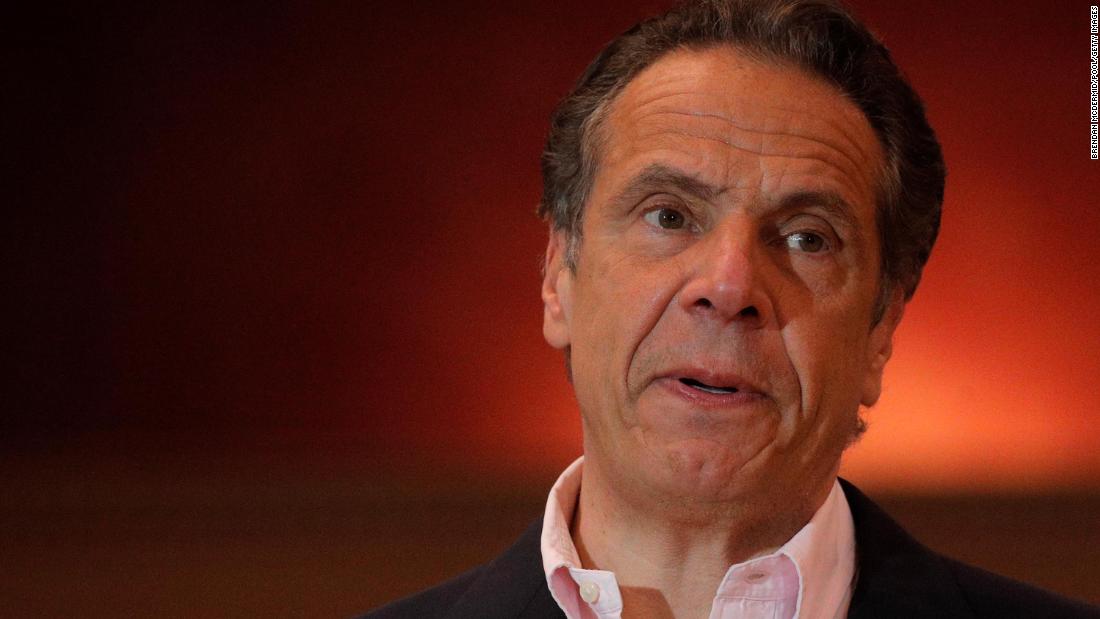
Former New York Gov. Andrew Cuomo is eyeing a political comeback - CNN

unitedstatepolitics.blogspot.com

(CNN)Former New York Gov. Andrew Cuomo is seriously considering a political comeback as early as this year, two sources close to his inner circle told CNN, adding to a series of recent reports hinting at the Democrat's desire to resurrect his career after resigning in disgrace last summer.

Cuomo, 64, faced impeachment and removal from office when he stepped down in August 2021, following a series of allegations of sexual harassment, which were detailed in a report by the state attorney general, and growing criticism over his handling of the pandemic, including his administration's release of misleading information about the death toll in nursing homes.
One source with ties to members of Cuomo's political operation said the former governor's close allies have called to solicit opinions about his prospects should he decide to challenge New York Attorney General Letitia James in a Democratic primary this year.
With more than $16 million in campaign funds to his name and the decisions by local prosecutors not to pursue charges against him in connection to the harassment allegations, Cuomo has been emboldened and sources now say the former governor is eying a return to the political arena.
James oversaw a months-long investigation, sanctioned by Cuomo, that found he sexually harassed 11 women. Cuomo vigorously contested its findings and his lawyer has held a series of briefings in recent months accusing James of conducting a biased probe. James has fiercely denied those claims and accused Cuomo of trying to distract from the findings of her report. She is running for re-election as attorney general after abandoning a brief gubernatorial campaign.
Another New York political strategist familiar with the Cuomo team's thinking confirmed that there have been discussions around a potential "comeback" and that recent reports speculating about his next move were not a "trial balloon."
There is no timeline currently in place and the specifics of how he might reemerge after months out of the spotlight are still unclear, the source said, adding that individuals close to the former governor have been "cagier" about the particular path forward than his desire to reenter the fray. A run for attorney general has been at the center of most conversations about his political future, the source added, but a more modest step, like seeking the state Democratic Party chair, has also been discussed.
In a statement to CNN, Cuomo spokesman Rich Azzopardi said the former governor is "laser focused" on getting the "truth" about James' report and, once again, accused the attorney general of ignoring or suppressing "testimony favorable to the governor" in furtherance of her own "political ambitions."
A spokesperson for James' office dismissed Azzopardi's claims as a smear in line with past attempts by Cuomo's team to shift the focus away from the damning details in the report.
"No one, including Andrew Cuomo, can dispute the fact that multiple investigations found allegations of sexual harassment against him to be credible. Only he is to blame for inappropriately touching his own staff and then quitting so he didn't have to face impeachment," James' spokesperson said. "His baseless attacks won't change the reality -- Andrew Cuomo is a serial sexual harasser."
Azzopardi was dismissive when asked about rumors that the former governor might run again for attorney general, the position Cuomo held before first being elected governor in 2010.
"Ha! If that's true then I'm running for Governor myself!" Azzopardi said. "Listen, there are a lot of silly rumors running around this town and we can't help it if some people are still fixated on us."
But Cuomo and his team have hardly sought to avoid the spotlight. Instead, they have actively pursued it.
Though Cuomo has been mostly mum, lawyer Rita Glavin has emerged as the public face of his campaign to discredit the James report and a number of the accusers who testified about his behavior -- holding a series of long presentations and question-and-answer sessions with reporters -- as part of a broader effort to change the narrative around his resignation.
And as the rumor mill churned last week, Cuomo also sat down for dinner with New York Mayor Eric Adams, who has not revealed details from their discussion except to say that he sought Cuomo's advice on "governance, not politics," with the state budgetary process looming.
Then, in an interview with Bloomberg published Monday morning, the former governor said he regretted leaving office and claimed that he has been "vindicated" in the subsequent months.
"I never resigned because I said I did something wrong," Cuomo said. "I said, I'm resigning because I don't want to be a distraction."
Cuomo, who has also claimed he would have survived impeachment by state lawmakers, was facing near certain removal from office. Democrats in the state Assembly and Senate, which would have conducted a trial and vote to remove, were poised to act before he shocked the state by announcing plans to resign in early August.
The impeachment process was halted by Assembly leaders after his departure -- a decision that could loom large now, because his potential conviction and removal from office would have barred Cuomo from running again, limiting his options and severely diminishing his political capital.
Instead, Cuomo has maintained his operation, albeit slimmed down from his years as governor and iron-fisted state party leader. According to his most recent financial disclosure, Cuomo has spent more than $2 million since July 2021, the vast majority of it in attorneys' fees following his resignation.
Glavin alone has received nearly $900,000 over that period. His political team, including Azzopardi's firm, has been paid more than $90,000.

Adblock test (Why?)


"politic" - Google News
February 08, 2022 at 04:46AM
https://ift.tt/LCXp2b3

Former New York Gov. Andrew Cuomo is eyeing a political comeback - CNN
"politic" - Google News
https://ift.tt/lzZ1sQ0
https://ift.tt/2RlosTW

Friday, February 4, 2022

South Carolina judge is at the center of a political whirlwind around Biden's Supreme Court decision - CNN

unitedstatepolitics.blogspot.com

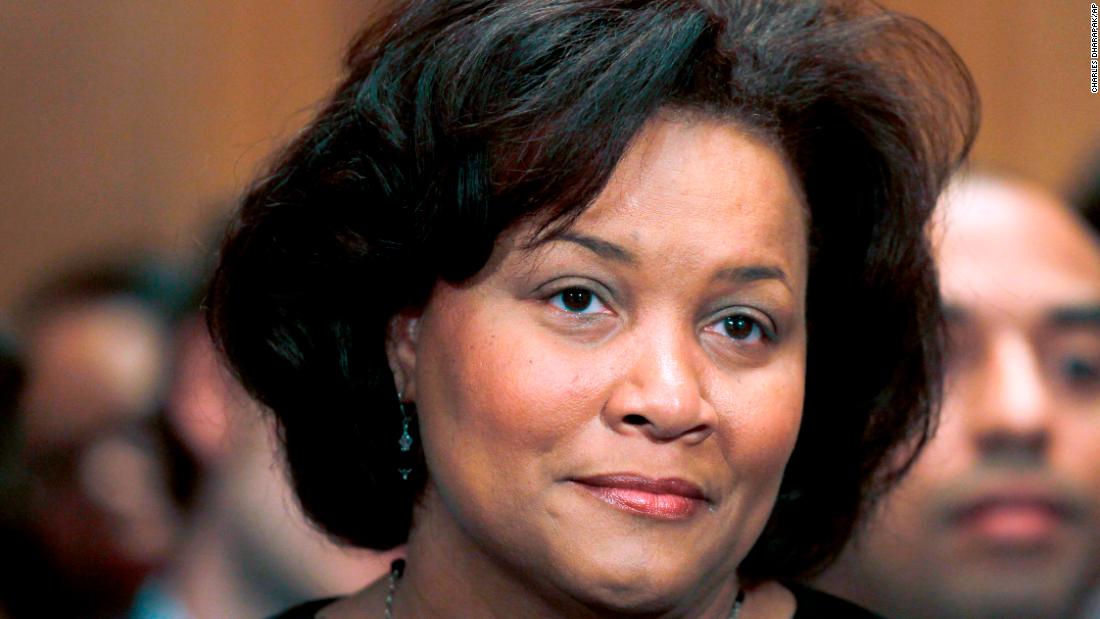
(CNN)Politics is never far removed from the selection of any Supreme Court justice, but the political winds are blowing with unusual ferocity around J. Michelle Childs, a federal judge from South Carolina who is among those on a short list to fill President Joe Biden's first court vacancy.

As the White House accelerates its extensive vetting of about a dozen potential nominees, lawmakers and outside groups have spent considerable time focusing on Childs after she emerged as the preferred choice of Democratic Rep. James Clyburn of South Carolina, one of the President's top allies. That endorsement, which Clyburn has loudly been making for more than a year as he has touted Childs as a rising South Carolina star, has thrust the judge to the middle of a high-profile political vortex, even as other contenders for the vacancy are receiving far less public attention.
Since her name came up as being on Biden's short list, Republican Sen. Lindsey Graham hailed Childs as a brilliant choice, saying, "It's fair to say I think Michelle Childs has a really good chance of getting Republican votes." Another Republican from South Carolina, Sen. Tim Scott, repeated that sentiment: "I think she has a strong record and would be a strong candidate." And Democratic Sen. Joe Manchin of West Virginia echoed the praise, calling Childs "a tremendous, tremendous candidate."
Those accolades have been, at the same time, accompanied by criticism from progressive activists and union leaders who suggest Childs' legal record is not sufficiently supportive of worker rights.
The attention on Childs comes in the critical opening stages of a process structured by Biden's top advisers to be equal parts methodical and rigorous, building to the selection of the first Black woman for the nation's highest court.
But with the exact dynamics of the process closely held by the President's most senior aides, it remains an open question whether the compliments -- or the condemnations -- play any role in influencing Biden on his choice to replace Justice Stephen Breyer, who is stepping down. Biden has been poring over biographies provided to him by the White House counsel's office and isn't expected to make a final decision until the end of the month.
Clyburn began raising Childs as a potential nominee with administration officials as far back as a year ago, and suggested Biden nominate her to the US Court of Appeals for the District of Columbia Circuit. That court, at which her nomination is pending, is viewed as a training ground for the Supreme Court.
"We've talked about this for about two years now, and the President knows very well what I feel about Michelle. They are considering her along with at least six other African American women, all of whom are highly qualified," Clyburn said on CNN, one of several television appearances he's made to draw attention to her candidacy. "I just know Michelle. And she has the kind of background that would offer some diversity to this court."
Childs is the only potential candidate the White House has formally confirmed by name as being under consideration, despite acknowledging the names of a dozen other contenders. That confirmation came as Childs' Senate hearing to be elevated to the circuit court position was postponed in light of her status as a candidate for the Supreme Court vacancy.
"President Biden will choose a nominee whose qualifications, record and character make them deserving of support on both sides of the aisle -- and there are many candidates at the top of their field who fit that profile," White House spokesman Andrew Bates told CNN, adding: "He is actively seeking the advice and recommendations of Republican and Democratic lawmakers, as well as legal experts, and appreciates the input he is being given both privately and publicly."

South Carolina plays a key role

White House officials say the selection process for a lifetime Supreme Court appointment rises far above politics, yet the discussion about Childs also shines a light on the fact that the process actually began with a blunt political move from Biden two years ago this month.
It was just days before the South Carolina primary in February 2020 and Biden was desperate to revive his floundering presidential campaign. On a debate stage in Charleston, he vowed to nominate the first Black woman to the court. Then, he won Clyburn's endorsement.
Two years later, Childs is among those potential nominees at the center of his promise.
Childs, who was nominated to the federal bench in 2010 by President Barack Obama, earned degrees from the University of South Florida and the University of South Carolina. Her champions say her state school experience would be a welcome change on the Supreme Court.
It puts her in contrast with other top contenders, including Leondra Kruger, who attended Harvard and Yale, and Ketanji Brown Jackson, who attended Harvard.
"The Harvard, Yale train needs to change," Graham told CNN. "I don't think we have had a publicly educated Supreme Court justice in 50 years, so that matters to me too."
Asked whether he could support another nominee, Graham said: "It would be much more problematic," even though he was one of three Republicans to vote to confirm Jackson to the US Appeals Court. He also voted to confirm Tiffany P. Cunningham as a federal circuit judge and Candace Jackson-Akiwumi to the 7th Circuit, both of whom are under consideration for the Breyer vacancy.
This week, Graham met with fellow South Carolinians Clyburn and Scott to discuss Childs and posted a photograph afterward. He also spoke to Manchin, viewed as a critical vote on any administration priority, about the judge.
"I understand the judge from South Carolina is a tremendous, tremendous candidate," Manchin said. "She's a tremendous candidate."

Thin margins in the Senate

It's a response that appeared to provide a window into a clear shift that has occurred over more than a decade. Gone are the days of 90-plus votes in favor of a nominee, replaced by partisan votes and clear political litmus tests.
"When a president campaigns on picking Supreme Court nominees of a certain mold and wins the election, we should give deference to them," Graham said in 2005, when President George W. Bush -- a Republican -- was in the Oval Office. "If the nominee is well-qualified and of good character and integrity, they should be confirmed in an overwhelming fashion."
Given those dynamics, White House officials are also keenly aware of the reality Graham pointed out when Breyer announced his upcoming retirement last month.
"If all Democrats hang together -- which I expect they will -- they have the power to replace Justice Breyer in 2022 without one Republican vote in support," Graham said in a statement.
In a West Wing with decades of experience in Supreme Court battles in Biden, as a longtime chairman of the Senate Judiciary Committee, and Ron Klain, the chief of staff, who has played inside or outside roles in no fewer than nine previous nominations, the realities of today's political environment are understood. Still, bipartisan support is welcome, and Biden has made clear that he wants advice -- and names of potential candidates -- from senators.
"I'm serious when I say it: that I want the advice of the Senate as well as the consent," Biden said as he sat in the Oval Office with the top Democrat and Republican on the Senate Judiciary Committee, Dick Durbin of Illinois and Chuck Grassley of Iowa, respectively.
While the White House is carefully monitoring the praise from Graham, Manchin and other senators, officials say the kind words and the pledges to support her confirmation will not be a deciding factor. And one official suggested Biden would be wary of appearing overly swayed by outside voices, wanted instead to be viewed as making the decision on his own.
More than one White House official noted that Graham wasn't exactly the Republican senator whose voice would carry overwhelming weight inside the West Wing.
Graham's close Senate relationship with Biden imploded during the 2020 presidential campaign when the senator joined then-President Donald Trump's attacks on Biden's son, Hunter. That personal break has not been reconciled, even if White House officials would welcome Graham's support for the nominee.
The praise has also drawn the ire of progressive groups that are raising concerns about her candidacy.
"Senator Graham is not, you know, somebody whose opinion we particularly follow or care about too much. Right?" said Paco Fabian, the campaigns and communications director for the liberal group Our Revolution. "If she's getting praise from somebody like Senator Graham -- somebody that, you know, was a big supporter of President Trump, for example -- then you know, that's not great, in our view. But really it's about her record."
White House officials say the decision will not be driven by political promises or considerations -- beyond the commitment to nominate a qualified Black woman.
"We've been clear that the President is considering Judge Childs for the Supreme Court, in addition to a range of other deeply qualified candidates," Bates said. "The President looks forward to evaluating her for this vacancy, and, if he selects another candidate, to her confirmation to the DC Circuit Court because of her extraordinary credentials and what she stands for."

Adblock test (Why?)


"politic" - Google News
February 04, 2022 at 05:00PM
https://ift.tt/Ug03Ywa

South Carolina judge is at the center of a political whirlwind around Biden's Supreme Court decision - CNN
"politic" - Google News
https://ift.tt/Df5gL92
https://ift.tt/PsoVLY5

Thursday, February 3, 2022

Politics - The Economist

unitedstatepolitics.blogspot.com
Listen to this story

Joe Biden dispatched thousands more American troops to eastern European countries that neighbour Ukraine. A Pentagon spokesman said the troops were not intended for combat but “to ensure the robust defence of our NATO allies”. Boris Johnson visited Ukraine to express his support. Vladimir Putin accused the West of trying to provoke war, and insisted his intentions were peaceful. NATO said Russia’s troop build-up near Ukraine was continuing. Some analysts believe conflict is unlikely during the Winter Olympics in Beijing, which will last until February 20th.

An electoral college of 1,009 politicians reappointed Sergio Mattarella as Italy’s president for a second seven-year term. The prime minister, Mario Draghi, had wanted the job, but his political allies balked, as they could not agree on a replacement to lead the government. An election is still required by the middle of next year. There is speculation that Mr Mattarella, who is 80, may not serve the full term. Mr Draghi might well then take his place.

Portugal’s prime minister, António Costa, won a surprise outright victory at a general election. His Social Democrats will no longer have to govern in coalition with the leftist parties that brought down his previous government.

Britain’s Conservative government published detailed plans for “levelling up”, its signature policy for tackling regional inequalities. But its ideas to redress structural differences in life expectancy, pay, unemployment and so on focused on infrastructure projects still overseen by Westminster, rather than devolving any real power to cities and regions. And in the short-term a huge jump in energy prices and rampant inflation means that many Britons are facing a big rise in the cost of living.

Partygate

Boris Johnson was in more hot water, as the delayed civil-service investigation into “gatherings” in Downing Street during strict covid-19 lockdowns was published. Of the 16 events looked into, 12 are being investigated by police. More Conservative MPs said they had lost confidence in the prime minister, though not yet enough to force a leadership contest.

Erin O’Toole was ousted as the leader of Canada’s Conservative Party and replaced by an interim leader. Mr O’Toole had been criticised within the ranks for being too centrist; his sacking heralds a shift to the right for the biggest opposition party to the ruling Liberals. Populists wanted him to show more support for the tens of thousands of lorry-drivers who descended recently on Ottawa, the capital, to protest against vaccine mandates.

Argentina’s recent provisional agreement with the IMF appeared to be at risk when Máximo Kirchner, the son of Cristina Fernández de Kirchner, the powerful vice-president, resigned as head of the ruling coalition in the lower house of Congress. The IMF deal is less exacting than usual and does not require pension or labour reforms. However the details have yet to be approved by the fund. A final deal would need to be passed by Congress, too.

India’s central bank will launch a digital currency, the finance minister said in her budget speech. She also announced a tax on gains from trading cryptocurrency and other crypto assets such as non-fungible tokens. The announcements are seen as the legalisation, in effect, of crypto assets in a country that had toyed with banning them.

New Zealand’s stringent pandemic border restrictions are to be eased gradually over the year. Even citizens have found it difficult to gain entry; many have been stranded abroad. Jacinda Ardern, the prime minister, has seen her popularity slump. Later this month vaccinated New Zealanders in Australia will be allowed to return. The opening will later be expanded to other countries.

Tonga, a Pacific island nation that had avoided an outbreak of covid-19 over the past two years, entered lockdown after the discovery of community transmission. An earthquake in the Tongan archipelago in January triggered a tsunami and widespread damage to inhabited areas. The virus is thought to have arrived with aid workers.

America’s gross national debt reached $30trn. That is years ahead of previous forecasts, but inevitable given the $5trn in federal spending programmes that cushioned the economy during covid.

Building his war chest

Donald Trump’s political committee has accumulated $122m, an extraordinary sum that he can dole out to candidates he favours in the mid-term elections and to campaign ahead of a possible decision on whether to run for president again in 2024. Mr Trump’s committee and related groups raised $1.1bn in the election of 2020.

Mali expelled the French ambassador after Jean-Yves Le Drian, the French foreign minister, called the junta that has seized power in a coup “illegitimate”. Mali also ordered Denmark to withdraw 105 commandos who had been sent to help it fight jihadists. The row has prompted France and the EU to reconsider their military presence in Mali.

Leaders of ECOWAS, the west African regional bloc, are considering imposing sanctions on Burkina Faso after its government was overthrown in a military coup. ECOWAS, which has already suspended Burkina Faso as a member, is demanding a return to civilian rule.

A militia group attacked a camp for people displaced by conflict in the east of the Democratic Republic of Congo, reportedly using machetes to hack at least 60 of its inhabitants to death. Long-simmering feuds between different ethnic groups in the Djugu area, where the camp is located, have claimed tens of thousands of lives in the past.

Galloping annual inflation of 61% is once again eroding confidence in Zimbabwe’s local currency just a few years after it was reintroduced in 2019. Many in the country fear a return of the hyperinflation that forced Zimbabwe to dump its currency and adopt the American dollar in 2009.

This article appeared in the The world this week section of the print edition under the headline "Politics"

Adblock test (Why?)


"politic" - Google News
February 03, 2022 at 10:54PM
https://ift.tt/4dNzsPLOT

Politics - The Economist
"politic" - Google News
https://ift.tt/cOA5bgPSi
https://ift.tt/wi058f9SX

Wednesday, February 2, 2022

Analysis: In Texas, cold weather brings a political chill - The Texas Tribune

unitedstatepolitics.blogspot.com

Adblock test (Why?)


"politic" - Google News
February 02, 2022 at 06:00PM
https://ift.tt/v2RPke0oX

Analysis: In Texas, cold weather brings a political chill - The Texas Tribune
"politic" - Google News
https://ift.tt/zOnSXkYiZ
https://ift.tt/rDhm1cFKn

Search

Featured Post

Politics - The Boston Globe

unitedstatepolitics.blogspot.com Adblock test (Why?) "politic" - Google News February 01, 2024 at 03:47AM https://ift.tt...

Postingan Populer