Rechercher dans ce blog

Tuesday, December 5, 2023

How Hispanic voters’ growing political power in Nevada could offer hope to the GOP - CNN

unitedstatepolitics.blogspot.com
Las Vegas CNN  — 

Antonio Munoz remembers admiring Ronald Reagan as a child, in a Las Vegas very different than it is today.

“When I was born here it was very small,” Munoz said. “The communities were kind of segregated. You had your Hispanics on one side of town, your African Americans another side of town. Then you had the strip and downtown, which was very small resorts, small hotels. But now we have mega resorts.”

Something else has changed. Hispanics were just 7% of Nevada’s population when Reagan was elected but are 30% now.

“It’s amazing the political power that Hispanics are creating here in the state of Nevada,” Munoz said during a break at his Vegas restaurant, 911 Taco Bar.

It is a political power with the potential to remake the 2024 electoral map. Nevada has backed the Democrat for president in four consecutive elections – but only by 2 points in 2020. There is evidence of modest GOP inroads with Hispanic voters in both 2020 and 2022 election data, and it is not hard to find signs of an opening for further Republican gains in 2024.

CNN traveled to Nevada – a key battleground next year – as part of our project tracking the 2024 campaign through the eyes and experiences of voters.

Munoz is an independent who says his presidential voting record is about evenly split between Democrats and Republicans, with a third-party vote in 2016. He declined to answer when asked about his 2020 vote.

“Why? Because the nature, the nature of society right now,” he said. “We’re a small business and they will attack you. They will attack you just because you support a certain candidate and it’s sad.”

His two adult sons are split, one for President Joe Biden and one for former President Donald Trump, who’s the front-runner for the GOP nomination in 2024. Munoz says he is truly undecided, though he takes sharp issue with Trump’s tone about Mexicans and immigrants.

“It hurts, it hurts,” Munoz said. “You know, sometimes we speak out of turn, maybe he does it more than others.”

Still, Munoz said, “Trump did some good stuff for businesses that actually helped us out as a small business. And I think Biden’s done the same thing for us.”

Antonio Munoz speaks to CNN's John King at his restaurant 911 Taco Bar in Las Vegas, Nevada.

The 911 Taco Bar is in a marketplace called the Mercado – a mix of vendors in a space once occupied by JCPenney in a Vegas shopping mall. The restaurant was “a dream,” Munoz said, while serving a decade in the Air Force and then 16 years as a Las Vegas police officer. Munoz also has 15 taco trucks for a catering service. He said his anecdotal evidence from listening in the community backs up polling that suggests Latino voters are more open to supporting Republicans than they were in the past.

“I think it is going to be a very interesting year,” Munoz said. “People are confused and, you know, if somebody comes out with that solid message, that would be great. Right now, I just don’t see it.”

A Democrat-turned-Republican looking for an alternative to Trump

Valeria Gurr is the face of the new competition here.

She was a Democrat who worked for the teachers’ union. Now, Gurr is a registered Republican who turns questions about immigration or the economy back to the issue she says will decide her vote for just about any office.

“I will vote for the candidate that supports my views on school choice,” Gurr said in an interview at her home in Henderson, a Vegas suburb.

It is a view shaped by her immigrant experience.

“I had only $600 and hope,” Gurr said of when she arrived from Chile in 2007.  “Without education, my career was going to be working in a labor job.”

Valeria Gurr speaks to CNN's John King in Nevada.

Now, she is working on a doctorate degree in public policy and is an activist for school choice. She drives her 6-year-old son across town to a private school because she sees the local public schools as a dead end.

“It breaks me every time I see kids and moms that just want to provide for their kids and their only way out of poverty is with quality education,” Gurr said. “If you live in a low-income area, you have to send your kids to failing public schools.”

In 2020, her single-issue test led her to vote for Trump, with reservations.

“I did not vote for him because he was the perfect candidate,” Gurr said. “I voted for him because he supported educational choice.”

She said Trump’s record as president on the issue was disappointing. She also said she would welcome a change of heart from the Biden administration – which has prioritized investment in public schools – but believes most Democrats are afraid to anger teachers’ unions.

So she is hoping Republicans make a new choice.

“I like Ron DeSantis simply because of what he has done in Florida,” Gurr said of the Sunshine State governor. “I personally would love to see (former South Carolina Gov.) Nikki Haley – to have another mom in the White House who supports school choice.”

A yearning for a GOP that no longer exists

Interest rates and inflation are the pressing issues for Zoila Sanchez, a real estate agent in the Las Vegas area for 26 years.

“The economy is really bad,” Sanchez said. She did acknowledge prices are a little better lately, but said interest rates need to come down significantly before working families can afford a new or bigger home.

She did not blame Biden, though, citing economic cycles she called largely beyond the control of any president.

Sanchez, like Gurr, is a first-generation immigrant. She was undocumented when she entered the United States from Mexico, but was granted amnesty as part of legislation signed by Reagan in 1986.

Sanchez is conservative, religious and a registered Republican. But she has voted for Democrats in the last four presidential elections. Barack Obama inspired her, Sanchez said, and Trump repulsed her.

“He’s not a Republican,” she said. “I don’t know what he is. And then of course he offended me by saying all the things he said about Mexicans.”

Zoila Sanchez speaks to CNN's John King in Nevada.

Sanchez twice voted for George W. Bush because he mixed calls for lower taxes and conservative views on many social issues with what she found to be compassionate talk about immigrants.

“It does not exist anymore,” Sanchez said of that Republican Party. “I would love it to come back. Yeah, that’s me.”

Like Gurr, Sanchez is a Haley fan.

“Because I think she could bring back that real Republican feeling, conservative – everything that it used to be.”

In a Biden-Trump rematch, Sanchez said she would vote for Biden.

But in a Biden-Haley matchup, “I would vote for Haley.”

Nevada, of course, also has a role in the nominating process. But Haley’s only chance there is for momentum, not delegates.

The party is holding both a caucus and a traditional primary, two days apart in early February.

Haley is not registered for the caucus, which is run by a state party organization full of Trump loyalists. Delegates to the national GOP convention will be allocated based on the caucus results. Haley will be on the primary ballot, where a strong showing might generate media attention and momentum heading into later nominating contests but will not offer any convention delegates.

A Culinary Union foot soldier tries to hold the line for Democrats

The early GOP maneuvering is all a side show for Carlos Padilla, a pastry baker at the Treasure Island casino for the past 30 years.

“To be in a job that long and actually still love it, it’s awesome,” Padilla said in an interview at his townhouse apartment.

Rising rents are Padilla’s biggest complaint at the moment, and he said a good number of his co-workers are still not back at work, or back only part time, despite a giant comeback for the travel and hospitality business from the Covid-19 pandemic shock that sent Nevada unemployment as high as 30.1% in April 2020.

“Businesses are making record profits right now,” Padilla said. “They should do something for those who aren’t working right now.”

Carlos Padilla speaks to CNN's John King during an interview in Nevada.

Padilla is a loyal Democrat and a volunteer foot solider for the politically powerful Culinary Union.

He has heard it all knocking doors, including disparaging remarks about Biden: “He’s too old. He’s going to be senile and not be able to do his job. That’s what I heard most.”

Padilla is ready to respond.

“He is the most pro-union president we’ve ever had,” he said. “And he’s really helped the middle class, the working class.”

The 2022 midterms were a mixed result for the union and its allies; Republican Joe Lombardo won the governor’s race, but Democratic Sen. Catherine Cortez Masto won reelection in a race that was a top GOP target. Lombardo made inroads with Latino voters, and Padilla expects a hard fight to keep Nevada blue in 2024.

If Trump is the GOP nominee, Padilla predicts health care will be a big issue. Trump recently vowed to try, again, to repeal Obamacare. Padilla gets his health insurance through work – and his union contract – but said past campaigns haven proven the issue holds sway with “working class people and they can’t afford insurance.”

Still, he sees at least a modest trickle of Latino support toward Republicans.

“I’ve seen it. But I’ve also, when I’ve knocked on doors and talk to the Latino voters, they’ve actually flipped, turned the other way,” Padilla said. “We’re the biggest organization that goes and knocks on doors. … So I think we have a big influence on trying to prevent them from flipping that seat.”

There is no question Nevada will be among the six to eight battleground states next year.

Biden just barely won Nevada in 2020, 50% to 48%, and Trump improved his standing a bit from 2016, in part by running a little better among Latinos.

Munoz, the 911 Taco Bar owner, said he is betting against the early odds that suggest a rematch.

“I think we are going to surprised,” he said with a smile and a nod. “I think we’ll be surprised.”

Adblock test (Why?)


"politic" - Google News
December 06, 2023 at 12:06AM
https://ift.tt/oFpxBdZ

How Hispanic voters’ growing political power in Nevada could offer hope to the GOP - CNN
"politic" - Google News
https://ift.tt/iGab6fQ
https://ift.tt/81UDN45

Kyiv's political feuds cause cracks in Ukrainian unity - Financial Times

unitedstatepolitics.blogspot.com

Adblock test (Why?)


"politic" - Google News
December 05, 2023 at 09:13PM
https://ift.tt/HfBpCLF

Kyiv's political feuds cause cracks in Ukrainian unity - Financial Times
"politic" - Google News
https://ift.tt/iGab6fQ
https://ift.tt/81UDN45

Monday, December 4, 2023

Weekly Political Compass 12.4.23 - Teneo

unitedstatepolitics.blogspot.com

Welcome to this edition of the Weekly Political Compass from Teneo’s political risk advisory team.

This week, we are taking a closer look at an evolving political funding scandal in Japan. Meanwhile, Chinese health officials have commented on a surge in respiratory illness, the budget crisis continues in Germany, Argentina’s self-described anarcho-capitalist president will be inaugurated, and presidential elections will be held in Egypt. Our graph of the week zooms in on elections around the globe in 2024.

Global Snapshot

An unfolding political funding scandal could engulf leading politicians in Japan’s ruling party LDP in the coming weeks, with the potential for wider political impacts. Our Japan expert James Brady analyzes the situation.

What is the evolving scandal about?

Tokyo police are investigating allegations that certain factions in the party gave kickbacks to their Diet members from the proceeds of tickets those members sold for annual fundraising events, in contravention of the Political Funding Control Law. The Abe and Nikai factions are reportedly under greatest suspicion.

What are the potential implications?

Depending on how the investigation unfolds, the scandal could weaken some of Prime Minister Fumio Kishida’s rivals within the party but further sap public support for the LDP as a whole and reduce the likelihood of a snap general election in H1/2024.

What to Watch

ASIA PACIFIC

China

A top Chinese health official said on Saturday that a surge in respiratory illness is caused by known pathogens and not a new infectious disease, after the World Health Organization asked Beijing for more information on clusters of pneumonia among children. Chinese and foreign experts say the surge in China matches similar increases in respiratory illness in other countries after pandemic measures eased, but five Republican US senators asked U.S. President Joe Biden to impose a ban on travellers from China.

EUROPE

CEE/EU/Ukraine

EU transport ministers are meeting in Brussels on 4 December to discuss ways to end – or at least ease – the blockade of border crossings between Ukraine and Poland and Slovakia since 6 November. Road freight operators in eastern EU member states including the Czech Republic and Lithuania, are demanding an end to the concessionary road transport agreement with Ukraine, valid until June 2024. They claim that Ukrainian haulers are undercutting their businesses. Poland is the largest road freight provider in the EU, with the transport and logistics industry accounting for 7% of the country’s GDP. The road blockages are significantly disrupting trade between Ukraine and the EU and have also already resulted in at least two casualties of truck drivers stuck in queues.

Germany

The fiscal crisis continues, as the coalition partners remain at odds over how to cut some EUR 17bn from next year’s budget. Vice Chancellor Robert Habeck has delayed his trip to COP28, as coalition talks continue in Berlin – to be interrupted only briefly for joint consultations with the Brazilian government, amid declining hopes for an EU-Mercosur trade deal. The fiscal timeline remains uncertain. The Bundestag will rise for the Christmas recess on 15 December, but even a one-week extension might run into constitutional problems. Legal issues could arise from the time pressure under which the accounts might have to be debated, depending on when the coalition can agree on a budget to table to MPs.

LATIN AMERICA

Argentina

Self-described anarcho-capitalist Javier Milei will be inaugurated as president on 10 December. Milei has already said that he intends to lay out in stark terms the full extent of Argentina’s economic crisis in his acceptance speech. A blunt exposition will be designed to help build support for economic adjustments that could be presented to Congress in a “mega-bill” encompassing deep spending cuts, a broad deregulation agenda, privatization plans and labor reforms. A “mega-bill” would represent the first test of Milei’s ability to construct viable legislative majorities. Milei has already been managing expectations and preparing the ground for adjustments and an expected currency devaluation by warning that Argentina is at risk of hyperinflation, and that inflation could take up to two years to bring down to more normal levels. In the run-up to the inauguration, final appointments – including who will head the Central Bank (BCRA) – should be confirmed.

MIDDLE EAST AND AFRICA

Egypt

President Abdel Fattah el-Sisi is set to win a third term in the 10-12 December presidential elections, which have been engineered to ensure no genuine competition. With high inflation, rising debt repayments, and a shortage of foreign exchange, the government is focused on post-election economic reforms that will hurt many Egyptians in the near term and potentially provoke political unrest. Given Egypt's crucial role as a gateway for aid into Gaza since the Israel-Hamas war started, the international community is likely to provide the necessary financial help to avoid a default in 2024.

West Africa

Coup risks are even more elevated in West Africa. This comes after governments in Sierra Leone and Guinea-Bissau confirmed failed attempts by rogue military elements to take over power in those countries in the past two weeks, respectively. With the Economic Community of West Africa States (ECOWAS) unable to reverse any of the recent coup d’etats in the region through diplomatic measures, the risk that similar events could occur in the coming months remains high.

Graph of the Week

Voters across major countries are going to the polls in 2024, including the U.S., the EU, Mexico, South Africa, India and (most likely) the UK. Elections are taking place against the backdrop of geopolitical and economic instability. In multiple regions, conflicts have deteriorated over the past years, from West Africa through Ukraine to the Middle East. Anti-establishment politics also remain strong, as observed recently in the Netherlands and Argentina. Against this background, climate concerns and the speed of the energy transition represent a not-so-new dividing line in many countries, with radical right and green left parties mobilizing voters along these issues.

The views and opinions in these articles are solely of the authors and do not necessarily reflect those of Teneo. They are offered to stimulate thought and discussion and not as legal, financial, accounting, tax or other professional advice or counsel.

Adblock test (Why?)


"politic" - Google News
December 05, 2023 at 02:59AM
https://ift.tt/98ltzVT

Weekly Political Compass 12.4.23 - Teneo
"politic" - Google News
https://ift.tt/iGab6fQ
https://ift.tt/81UDN45

Sunday, December 3, 2023

Eric Adams's Budget Cuts Risk Political Catastrophe - New York Magazine

unitedstatepolitics.blogspot.com

Photo: Spencer Platt/Getty Images

Discussions about challenging Eric Adams for reelection were already intensifying before what was a particularly rough month for the mayor. In early November, news broke of a federal corruption investigation into his campaign and administration in which his chief fundraiser’s home was raided and the mayor’s phones were seized. As Thanksgiving approached, he was accused of a 1993 sexual assault under the look-back window of the state’s Adult Survivors Act. But no one knows where the federal investigation is going and the assault claim, which Adams denies, has not been outlined in detail and will likely take many months to unfold.

Potentially worse for the mayor in the near term is his decision to slash the city’s budget. Though he’s been dealt a challenging fiscal hand by his predecessor and the City Council, as well as by the immense cost of the migrant crisis, Adams is developing a reputation for cutting core city services — this is the second time, for instance, that his face has been splashed across front pages with headlines about slashed library funding.

“The budget cuts can be more troubling for the mayor than the investigations swirling around him,” said Basil Smikle Jr., a Democratic strategist and director of the public-policy program at Hunter College. The investigations require voters to process a complicated web of issues, players, and allegations, and there is no direct charge of wrongdoing by the mayor, he added. “But voters may feel the effects of shorter library hours, sanitation, education and 3K cuts — all bricks-and-mortar politics. What voters see, touch, and access matters heavily in evaluations of government efficacy and efficiency.”

The cuts have united the ideological spectrum against Adams, from his left (which says there’s enough money to avoid most cuts) to his right (which says his underbudgeting of the cost of migrant care led to unnecessary “emergency” mid-year cuts). Adams, meanwhile, has mostly allowed critics to define the narrative instead of more clearly explaining his choices and how he will minimize the harm to New Yorkers.

“Every time the city has faced a challenge in the last two years, the answer from the administration has been to cut,” said Public Advocate Jumaane Williams, a Democrat whom some progressives would love to see challenge Adams in 2025 but who has said he’s not going to run. “These cuts aren’t abstract and do real harm to our systems of government and New Yorkers relying on those services.”

Critics mostly agree that the administration has spent far too much on emergency contracts with private companies, mostly to provide shelter, and not done enough to rein in overall migrant-related costs with alternate ideas ranging from spending more on legal services so migrants can access work permits to greater use of congregate sites over hotel rooms. They also see Adams’s choices, especially a planned reduction in the city’s police force by thousands of officers, as a transparent move to stir outcry over the cuts — which Adams says he’s forced to make because of the cost of the migrant crisis — to win more federal and state help. The mayor has denied using budget shocks for leverage, though he did quickly get Governor Kathy Hochul to say more aid is on the way.

“I know what I’m doing,” Adams said recently when questioned about his budgeting, “and I need New Yorkers right now to trust me.”

Adams has already promised more drastic cuts in his January budget plan for next fiscal year, warning that even more will be sliced without additional state and federal help. He’s also instructed his administration to start significantly scaling back spending on migrant services.

Justin Brannan, chair of the City Council’s finance committee, has said repeatedly in recent weeks that the “draconian cuts” are not necessary and predicted that many, particularly the police-force reduction, will be reversed once the administration recognizes larger-than-expected tax revenue that continues to arrive in city coffers. (The library cuts, for instance, save just $36 million while shuttering most Sunday service.) Brannan, a Democrat, has also said that the city should tap into its billions in reserves and pledged a plan from the Council to “bridge these gaps without making these wholesale cuts” that will include asking state lawmakers to approve revenue-raisers that are out of the city’s control.

Adams is clearly banking on more outrage being directed at the migrants and the lack of federal help to deal with the crisis than on his decision-making, but it’s risky brinkmanship, especially since he’s dealing with public anger over expansive quality-of-life concerns and the criminal investigation into his campaign and administration.

Both controversies have only further motivated those interested in unseating Adams in 2025 and given more reason for those considering a run against him to take a closer look.

“We are in a moment where all the conversations that were happening before are accelerating and rightly so,” Ana Maria Archila, co-executive director of the progressive New York Working Families Party, told me. “The investigation changes the dynamic a little bit, because it’s one thing to think about running against a mayor who is irresponsible and strong, and another thing to think about running against a mayor who is irresponsible and weak and unpopular, and another thing to think about a special election.”

Calling the centrist Adams “a chaos agent for our city,” Archila said there’s a “big bench” of “excellent potential leaders of the city,” who would actually address the affordability crisis while leading with empathy and unity.

Zellnor Myrie, a Brooklyn state senator, said recently he continues to be approached regularly about running for mayor, and one political strategist said that Myrie’s moves indicate he’s taking more of a “when not if” approach to preparing for a potential run.

Queens state senator Jessica Ramos told me last week that her thinking about her own possible run for mayor has not changed based on recent developments but said the city is ailing with Adams at the helm and there’s widespread concern, including among some labor leaders. “He doesn’t have his priorities straight,” she said, noting that he skipped meetings in Washington, D.C., to return to the city when his fundraiser’s home was raided, “so the priority of New Yorkers should be electing a new mayor.”

Comptroller Brad Lander would be particularly well suited for a special election given his citywide perch and millions of dollars in his campaign war chest. “Since this story broke,” someone close to Lander told me, referring to the federal investigation around Adams, “Brad’s been approached every day by voters on the street and civic leaders asking him to run for mayor.”

Antonio Reynoso, the Brooklyn borough president, has said he’s not running against Adams in 2025, but he remains a target for progressive recruitment and is a vocal critic of the mayor. Speaking at a recent housing event in front of hundreds of attendees, Reynoso sounded like a future mayoral candidate, whether in 2025 or 2029. “We’re just not bold enough,” he said, arguing the city must go much further than what Adams is pursuing on the housing front.

More moderate candidates, from 2021 Democratic-primary runner-up Kathryn Garcia to former governor Andrew Cuomo, who has been polling potential runs for several offices, and others may be readying in case Adams is not a candidate in the next mayoral election. Former comptroller Scott Stringer, who finished fifth in the 2021 Democratic primary, is considering a 2025 bid.

Polling by Marist done just before the budget cuts were announced showed Adams was already suffering with just 37 percent of New Yorkers approving of his job performance as mayor and 54 percent disapproving. As of now, even potential challengers see him as weakened but still formidable for reelection in 2025. “Based on the poll, voters are concerned about the mayor’s legal troubles, but time is on his side,” Smikle said, noting that Adams is still strong with his base of Black and Latino voters. “But the concerns about quality of life are ever present and can raise bigger concerns.”

Adblock test (Why?)


"politic" - Google News
December 03, 2023 at 05:00PM
https://ift.tt/oIe8T3N

Eric Adams's Budget Cuts Risk Political Catastrophe - New York Magazine
"politic" - Google News
https://ift.tt/vtAg1ki
https://ift.tt/AX7g0Uc

DeSantis’s Education Policies in Florida Drive Out Liberal-Leaning ... - The New York Times

unitedstatepolitics.blogspot.com

Gov. Ron DeSantis had just taken office in 2019 when the University of Florida lured Neil H. Buchanan, a prominent economist and tax law scholar, from George Washington University.

Now, just four years after he started at the university, Dr. Buchanan has given up his tenured job and headed north to teach in Toronto. In a recent column on a legal commentary website, he accused Florida of “open hostility to professors and to higher education more generally.”

He is not the only liberal-leaning professor to leave one of Florida’s highly regarded public universities. Many are giving up coveted tenured positions and blaming their departures on Governor DeSantis and his effort to reshape the higher education system to fit his conservative principles.

The Times interviewed a dozen academics — in fields ranging from law to psychology to agronomy — who have left Florida public universities or given their notice, many headed to blue states. While emphasizing that hundreds of top academics remain in Florida, a state known for its solid and affordable public university system, they raised concerns that the governor’s policies have become increasingly untenable for scholars and students.

The University of Florida said that its turnover rate is not unusual and remains well below the 10.57 percent national average. Hiring, it said, has also outpaced departures. Florida State University and the University of South Florida released similar figures.

Governor DeSantis’s office did not respond to requests for comment. But Sarah D. Lynne, chair-elect of the University of Florida’s faculty senate, said that little has changed except that her campus has become the focus of national politics. Most people who leave, she said, do so for reasons that have nothing to do with politics.

“Florida isn’t really a unique scenario when it comes to the politicization of higher education,” said Dr. Lynne, who teaches in the Department of Family, Youth and Community Sciences. “It’s a beautiful state to live in and we have amazing students, so we’re staying.”

Neil H. Buchanan, dressed in a blue blazer, stands against a brick wall.
Neil H. Buchanan, a prominent economist and tax law scholar, left his tenured job at the University of Florida.Chloe Ellingson for The New York Times

Data from several schools, however, show departure rates have ticked upward. At the University of Florida, overall turnover went from 7 percent in 2021 to 9.3 percent in 2023, according to figures released by the university.

A report by the faculty senate at the University of Florida found some departments hard hit. The school of arts — which includes art, music and dance — “struggles to hire or retain good faculty and graduate students in the current political climate,” said the report, issued in June.

In liberal arts, the report said: “Faculty of color have left.”

Danaya C. Wright, a law professor who currently chairs the faculty senate, said she sees job candidates avoiding the state. “We have seen more people pull their applications, or just say, ‘no, I’m not interested — it’s Florida,’” she said.

At Florida State University, the vice president for faculty development, Janet Kistner, commented during a faculty senate meeting in September that the “political climate in Florida” had contributed to an upswing in faculty turnover, with 37 professors leaving for reasons other than retirement in the past year compared to an average of 23 during the past five years.

Paul Ortiz, a history professor at the University of Florida and a former president of the school’s faculty union, is leaving after more than 15 years to join Cornell next summer.

“If the academic job market was more robust, then a lot more people would be leaving,” Dr. Ortiz said.

Walter R. Boot, a psychology professor, who is leaving Florida State.Erich Martin for The New York Times

Walter Boot, a tenured psychology professor who had secured millions of dollars in grants for Florida State, is headed to Weill Cornell Medicine in New York, where he will continue developing technology for the elderly.

Dr. Boot said he joined Florida State in 2008 and immediately felt at home on the Tallahassee campus: “This was the place I could see myself spending the rest of my career — great department, great university.”

Things began to change, he said, when the DeSantis administration started to push its education policies. Dr. Boot, who is gay, cited a 2022 law that limits what educators can say about gender and sexuality in elementary schools. It was not technically aimed at universities, but it fueled a frightening environment, he said.

“The run-up and aftermath of its passage involved hostile rhetoric painting queer and trans individuals as pedophiles and groomers, rhetoric that came not just from citizens but from state officials,” Dr. Boot recently wrote in the Tallahassee Democrat.

He pointed out that soon after the bill’s passage, a man threatened to kill gay people on Florida State’s campus.

“It’s been very difficult, from a day-to-day perspective, not feeling comfortable or even safe where I live,” Dr. Boot said in an interview.

Other gay professors cited recent state sanctions aimed at transgender employees and students who do not comply with a law, passed in May, restricting access to bathrooms, as well as state restrictions on transgender medical procedures.

Hope Wilson, who was a professor of education at the University of North Florida in Jacksonville, had served as an adviser to the school’s Pride club and worked with the L.G.B.T.Q. center.

Dr. Wilson said that she particularly objected to what she regarded as intrusive requests from the state for information — to which her school responded — on everything from how many students had received transgender care to expenditures for D.E.I. initiatives.

“It just felt very dystopian all the way around,” she said.

Her professional discomfort was matched by personal worries, because her child is transgender.

“Florida isn’t a state where I can raise my family or do my job,” Dr. Wilson said. She landed at the Northern Illinois University.

“Florida isn’t a state where I can raise my family or do my job,” said Hope Wilson, a former professor of education at the University of North Florida in Jacksonville. Jim Vondruska for The New York Times

To Christopher Rufo, a conservative writer and activist whom the governor appointed a trustee of New College of Florida this year as part of a campus shake-up, faculty departures are a plus.

“To me, this is a net gain for Florida,” he wrote in a statement, railing against diversity programs and transgender medical care. “Professors who want to practice D.E.I.-style racial discrimination, facilitate the sexual amputation of minors, and replace scholarship with partisan activism are free to do so elsewhere. Good riddance.”

The University of Florida’s law school has been particularly hard hit this year, with a 30 percent faculty turnover rate.

Some of those professors said political interference contributed to their departures, while other faculty said Florida’s reputation had deterred professors elsewhere from joining.

Maryam Jamshidi said that after a 2021 law permitted students to record professors in the classroom, liberal-leaning professors feared they would see videos of their lectures on Fox News.

“As a Muslim woman who works on issues of racism and American power, I didn’t feel like U.F. was a place I could safely be myself and do my work,” said Ms. Jamshidi, who now teaches at the University of Colorado Boulder.

Questions about gender and race are fundamental to an array of legal arguments, from constitutional law to criminal justice and workplace discrimination.

But in May, Governor DeSantis signed a bill that regulated what can be said in the classrooms and also barred university spending on diversity programs.

By that time, Kenneth B. Nunn had already decided to leave, one of several Black law professors who have recently departed.

In 2021, Mr. Nunn had been barred from signing a brief challenging state restrictions on voting by felons. Mr. Nunn said that signing such briefs is “something that is considered a matter of course for faculty to do anywhere else.”

The school later reversed itself on the question of whether he could sign, but Mr. Nunn took the episode as an indication of the university’s direction. He opted to retire from the law school, and is currently a visiting professor at Howard University.

For Dr. Buchanan, the economist and law professor, a final straw was the institution of a review process for tenured faculty, which he viewed as the end of academic freedom.

“It’s not just that the laws are so vague and obviously designed to chill speech that DeSantis doesn’t like. It’s that they simultaneously took away the benefit of tenured faculty to stand up for what’s right,” he said. “It’s tenure in name only at this point.”

Since Dr. Buchanan writes on tax policy from a progressive perspective, he said that he felt he could become a target any time.

“The Republicans who are running Florida,” he said, “are squandering one of the state’s most important assets by driving out professors who otherwise wouldn’t have wanted to leave.”

Adblock test (Why?)


"politic" - Google News
December 03, 2023 at 08:53PM
https://ift.tt/dgQYyDS

DeSantis’s Education Policies in Florida Drive Out Liberal-Leaning ... - The New York Times
"politic" - Google News
https://ift.tt/vtAg1ki
https://ift.tt/AX7g0Uc

Saturday, December 2, 2023

Analysis | The mega rich are the new political bosses. Is that bad for ... - The Washington Post

unitedstatepolitics.blogspot.com

The demise of political party bosses and the smoke-filled rooms in which they operated was heralded a long time ago as an important step toward handing more power over the selection of presidential nominees to ordinary citizens. Who would have thought then that billionaires would seek to become the new bosses of American politics?

Super-wealthy individuals receive outsize attention in presidential politics. And virtually every prospective candidate wants the support of a well-funded super PAC and the vocal backing of the mega rich. The defection of a disenchanted billionaire is treated as bad news for any candidate. But what difference does all this make?

Just last week, Americans for Prosperity, part of the political network of billionaire industrialist Charles Koch, endorsed Nikki Haley in her bid to become the Republican nominee. The endorsement was heralded as a major coup for the former United Nations ambassador and South Carolina governor, who has been gaining in the polls.

It is also considered news that billionaire Jamie Dimon, the chairman of JPMorgan Chase, spoke with her on the phone, and that Larry Fink, the chairman of BlackRock, attended a small gathering for her. When hedge fund billionaire Ken Griffin said he would back Florida Gov. Ron DeSantis (R), it garnered headlines, and again when he stopped short of doing so and declared himself “still on the sidelines.”

DeSantis has enjoyed the support of a sizable super PAC called Never Back Down. Now he has another newly formed super PAC that was established amid infighting among the leaders of Never Back Down. His campaign so far has failed to meet the expectations of his donors and break away from the pack to become the principal challenger to former president Donald Trump that many at the start of the year thought he would be.

The goal of these rich Republicans is to find a credible candidate and consolidate behind that person to avoid a repeat of the 2016 primaries, when Trump was able to win against a divided field. That may be commendable but so far they have been no more successful in slowing Trump than the Republican establishment was in 2016. Billionaires influence Democratic presidential politics as well. Candidates have courted them assiduously as they competed for their party nominations in recent campaigns. But this dynamic on the left is not as pronounced as it has become in the Republican Party.

What all this says about the nature of politics today is far more concerning. Citizens — voters — do have a larger voice in the selection of presidential nominees than they did many decades ago, but billionaires get special treatment. The richest among us can influence who runs and who does not, who has the money to stay in the race and who does not. No one planned this. The system today is an accident of several seemingly unrelated changes.

The influence of the old bosses, including powerful governors, mayors and other party leaders, began to wane over half a century ago when, after the tumultuous 1968 Chicago convention, the Democratic Party revamped rules to give more power over the selection of national convention delegates, and therefore the eventual nominee, to voters.

Congress, too, had a hand in the changes. After the Watergate scandal, Congress enacted new campaign finance laws designed to limit both individual contributions and overall spending by candidates. A system of federal-matching funds provided candidates with money from a voluntary taxpayer-funded pool to match smaller contributions. It was built on a bargain: In return for getting those federal funds, candidates agreed to abide by spending limits.

That system began to erode about two decades ago as candidates with the capacity to raise money far beyond the spending limits opted out of the system. That allowed them to spend freely in the nomination contest. Over time, the whole system collapsed, putting candidates who could not raise huge amounts of money through individual contributions at a disadvantage.

In 2012, the Supreme Court issued its decision in Citizens United v. Federal Election Commission, which along with related court rulings that followed, once again changed the structure of campaign financing. One result was a new breed of entities called super PACs, typically backed by billionaires and multimillionaires, including “dark money” groups which do not report the names of their contributors. Some of these committees operated independently. Others were designed to supplement the work of national party committees or individual presidential candidates, though coordination was to be limited. Today, the super PACs supporting a candidate coordinate more closely than ever.

Why are super PACs funded by the super-wealthy so attractive to candidates? Federal rules limit contributions from individuals to candidates for federal office, including the presidency, to $3,300 per election. So an individual can give a candidate $3,300 for the primary election and $3,300 for the general election. If candidates seek out people who can give the maximum, that means every $1 million raised requires finding roughly 300 individuals to donate.

Candidates like Barack Obama and Bernie Sanders were able to use the rules to produce a gusher of grass-roots money. They showed that by generating passion and enthusiasm among the masses, the money would follow, $15 or $25 or $50 at a time. Some small donors even reached the maximum legal limit. For most candidates, however, raising individual contributions under the federal rules is laborious and sometimes produces minimal revenue.

The system also leads to distortions. The Republican National Committee has set terms to qualify for the presidential debates this year with a combination of strength in public polls and numbers of individual donors. Those who do not reach the threshold cannot participate in the debates, and the threshold rises with each debate.

This fall, North Dakota Gov. Doug Burgum (R) was struggling to qualify for one of the debates. He has plenty of personal money to fund his campaign. What he lacked was individual donors, so his campaign offered $20 gasoline cards to new donors who gave $1. Burgum made it to the first two debates but failed to make it to the third one last month in Miami.

Few viable candidates run for president without a flush super PAC backing them up, which enhances the power of the mega-rich donors. They are courted by candidates, their family members and their top strategists, and sought out by political reporters as sources of inside information. Their opinions should carry no more weight about the strengths and weaknesses of a candidate than those of voters in Iowa or Michigan or Arizona. But their voices are amplified because they speak with dollar signs.

This fall, Thomas Peterffy was looking to entice Virginia Gov. Glenn Youngkin (R) to make a late entry into the party nomination battle. At the time, he told Robert Costa of CBS News that, if Youngkin were to declare his candidacy, “the money would be there.” He meant that a super PAC would be assembled quickly to provide support.

The story in The Washington Post carried the headline, “Alarmed Republicans are preparing to draft Glenn Youngkin.” But there was no evident groundswell of voters trying to draft the governor and former private equity executive. It was some nervous billionaires conspiring to flex their muscles. And all that talk faded after Republicans suffered setbacks in the Virginia legislative elections last month.

Would those major donors have made a difference had Youngkin decided to run? The evidence is mixed. Jeb Bush, the former Florida governor, learned the limits of this new system when he ran for president in 2016. He had a super PAC funded for the long haul. The voters had other ideas. All that money failed to produce the support of voters, and Bush ended his campaign in defeat after the South Carolina primary.

Candidates still must do the work of campaigning, of knowing why they are running, honing their message and making a persuasive case to voters. Money alone does not do that. Those with the biggest bank accounts had the best seats at the table of democracy in this year. But voters will begin to make their voices heard next month when the primary and caucus season begins.

Adblock test (Why?)


"politic" - Google News
December 03, 2023 at 04:00AM
https://ift.tt/dzHXsp0

Analysis | The mega rich are the new political bosses. Is that bad for ... - The Washington Post
"politic" - Google News
https://ift.tt/gandr3i
https://ift.tt/QntWmIu

The race to replace George Santos will be a sprint - Spectrum News

unitedstatepolitics.blogspot.com

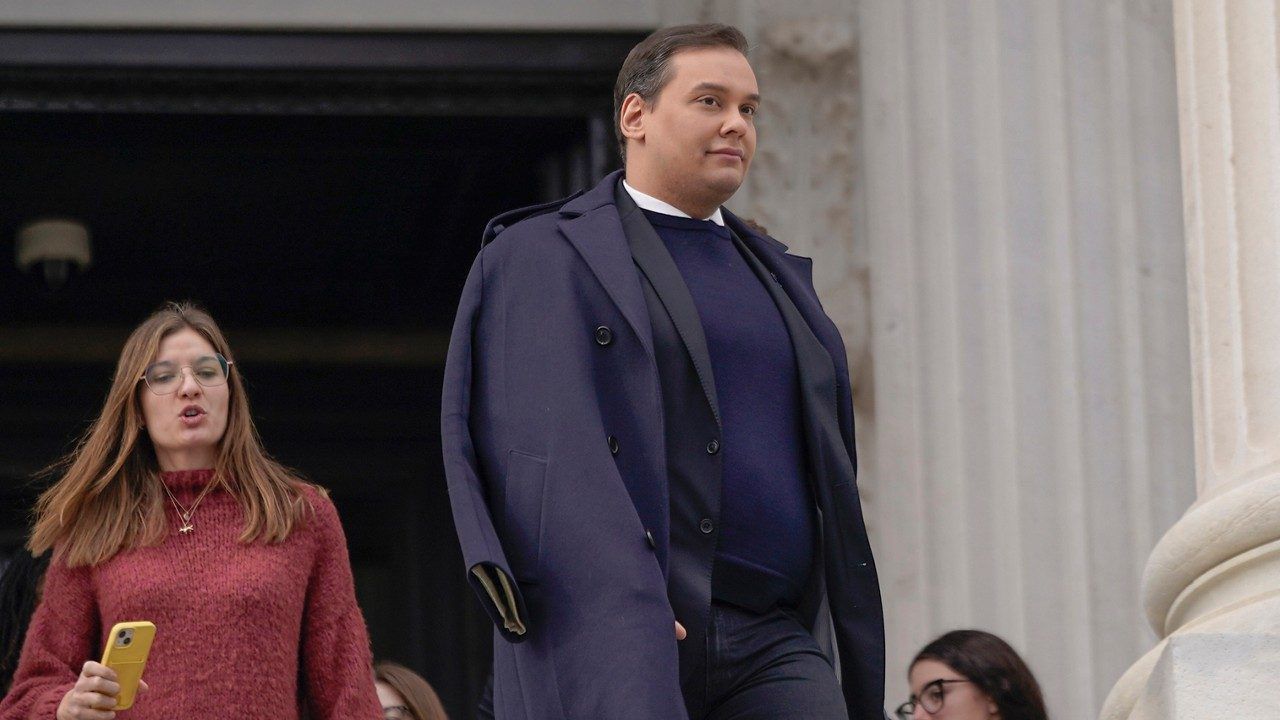
Friday’s expulsion vote in the House of Representatives marked the end of George Santos’ time in Congress — and the start of a sprint to replace him.

“The clock has started ticking,” Gov. Kathy Hochul told NY1 in an interview Friday.


What You Need To Know

  • Gov. Kathy Hochul has 10 days to declare a special election to replace George Santos, which will then take place in mid- to late February

  • The Democratic and Republican nominees will be chosen by local party leaders, with Gov. Hochul also expected to have significant say

  • Nassau County Democratic leader Jay Jacobs said there are three or four “serious candidates,” including former state Senator Anna Kaplan and former Congressman Tom Suozzi
  • Jacobs said a Democratic nominee could be announced by Tuesday, and Republicans leaders said they would announce their candidate in “the very near future”

Hochul now has 10 days to declare a special election, which must then take place 70 to 80 days later — or sometime in mid- to late February. Democrats see it as a critical pickup opportunity as they seek to reclaim control of the House and put one of their own in charge.

“Job number one for us in New York is to make sure that Hakeem Jeffries is the speaker of the House of Representatives next January,” Hochul said. “So I’m focused on that. We have to get a good, quality candidate.”

Hochul will have a major say in choosing the Democratic nominee, and so will the local county leaders: Queens Congressman Gregory Meeks and Nassau County Chairman Jay Jacobs.

“We don’t have a lot of time,” Jacobs said in an interview Friday.

Jacobs said there are three or four “serious candidates.” That includes former state Senator Anna Kaplan and former Congressman Tom Suozzi, who held the seat before Santos, but gave it up to challenge Hochul last year, bucking his own party.

“I don’t think it’s an added bonus for him, I will tell you that,” Jacobs said. “And I was one, as you might remember, that was very vocal in asking him not to run.”

Still, he said, Suozzi brings certain advantages to the table. Candidate screening was already underway Friday, Jacobs said, with a decision coming as soon as Tuesday.

“I think we’ll win it,” Meeks said. “I think it’s not going to be easy.”

Despite the Santos fiasco, Republicans said they like their chances, given recent victories across Long Island.

“Long Island is a bright shade of red,” said Long Island Congressman Anthony D’Esposito, “in places, in cities, in counties, in towns that we haven’t had strongholds in sometimes 25 years.”

Nassau County Republican Chairman Joe Cairo said in a statement that the party is conducting interviews and will announce its candidate “in the very near future.”

“The Nassau County organization is probably one of the strongest, not only in New York, but in the country,” said Republican Congresswoman Nicole Malliotakis, who represents Staten Island and parts of southern Brooklyn.

Both parties agree the race will draw national attention and national funding.

“There will not be a voter in Nassau County, or Queens, for that matter—I can guarantee you—who on election day will turn around and say, ‘oh really, it’s an election?’” Jacobs said. “They would have to be six feet under not to know that there’s an election going on.”

February’s special election will be followed a traditional party primary election in June.

Adblock test (Why?)


"politic" - Google News
December 02, 2023 at 08:30AM
https://ift.tt/1uMabQz

The race to replace George Santos will be a sprint - Spectrum News
"politic" - Google News
https://ift.tt/gandr3i
https://ift.tt/QntWmIu

Search

Featured Post

Politics - The Boston Globe

unitedstatepolitics.blogspot.com Adblock test (Why?) "politic" - Google News February 01, 2024 at 03:47AM https://ift.tt...

Postingan Populer