Rechercher dans ce blog

Wednesday, September 29, 2021

Warby Parker Valued at $6 Billion After Public Market Debut - The New York Times

unitedstatepolitics.blogspot.com

Warby Parker went public on Wednesday in a direct listing that valued the trendy eyewear retailer at more than $6 billion. The company opened trading at $54.05 a share, more than 30 percent above the reference price, and closed at $54.49.

Warby, which was valued at $3 billion in the private market just over a year ago, is one of a number of direct-to-consumer brands, like AllBirds and Fabletics, making market debuts in the span of a few months. The companies aim to take advantage of sky-high valuations for tech companies and strong interest in consumer names. Neil Blumenthal and Dave Gilboa, Warby’s co-founders and chief executives, spoke about how the brand got here and what comes next, the DealBook newsletter reports.

Warby’s sales grew 6 percent in 2020, beating rivals like the parent of Ray-Ban, EssilorLuxottica, whose sales fell by double digits over the same period. Warby’s mix of online and in-store sales “enabled us to take market share, even during the year that we were hobbled,” Mr. Blumenthal said. But that came at a cost: The company’s marketing spend jumped to 19 percent of sales in 2020 from 13 percent the previous year.

Warby was one of the first brands born online that sought to combine the brand awareness that comes from stores with the reach of digital sales. (It was founded in 2010, opened its first dedicated store in 2013 and now has 145 retail outlets, with plans to open more.) Warby generated about two-thirds of its revenue in stores before the pandemic, but the mix of in-person and online sales is now closer to 50-50 because of various restrictions. As for the ideal mix, the company is “channel agnostic,” Mr. Gilboa said.

“Clearly, a lot of companies that have raised money are looking to access a broader investor base,” Mr. Blumenthal said, seeking to distinguish Warby — whose direct listing won’t raise new funds — from others. So far this year, 12 internet retail companies have gone public, compared with nine last year, according to Renaissance Capital. Performance of these and related retail names has been mixed: Shares of Honest Company, Jessica Alba’s wellness brand, are down 53 percent since listing, while Figs, the upmarket scrubs company, is up 29 percent.

Adblock test (Why?)


"Market" - Google News
September 30, 2021 at 03:34AM
https://ift.tt/3F40eyY

Warby Parker Valued at $6 Billion After Public Market Debut - The New York Times
"Market" - Google News
https://ift.tt/2Yge9gs
https://ift.tt/2Wls1p6

Overland Park residents want to see farmers' market grow but differ on how that should happen - Shawnee Mission Post

unitedstatepolitics.blogspot.com

A community discussion on the future Overland Park Farmer’s Market revealed some common themes Tuesday night — flexible design for growth, sustainability features like solar panels, composting and glass recycling, accessibility and off-season use.

There was also some discussion of whether the market should remain an open-air event, as it has been in its temporary spot at the Matt Ross Community Center parking lot over the last year.

About 45 people turned out at Matt Ross on Tuesday to give their input about a reimagining of the market, which is the latest step in a multi-year process.

Overland Park officials had asked for community feedback on the project, which is intended to upgrade the original pavilion site off Marty Street.

The city also will ask developers for proposals that could involve a partnership with the city.

The attendees on Tuesday spent most of the time sticking up suggestion cards reflecting their thoughts on the ideal farmer’s market.

Some ideas

Many attendees’ cards stressed the need to have a plan for future expansion.

The market, which was originally started by downtown businesses in 1982, has grown over the years into a major draw for the city.

Crowding at the pavilion, as well as the limitations of the open-sided structure at 7919 Overland Park Drive and the slope of the lot, has been a big driver for the redesign.

But there were some differences among the participants on what would be the best overall vision for the market.

Some, like Tim Fitzgerald, said they’d like to see a flexible market building, perhaps with a design that allows protection from the weather and other uses on non-market days.

Fitzgerald, who moved to Overland Park a year ago, lives within walking distance near downtown Overland Park and frequents the market with his family nearly every weekend, he said.

Others suggested adding more ethnic markets and perhaps night markets, or culinary classes and events in nearby parks.

One speaker said the market has value for young professionals and people moving to the city.

“I think that the after-hours and events that are happening not just on Saturday mornings, are going to be the things that make someone (go from), ‘This is a fun place to be for a couple of years,’ to ‘This is where I can settle, this is where there’s something for me all the time, for my family to grow,'” that speaker said.

Others asked that consideration of an open-air market like the one in Des Moines, Iowa, be added to the request for proposals that will go out to businesses.

There was at least one suggestion that Santa Fe Street be closed on market days, so that the market could be open-air, with pedestrian circulation like that on the annual Fall Festival.

Other priorities expressed

Sustainability, and inclusiveness, was mentioned by Claire Sinovic, who also said the next market space should have room for expansion.

Johnathan Subramanian said he was most concerned with accessibility, so the disabled can get around the market. He also said the market should become better known in the southern part of town.

Other suggestions focused on practicality.

Jeanne Mackay, who owns The Tasteful Olive with her husband, Jay, said water fountains or free water should be available so market goers don’t have to buy it.

Mackay, whose store has been in downtown Overland Park for ten years, also has a stand at the market. She and her husband stressed that vendors and businesses should be consulted about the market plans.

What happens next

Plans for changing the market have been ongoing since a 2017 study listed some alternatives to the aging pavilion.

For a time, the city council explored the idea of moving the market to a nearby park. But that plan was abandoned after heated push-back from the neighborhood.

A decision was made to keep the market at its original site near the Clock Tower downtown, although the public health limitations of the pandemic have caused it to be held at Matt Ross the past two seasons.

The city council will eventually decide whether to go ahead with a plan for a reconfigured market on its own or to partner with real estate developers, perhaps with private property and other uses in the mix.

The community feedback of Tuesday will be included in the request for proposals from developers, who have until Oct. 29 to submit their ideas.

Adblock test (Why?)


"Market" - Google News
September 29, 2021 at 06:30PM
https://ift.tt/3kQwpcR

Overland Park residents want to see farmers' market grow but differ on how that should happen - Shawnee Mission Post
"Market" - Google News
https://ift.tt/2Yge9gs
https://ift.tt/2Wls1p6

We asked 3 major investors what happens next in the market — none of them see big returns - CNBC

unitedstatepolitics.blogspot.com

In this article

The strong stock performance of the past year is unlikely to last, according to some of the biggest U.S. institutional investors.

The response by central banks around the world to the coronavirus pandemic has boosted equity returns, Mary Erdoes, JPMorgan Chase head of asset and wealth management, said Wednesday at CNBC's Delivering Alpha conference.

"Since last year's Delivering Alpha, markets are up 30% to 50%, clearly not normal," Erdoes said. "We're enjoying it, but this is not a normal time period."

Stock returns are likely to be "much more muted" going forward, while volatility will remain the same, according to Jason Klein, chief investment officer at Memorial Sloan Kettering Cancer Center.

The CIO said expectations for 10% average annualized returns should be closer to 5%.

"What had been tail winds are now headwinds," said Klein. To his eye, stock valuations are "stretched market wide" and could be vulnerable as the Federal Reserve pulls back the extraordinary support it has provided markets since 2020.

Where is Alpha Now: Mary Callahan Erdoes, J.P. Morgan Asset & Wealth Management CEO Ashbel Williams, Florida State Board of Administration Executive Director and CIO Jason Klein, Memorial Sloan Kettering Cancer Center SVP & CIO Moderator: Becky Quick, CNBC "Squawk Box" Co-Anchor
CNBC

In response to bonds that offer negative real returns, big investors are seeking alternative investments that provide a yield and that aren't correlated to stocks, according to Ashbel Williams, executive director and CIO of the Florida State Board of Administration. He manages more than $195 billion in assets for one of the largest U.S. pension funds.

He invests in assets including planes, trains, timber, and music and TV rights, he said. Bonds now make up a smaller percentage of his holdings, down to 18% or 19% from about 25% a decade ago, Williams said.

Another area that might warrant more investor attention is China, where equities have tumbled after regulatory crackdowns. Specific Chinese companies can be very attractive investments, Erdoes said.

"China has gone on sale," she said. "Clients are underweight emerging markets and very underweight China in particular."

There are also a "ton of opportunities" in Europe and mentioned their banks, which are still trading below tangible book value, she said.

"You want to look for the other areas of the world that might be able to play catch-up," Erdoes said.

Both Williams and Klein emphasized that now is a good time for teaming up with world-class active managers.

"If you own entire markets with the view that asset selection doesn't matter, that's great when the markets are going up," Williams said. "But when things become really tough, and circumstances hit different industries and different companies in different ways ... this is a time active management makes sense."

The S&P 500 is up 31% over the last 12 months.

"The froth has continued," Erdoes said. "Only time will tell how long that will go."

Adblock test (Why?)


"Market" - Google News
September 29, 2021 at 09:12PM
https://ift.tt/3mbZVt8

We asked 3 major investors what happens next in the market — none of them see big returns - CNBC
"Market" - Google News
https://ift.tt/2Yge9gs
https://ift.tt/2Wls1p6

Vilified by Trump, Liz Cheney explores her political future with backing from GOP elders - CNN

unitedstatepolitics.blogspot.com

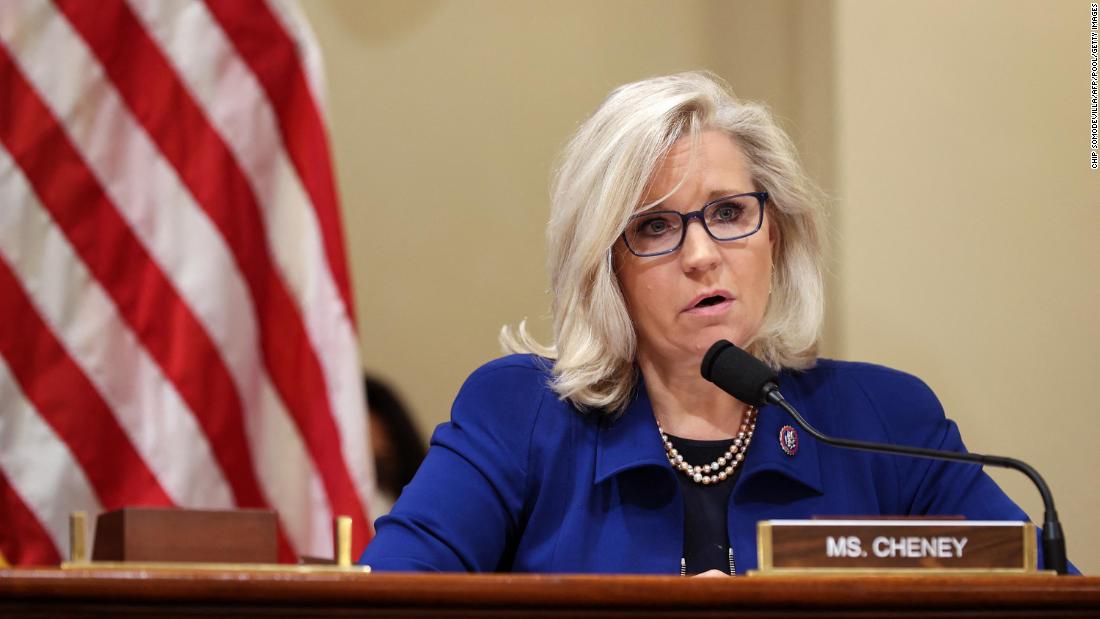
(CNN)Liz Cheney is going to New Hampshire. She's getting her political operation in order. And she's raising money like mad from icons of the Republican Party.

The Wyoming congresswoman is clearly exploring her political options and power well beyond her congressional district, even if she's not talking openly about a run for president.
"I've never had a conversation with her about 2024," said Eric Edelman, a former ambassador, Pentagon official and adviser to former Vice President Dick Cheney. "If there was going to be a Never Trump candidate, I can't think of anyone better."
Eight months after she voted to impeach Donald Trump, Cheney continues to be one of the party's most vocal critics of the former President and his hold on the Republican Party. The three-term House member has also said she would do "whatever it takes" to prevent Trump from becoming president again and has not closed the door on running for the White House herself.
Cheney's immediate political goal, however, is to retain her House seat from Harriet Hageman, a Trump-backed primary challenger. To help, she is marshaling the forces of the pre-Trump GOP establishment.
On October 18, former President George W. Bush will attend a fundraiser for Cheney in Dallas, co-hosted by former US Sen. Kay Bailey Hutchison and top Bush campaign aides Karl Rove and Karen Hughes.
Former Republican House Speakers John Boehner and Paul Ryan also raised money for Cheney earlier this year. And on top of that, Senate Minority Leader Mitch McConnell and Sens. Lindsey Graham and Mitt Romney have all donated to Cheney through their respective political action committees.
Her fundraising hauls have been impressive for the standards of Wyoming's at-large district -- more than $1.5 million in the first quarter of 2021 and nearly $1.9 million in the second, by far her two best fundraising performances ever.
Cheney's political schedule is also drawing attention.
On November 9, she will travel to New Hampshire, the home of the first presidential primary, to speak at St. Anselm College's Institute of Politics. The event is sponsored by the Loeb School of Communications, whose president, Joe McQuaid, is also the conservative publisher of the Manchester newspaper, the New Hampshire Union Leader, and a gatekeeper for Republican White House hopefuls.
All of this comes as Cheney continues to play a heightened role in the national conversation, despite her ouster from the House Republican leadership team earlier this year. She is the co-chair of the House select committee investigating the events of January 6, and is just one of two Republicans serving on the panel.
In an interview with CBS News' "60 Minutes" this week, Cheney repeated her condemnations of Trump, calling his actions on January 6 "unforgivable." She also criticized Republicans, like House Minority Leader Kevin McCarthy, for continuing to embrace Trump.
"What he's done is embrace Donald Trump. And if I were doing what he's doing, I would be deeply ashamed of myself," Cheney said.

Winning reelection first

Trump has made taking out Cheney a top priority, setting up what the congresswoman told "60 Minutes" would be "the most important House race in the country in 2022."
While a number of Republican candidates have jumped into the at-large district's primary, Trump announced on September 9 he would back Hageman, the same day she entered the race.
"I strongly endorse Republican House of Representatives Candidate Harriet Hageman from Wyoming who is running against warmonger and disloyal Republican, Liz Cheney," the former President said in a statement.
An attorney and former Republican National Committee member, Hageman was once a political adviser to Cheney, who responded to the endorsement on Twitter: "Here's a sound bite for you: Bring it."
Since Hageman declared her candidacy, Cheney allies have highlighted her opponent's past statements and actions opposing Trump.
A New York Times article documented Hageman's alliance with Texas Sen. Ted Cruz at the 2016 Republican National Convention in the effort to force a floor vote on the nomination. At the time, Hageman referred to Trump as "racist" and "xenophobic," according to the Times.
But since then, Hageman has taken Trump's side. She told CNN's Alex Rogers that Trump is the "leader of the party" and that "there are legitimate questions about what happened during the 2020 election."
Cheney has argued that such accommodation only strengthens Trump's hold on the GOP. She has repeatedly called on her fellow Republicans to instead address Trump's falsehoods about the election head on.
"Those who think that by ignoring Trump, he will go away, have been proven wrong," Cheney said on "60 Minutes"
Charlie Dent, a former Republican congressman and CNN contributor, said he admires Cheney's stand but doesn't know what she'll do if she's successful.
"For her, this clearly is not about politics and the next election," Dent said. "She's clearly focused on a post-Trump future for the party."
CORRECTION: A previous version of this story incorrectly stated who was highlighting Harriet Hageman's previous anti-Trump statements. Allies of Liz Cheney have done so.

Adblock test (Why?)


"politic" - Google News
September 29, 2021 at 06:02PM
https://ift.tt/3F57hqU

Vilified by Trump, Liz Cheney explores her political future with backing from GOP elders - CNN
"politic" - Google News
https://ift.tt/3c2OaPk
https://ift.tt/2Wls1p6

Tuesday, September 28, 2021

Stock Market Today: Dow, S&P Live Updates for Sep. 29, 2021 - Bloomberg

unitedstatepolitics.blogspot.com

Asia stocks declined Wednesday as rising bond yields stoked fears about inflation and as China Evergrande Group’s debt crisis intensified.

MSCI Inc.’s gauge of Asian stocks had the biggest drop in almost six weeks -- and is headed for its first quarterly slide in six. Japan fell though pared some losses as counting was underway for a new leader for the ruling party. China dropped on the deepening debt crisis at China Evergrande Group. 

Adblock test (Why?)


"Market" - Google News
September 29, 2021 at 04:44AM
https://ift.tt/3uoucZE

Stock Market Today: Dow, S&P Live Updates for Sep. 29, 2021 - Bloomberg
"Market" - Google News
https://ift.tt/2Yge9gs
https://ift.tt/2Wls1p6

The energy crunch is roiling markets - CNN

unitedstatepolitics.blogspot.com
A version of this story first appeared in CNN Business' Before the Bell newsletter. Not a subscriber? You can sign up right here.

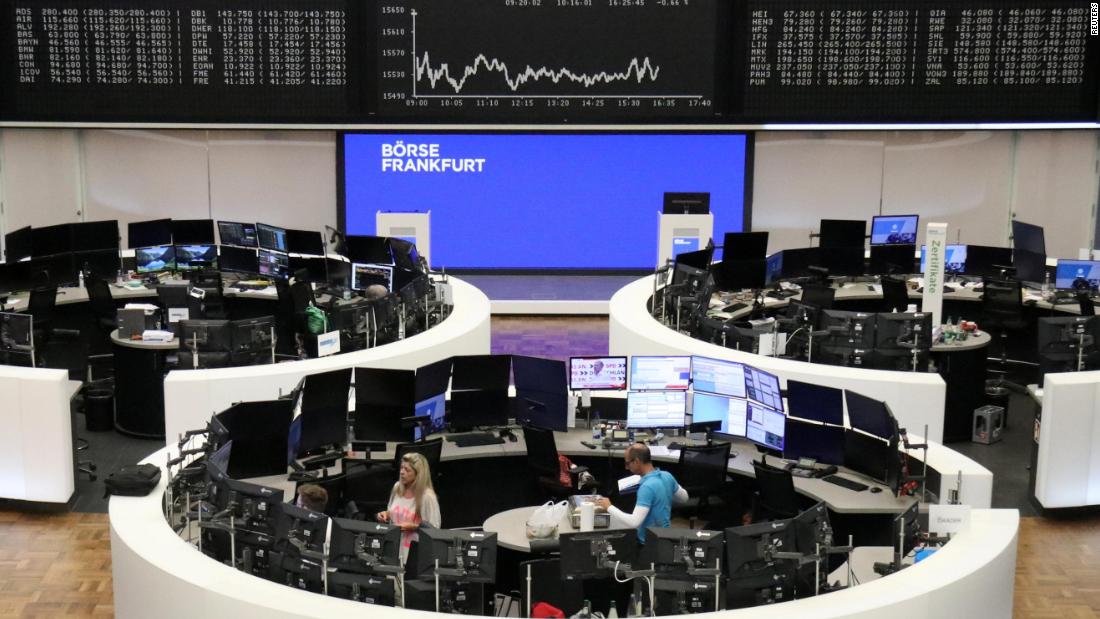
London (CNN Business)Energy prices are skyrocketing around the world, with major consequences for markets as investors worry about the state of the economic recovery.

What's happening: Global markets are stumbling Tuesday as energy prices soar. One big problem has been shortages of natural gas, triggered by low stocks and a jump in demand as activity recovers from its Covid-19 lull.
Wholesale natural gas prices in Europe hit fresh records on Monday and continue to rally Tuesday, according to Tom Marzec-Manser at market intelligence firm ICIS. In the United States, natural gas futures have also jumped, surpassing levels last hit in 2014, when temperatures plunged across much of the country.
China is contending with a worsening energy situation, too, as it tries to reduce its reliance on coal just as demand for domestic-made goods is swelling. Companies in the country's industrial heartlands have been told to limit their energy consumption, according to state media, while supply has also been cut to some homes — reportedly trapping people in elevators.
Asia is now "scrambling" to secure natural gas for immediate delivery "in the same way Europe is," Marzec-Manser told me. And while the prices "are nowhere near comparable" in the United States, they're clearly on a steep upward trajectory, he added.
The circumstances put growing pressure on national governments, which are trying to limit instability by shielding residents from the effects of higher costs and shortages. For investors, the fallout presents another key risk.
Watch this space: There were already concerns that the economic recovery was losing momentum in both the United States and China. Turmoil in energy markets only stands to make matters worse.
Analysts at Nomura trimmed their forecast for Chinese growth in 2021 by half a percentage point to 7.7% on Friday, citing the "rising number of factories" that have had to "cease operations," either because of local energy consumption mandates or power outages due to rising coal prices and shortages.
Goldman Sachs followed on Tuesday, cutting its 2021 GDP growth forecast to 7.8% from 8.2%, pointing to "recent sharp cuts to production in a range of high-energy intensity industries."
"Short-term economic activity will likely experience a greater drag from this shock than from Evergrande," Craig Botham, chief China economist at Pantheon Macroeconomics, told clients Tuesday, referring to the debt-laden Chinese real estate developer whose potential collapse is being monitored closely.
Markets drop: Anxiety about rising energy prices is tied to broader fears about inflation, which have been pushing up bond yields. Higher yields, which move opposite prices, are encouraging investors to ditch high-growth tech stocks, which tend to perform better when bonds are more expensive.
Shares of Apple (AAPL), Microsoft (MSFT) and Amazon (AMZN) are all down roughly 1.5% in premarket trading.
Oil prices, meanwhile, are shooting up, with Brent crude futures, the global benchmark, hitting their highest level in almost three years. US oil futures are also at their highest since October 2018. If the winter is colder than expected, and securing natural gas remains difficult, there could be a scramble for crude, keeping prices elevated.
"Fuel oil may need to brace itself for the high gas and coal price situation bleeding into its own market," BloombergNEF analysts said in a report published Tuesday.

Fed officials step down after criticism over personal trades

The heads of the Boston and Dallas Federal Reserve banks have announced their early retirement amid a controversy over their personal investing decisions that raised conflict-of-interest concerns.
The latest: Eric Rosengren, the Boston Fed chief, cited his health Monday in announcing he would step down about a year earlier than planned, my CNN Business colleague Anneken Tappe reports. He was set to retire in June next year but moved that date up to Thursday. In a message to staff, he shared that he has a kidney condition and qualified for transplant, which will require making lifestyle changes.
Later Monday, Dallas Fed chief Robert Kaplan said in a statement that his retirement would take effect in early October. He attributed the move to recent scrutiny of his trading activity.
"The Federal Reserve is approaching a critical point in our economic recovery as it deliberates the future path of monetary policy," Kaplan said in a statement. "Unfortunately, the recent focus on my financial disclosure risks becoming a distraction to the Federal Reserve's execution of that vital work."
Step back: The Fed officials have faced backlash over trades made during the pandemic while the central bank was buying hundreds of billions of dollars in assets to shore up the economy. Stimulus from central banks has been a huge boon for financial markets.
The Boston Fed recently disclosed that Rosengren had investments in the real estate sector. At the same time, the central bank was buying $40 billion worth of mortgage-backed securities each month.
My thought bubble: It's important that the Fed is now reviewing its ethics rules, given how essential it is that the central bank, whose decisions steer the US economy, maintains public trust.
The shakeup could also have policy ramifications at a delicate moment. Rosengren and Kaplan were hawks, or officials who supported a faster rollback of pandemic-era support. The new Boston Fed president will be a voting member on the Fed's decision-making body next year, while the Dallas Fed president will hold a spot in 2023.

This hamster's crypto portfolio is beating the market

Market professionals don't like to be reminded that it's tough to consistently predict the whims of the market. Unfortunately for them, there's a hamster determined to drive home the message.
Since June, a German hamster named Mr. Goxx has been running an independent portfolio that trades cryptocurrency from a high-tech cage called the Goxx Box. His portfolio includes a wide range of cryptocurrencies, including ether and bitcoin, my CNN Business colleague Ramishah Maruf reports.
How it works: Mr. Goxx's trading sessions are livestreamed on Twitch. First, the hamster runs on an "intention wheel," which spins around and chooses a cryptocurrency. Then, it scampers through either a "buy" tunnel or a "sell" tunnel, triggering purchases or sales of roughly €20 ($23.35) worth of the cryptocurrency (presumably executed by the hamster's anonymous human partner).
Industry website Protos reports that Mr. Goxx is up nearly 30% since he started trading digital assets, outperforming returns from bitcoin, the S&P 500 and Warren Buffett's Berkshire Hathaway.
The takeaway: Perhaps Mr. Goxx is a market savant, and we should all be tapping hamsters to set us up for retirement. Alternately, his wins back up a well-worn theory: If markets are effective at incorporating all publicly available information, prices are mostly driven by random events. That means a monkey who makes stock picks throwing darts at a board should be able to do just as well as esteemed portfolio managers.
There's plenty of room for debate on whether markets really do function efficiently. But financial advisers can point to Mr. Goxx as evidence that average investors would be wisest to invest in a broad range of assets over the long-term, instead of trying to beat the system.

Up next

Federal Reserve Chair Jerome Powell and Treasury Secretary Janet Yellen testify before the Senate on the coronavirus recovery starting at 10 a.m. ET.
Also today:
  • US consumer confidence data for September arrives at 10 a.m. ET.
  • Micron (MICR) reports results after US markets close.
Coming tomorrow: Shares of eyeglass brand Warby Parker are expected to start trading on the New York Stock Exchange. The startup is going public via a direct listing, as opposed to a traditional initial public offering, or IPO.

Adblock test (Why?)


"Market" - Google News
September 28, 2021 at 07:30PM
https://ift.tt/2XQxTLk

The energy crunch is roiling markets - CNN
"Market" - Google News
https://ift.tt/2Yge9gs
https://ift.tt/2Wls1p6

How the Debt Ceiling Came to Be a Political Cudgel - The New York Times

unitedstatepolitics.blogspot.com

The current fight over raising the debt limit is proving to be another lesson in American political dysfunction.

Sign up here to get On Politics in your inbox every Tuesday and Thursday.

Over the weekend, Germany conducted a hard and close-fought election with calm, ease and not a peep about voter fraud or fake news — a sharp contrast, several observers noted, to the mess that is contemporary American electoral politics. And now we’re getting another lesson in American political dysfunction: the fight over whether and how to raise the debt ceiling.

Coming amid the endgame maneuvering around President Biden’s infrastructure bill, his $3.5 trillion reconciliation package and a looming deadline to fund the government, this debate is absurdist theater at its worst. The debt ceiling is a century-old, artificial limit placed on how much the United States can borrow to fund its existing obligations, a limit that Congress could do away with, but remains in place because it is always caught up in short-term political calculations.

Raising the limit used to be a bipartisan nonevent. But, like everything else in Washington over the last 15 years, it has been sucked into the tornado of no-holds-barred politics. In 2006, the Democrats, including then-Senator Joe Biden, refused to support a debt-limit increase by the George W. Bush administration and the Republican majority in Congress, as a protest over the Iraq war and tax cuts. In 2011 and again two years later, the Republicans tried to use their potential support as a bargaining chip, to force the Democrats and Barack Obama to concede on spending cuts.

Each time, columnists and Treasury officials warned about the consequences of default, should the limit not be raised. And each time, in the end, Republicans and Democrats reached a deal, and the crisis was averted.

Things feel different this time, though — not because we’re at any more risk of default, but because of what the details of the fight show about the danger of government dysfunction.

As my colleague Jim Tankersley has noted, this time there’s no demand from the Republicans, no attempt to win concessions from the Democrats. They simply refuse to engage with the issue. And the Democrats, who see the mounting debt as at least partly the result of Donald Trump’s 2017 tax cuts, but who could also act unilaterally to raise the limit, are holding out, in hope of forcing the Republicans to vote for the debt increase and therefore own a piece of it.

The whole situation has a darkly comic, Strangelovian aura about it, if “Dr. Strangelove” were about fiscal policy instead of nuclear Armageddon. Consider a comment by Mitch McConnell, the Senate minority leader, at a news conference last week.

“America must never default — we never have, and we never will,” he said. “The debt ceiling will be raised, as it always should be. But it will be raised by the Democrats.”

In other words, the Republicans are openly abdicating their responsibility to govern in order to win political points. (A recent Morning Consult/Politico poll found that in the case of a default, 33 percent of voters would blame Democrats, 42 percent would blame both parties and only 16 percent would blame Republicans.) Unlike in the past, there’s no real principle involved, not even a fig leaf about fighting the deficit or pulling in rampant spending. It’s pure politics, with both parties eyeing the midterms and trying to maneuver the other side into taking a hit.

The Democrats’ latest attempt to draw in the Republicans came Monday, when the Senate took up a bill to continue funding the government — an absolute necessity by Sept. 30 — with a temporary increase in the debt ceiling, along with disaster-relief assistance and funding for refugee resettlement. But since it’s a conventional piece of legislation, the Republicans blocked it with the threat of a filibuster.

That leaves the Democrats with few options but to use the budget reconciliation process to lift the ceiling, adding to the party’s long to-do list in the coming days. It’s time consuming, but absent a colossal mistake by congressional leaders, it will happen, just as Mr. McConnell promised.

If that’s the case, what’s the big deal? Republicans say they’ll use the vote to attack Democrats during the midterms, but it’s hard to imagine making it stick, especially since the vote is about paying existing obligations, not creating new ones with more spending. There’s a good chance that a year from now, no one will be talking about it.

There are, however, two disturbing takeaways from this semiannual dance with default. The first is, obviously, that this is no way to run a country. Some will defend the debt ceiling as a check on spending, but while that was the original goal, it doesn’t work — otherwise, we wouldn’t have to raise it every few years. And there are much, much better ways to check spending than to intentionally career wildly toward the edge of a cliff, only to brake at the last possible second.

But there’s something else about the current debt-limit fight that bodes ill for the future. Much of the scare-quote commentary about the possibility of default assumes that it would come about as a result of a miscalculation. But what if it’s intentional? What if one party comes to believe that forcing a default would sink the other, politically, and decides to prioritize its short-term political fortunes over the country’s long-term economic health?

If that sounds insane, think about how quickly we got used to the Republicans shutting down the federal government for weeks to win some fleeting political concession. The fact that the shutdowns did significant damage to the country, and to the public’s faith in their leaders, hasn’t stopped elected officials from doing it again and again.

And in a world where significant parts of both parties believe that having the other in the majority is tantamount to a communist (or fascist) coup, it’s not hard to imagine one party deciding to sabotage the other by pushing the country into default. After all, during the debt-ceiling fight in 2013 several congressional Republicans said that a default actually wouldn’t be that bad, and would be worth it to stop Mr. Obama’s legislative priorities.

Then again, maybe that’s all just another unlikely nightmare scenario. But after watching too many nightmares come to life over the last few years, who’s to say?


New York Times Events

As world leaders prepare to gather in Glasgow for consequential climate change negotiations, The New York Times Climate Hub is bringing together citizens, scientists, inventors, academics, delegates and journalists to uncover answers to one of the most urgent questions of our time: How do we adapt and thrive on a changing planet?

The Times event, both in person and online, will be in Glasgow from Nov. 3 to Nov. 11. Get tickets at nytclimatehub.com.

On Politics is also available as a newsletter. Sign up here to get it delivered to your inbox.

Is there anything you think we’re missing? Anything you want to see more of? We’d love to hear from you. Email us at onpolitics@nytimes.com.

Adblock test (Why?)


"politic" - Google News
September 29, 2021 at 05:05AM
https://ift.tt/2XSeLN0

How the Debt Ceiling Came to Be a Political Cudgel - The New York Times
"politic" - Google News
https://ift.tt/3c2OaPk
https://ift.tt/2Wls1p6

Search

Featured Post

Politics - The Boston Globe

unitedstatepolitics.blogspot.com Adblock test (Why?) "politic" - Google News February 01, 2024 at 03:47AM https://ift.tt...

Postingan Populer