Rechercher dans ce blog

Wednesday, December 28, 2022

Prosecutors investigating Rep.-elect George Santos after lying admission - PBS NewsHour

unitedstatepolitics.blogspot.com

NEW YORK (AP) — Long Island prosecutors have launched an investigation into U.S. Rep.-elect George Santos of New York, after revelations surfaced that the now-embattled Republican lied about his heritage, education and professional pedigree as he campaigned for office.

But despite intensifying doubt about his fitness to hold federal office, Santos has thus far shown no signs of stepping aside — even as he has publicly admitted to a long list of lies.

WATCH: Republican Rep.-elect George Santos admits to lying about his credentials

“The numerous fabrications and inconsistencies associated with Congressman-Elect Santos are nothing short of stunning,” said Nassau County District Attorney Anne T. Donnelly, a Republican.

“The residents of Nassau County and other parts of the third district must have an honest and accountable representative in Congress,” she said. “No one is above the law and if a crime was committed in this county, we will prosecute it.”

Santos’ campaign did not immediately respond to a request for comment Wednesday.

He is scheduled to be sworn in next Tuesday, when the U.S. House reconvenes. If he assumes office, he could face investigations by the House Committee on Ethics and the Justice Department.

READ MORE: Jan. 6 panel urges ethics review for Kevin McCarthy, GOP lawmakers

The New York attorney general’s office has already said it is looking into some of the issues that have come to light.

The Republican has admitted to lying about having Jewish ancestry, a Wall Street pedigree and a college degree, but he has yet to address other lingering questions — including the source of what appears to be a quickly amassed fortune despite recent financial problems, including evictions and owing thousands in back rent.

Some fellow Republicans had called for Congress and law enforcement to launch inquiries.

Fellow Long Island Republican, Rep.-elect Nick Lalota said he was troubled by the revelations.

“I believe a full investigation by the House Ethics Committee and, if necessary, law enforcement, is required,” Lalota said Tuesday.

WATCH: Outgoing Republican congressman on how his party and U.S. politics changed

A spokesperson for the Nassau County DA’s office, Brendan Brosh, said Wednesday: “We are looking into the matter.” The scope of the investigation was not immediately clear.

Other Republicans castigated Santos for his dishonesty but stopped short of asking him to step aside.

“Congressman-Elect George Santos has broken the public trust by making serious misstatements regarding his background, experience and education, among other issues,” said Joseph G. Cairo, chair of the Nassau County Republican Committee, which lies within the 3rd Congressional District.

Cairo said he “expected more than just a blanket apology,” adding that “the damage that his lies have caused to many people, especially those who have been impacted by the Holocaust, are profound.”

Fellow Long Island Republican, Rep.-elect Nick Lalota said he was troubled by the revelations.

“I believe a full investigation by the House Ethics Committee and, if necessary, law enforcement, is required,” Lalota said Tuesday.

On Wednesday, a spokesperson for the Nassau County DA’s office, Brendan Brosh, said: “We are looking into the matter.”

Questions intensified after The New York Times examined the narrative Santos, 34, presented to voters during his successful campaign for a congressional district that straddles the north shore suburbs of Long Island and a sliver of Queens.

The Times uncovered records in Brazil that show Santos was the subject of a criminal investigation there in 2008 over allegations that he used stolen checks to buy items at an clothing shop in the city of Niteroi. At the time, Santos would have been 19. The Times quoted local prosecutors as saying the case was dormant because Santos had never appeared in court.

Santos continued to deny that he was being sought by authorities in South America.

Democrats pounced, calling Santos a serial fabulist and demanded he voluntarily not take office.

In an interview with the New York Post earlier this week, Santos apologized for his fabrications but downplayed them as “sins” over embellishing his resume, adding that “we do stupid things in life.”

He admitted to lying about working for Citigroup and Goldman Sachs, as well as having earned a degree in finance and economics from Baruch College in New York.

Beyond his resume, Santos invented a life story that has also come under question, including claims that his grandparents “fled Jewish persecution in Ukraine, settled in Belgium, and again fled persecution during WWII.”

During his campaign, he referred to himself as “a proud American Jew.”

He backtracked on that claim, saying he never intended to claim Jewish heritage, which would have likely raised his appeal among his district’s significant ranks of Jewish voters.

“I am Catholic,” he told the Post. “Because I learned my maternal family had a Jewish background I said I was ‘Jew-ish.’”

In a statement Tuesday, the Republican Jewish Coalition repudiated Santos.

“He deceived us and misrepresented his heritage. In public comments and to us personally he previously claimed to be Jewish,” the coalition said. “He will not be welcome at any future RJC event.”

Santos lost his first race for Congress in 2020 but successfully ran again this year.

In its opposition research on Santos, the Democratic Congressional Campaign Committee raised several red flags about the Republican’s record — but also accepted some of his assertions, including his educational record, as fact. The 87-page dossier sought to tie him to the Jan. 6 insurrection at the U.S. Capitol and his support for baseless claims of widespread fraud in the 2020 presidential election. The report also sought to depict him as a far-right candidate. But buried within its report, the DCCC had raised issues about his shaky financial standing and multiple evictions that left him thousands of dollars in debt.

Federal campaign records show that he loaned his campaign more than $700,000, but the source of that money has yet to be explained.

“George Santos is delusional if he thinks voters will trust him after he’s been exposed for lie after lie and continues to withhold key information,” DCCC spokesperson Nebeyatt Betre said.

While his Democratic opponent, Robert Zimmerman, also tried to raise Santos’ misrepresentations during his losing campaign, it did not gain much traction.

Zimmerman had said that Santos was unfit for office and has called for him to step aside so a special election can be held.

Adblock test (Why?)


"politic" - Google News
December 29, 2022 at 05:31AM
https://ift.tt/vweTZYt

Prosecutors investigating Rep.-elect George Santos after lying admission - PBS NewsHour
"politic" - Google News
https://ift.tt/qmrRG5o
https://ift.tt/RIEaeGH

Tuesday, December 27, 2022

A 'Political Coming-Out' for Chinese Feminist Comics - The Cut

unitedstatepolitics.blogspot.com
A young Chinese woman wearing a black tee shirt and black hot pants stands at a microphone.

Photo: YunChi Jong

Days after protesters flooded the streets of dozens of Chinese cities to demand the country relax its strict zero-COVID policies, young Chinese students and professionals packed the cozy Caveat Theater on the Lower East Side. They’d all scored a coveted ticket to “女子主意,” best translated as “women’s ideas” or “good ideas,” which is the only feminist stand-up comedy show performed in Chinese language in New York. They sipped cocktails and chewed on popcorn as they waited to be bombarded with punch lines that bring “forbidden pleasure” to people who grew up in China, as one audience member put it. But anyone who thought they were in for a light evening of entertainment was soon forced to confront something darker.

The show’s advertised theme, “what is home,” served as a reminder that China’s ironfisted COVID travel rules had kept most of the audience and performers away for at least three years. The performance began with an audio recording of a Uyghur reading out the names of the victims of a deadly fire in Urumqi, in China’s Xinjiang Province. The fire was the spark that ignited the protests in China in late November, as people believed the country’s draconian COVID lockdowns made it more difficult for people to escape the residential building and for firefighters to put out the blaze. Signs for “Urumqi Road,” where one of the major protests took place in Shanghai, were installed around the theater; a red balloon reading “Give me liberty or give me death” was tied to a stool on the stage.

The show’s co-host asked the audience what they missed the most about their moms’ cooking, joking about her own working mom’s “magical ability” to feed her a different dish every day by taking her to a canteen. Fei Fei, who’s in her 30s and asked to be identified by her stage name, soon switched from talking about braised ribs and steamed sea bass to the pain her violent father had inflicted on her and her mother, and the happy life she said they’ve been enjoying since his death. “Your home would only become a home after the bully at the home is gone,” she said. Then she asked the audience to imagine the home those living in Hong Kong, Taiwan, and Xinjiang could find if they didn’t have their own bullying parent: the Chinese government.

Combining feminism and politics in this way is unimaginable in China, where activists can be arrested, Me Too victims are isolated, and the LGBTQ community is silenced. But it’s a hallmark of the stand-up comedy series that Fei Fei and feminist activist Xiaowen Liang launched in May. They and other performers are part of a larger circle of activists, students, and young professionals who participate in feminist protests in New York. They post photos from the demonstrations on social media to inspire debate back in China, raise money to support Chinese Me Too victims, and counterpunch against the misogynistic attacks the victims face online. They also played a role in coordinating a rally across the street from the Chinese consulate in midtown in solidarity with the zero-COVID demonstrations. The rally stood out from some other protests for its explicitly feminist signs with slogans like “The liberation of queers is the liberation of all people” and “We don’t want patriarchy, we want diversity.”

The comics draw their punch lines from the harsh realities of gender inequality and totalitarianism in China. Alice Wang, a first-time performer in her 20s, cracked a joke about her relatives’ concern that she may find a “foreign boyfriend” and poked fun at their lack of awareness around the LGBTQ community. Others joked about China’s resistance to democracy or the hazmat COVID volunteers.

The audience also was provided with pieces of plain A4 paper, which protesters held up during the demonstrations in China as a symbol of their struggle against censorship, and asked to write whatever they thought people back home would say if they had the chance. A performer going by the stage name Xiao Qi said the last time she saw so many people holding pieces of paper was years ago, when it was a fad for Chinese women to show their waists were as slim as the width of one sheet. Holding the paper from the waist to the chest is “one small step for the paper, one giant leap for China,” she said.

Xiao Qi, a third-time performer, told me she didn’t plan to talk about politics when she started doing stand-up. But she described this show as her “political coming out”: “The first time I performed, I talked about male dominance in the movie industry. Then I realized it was not enough,” she told me. “If we only focus on gender disparities and equal wages, we are missing the elephant in the room.”

Talking about politics doesn’t come organically to many young Chinese. Government censors ensure that even a veiled mention of sensitive topics like the Tiananmen Square massacre won’t live for more than a few seconds online, and history teachers can lose their jobs by talking about such events in class. “The first time my mom told me about the 1989 Tiananmen pro-democracy movement was in 2020, as a warning for me to not get involved in protesting against the COVID policies,” Susan Zhang, an industrial designer in her 20s who performed in the show, told me.

“The younger generation grew up in a prosperous China, and they have not suffered from the system as much as we have,” Yang, a performer in her late 40s who asked to be identified only by her last name, told me. So she was thrilled to see younger faces at the solidarity protests in New York.  “I thought they were indifferent,” she said. “Now I feel much closer to them.”

But even in a “political coming-out,” there is an element of fear. Many performers in the stand-up show, as well as protesters at the solidarity rally, did not want to be identified by their full names. While the recent uprising in China led to the meltdown of many COVID restrictions, some protesters have been arrested and the Chinese government has tried to blame “sinister foreign forces” for instigating the protests. Liang, the co-founder of the show who became a renowned feminist activist when she was a college student in China, has been a frequent target of nationalistic internet trolls herself. Even after she moved to the U.S., police visited Liang’s parents and urged them to restrain her speech on social media.

Still, Liang told me the recent protests gave her hope. “Many overseas Chinese students started discussing how to mobilize and organize rights activities,” she said. “This is a lesson we had no chance to learn in China.” When Wang went to a demonstration against China’s COVID policy, her mom, an immigrant living in the U.S., told her “to wrap myself up and avoid the cameras.” But Wang said fear wouldn’t stop her from doing what she believes is the right thing. “People in China cannot say whatever they want to say, so we should say it for them,” she told me.

As the show went on, performers gathered the pieces of paper on which the audience members poured out their wishes — “I want to go home,” “I want to talk about and participate in politics,” “No internment” — and fixed them onto a piece of blue-painted cardboard on the stage that mimicked the ubiquitous metal foil used to block the entrances of residential buildings during China’s lockdowns. At one point, the board fell over accidentally and the audience started cheering. “It fell out of fear,” Fei Fei, the co-host, told the audience. “Our paper has weight.”

Adblock test (Why?)


"politic" - Google News
December 23, 2022 at 01:29AM
https://ift.tt/83XOVdI

A 'Political Coming-Out' for Chinese Feminist Comics - The Cut
"politic" - Google News
https://ift.tt/gARw5Ck
https://ift.tt/ksL5t9a

Co-leader of Whitmer kidnapping plot gets 16 years in prison - The Associated Press - en Español

unitedstatepolitics.blogspot.com

GRAND RAPIDS, Mich. (AP) — The co-leader of a plot to kidnap Michigan Gov. Gretchen Whitmer was sentenced Tuesday to 16 years in prison for conspiring to abduct the Democrat and blow up a bridge to ease an escape.

Adam Fox’s sentence is the longest of anyone convicted in the plot so far, though it’s significantly shorter than the life sentence that prosecutors sought.

Fox, 39, returned to federal court four months after he and Barry Croft Jr. were convicted of conspiracy charges at a second trial in Grand Rapids, Michigan.

They were accused of organizing a wild plot to whip up anti-government extremists just before the 2020 presidential election. Their arrest, as well as the capture of 12 others, was a stunning coda to a tumultuous year of racial strife and political turmoil in the U.S.

The government said Croft offered bomb-making skills and ideology while Fox was the “driving force urging their recruits to take up arms, kidnap the governor and kill those who stood in their way.”

But Judge Robert J. Jonker said that while Fox’s sentence was needed as a punishment and deterrent to future similar acts, the government’s request for life in prison is “not necessary to achieve those purposes.”

“It’s too much. Something less than life gets the job done in this case,” Jonker said, later adding that 16 years behind bars “is still in my mind a very long time.”

Jonker said he also considered the emotional baggage Whitmer has to carry due to the plot.

“It undoubtedly affects other people who are in public office or are considering public office,” he said. “They have to count the cost. That does need a forceful sentence from the court.”

In addition to the prison sentence, Fox will have to serve five years of supervised release. He’ll also get credit for more than two years in custody since his arrest.

“Responding to domestic terrorism plots has been a priority for the Department of Justice since its founding and we’re going to continue to spare no expense to make sure we disrupt plots like these,” U.S. Attorney Andrew Birge told reporters outside the courthouse following the sentencing.

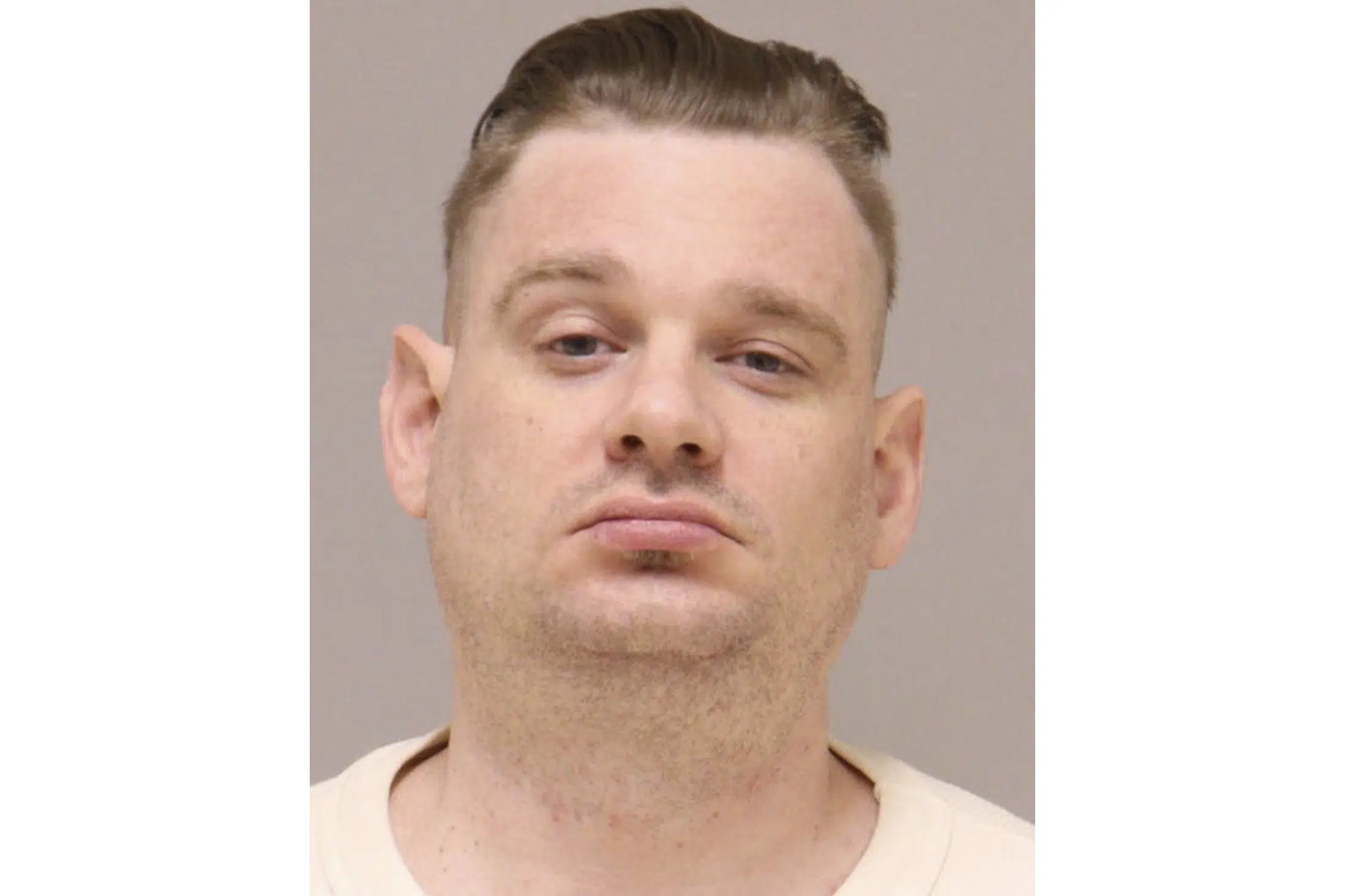
Fox wore orange prison clothes with long slicked-back hair and a full beard. He showed little reaction when the sentence was read.

Daniel Harris, who was acquitted by a jury earlier this year for his involvement in the plot, sat next to Fox’s mother in the gallery and hugged her after the sentencing was read. Fox looked into the gallery multiple times, often mouthing words.

He shook his head and repeatedly smirked while Assistant U.S. Attorney Nils Kessler spoke. Kessler said Fox’s smirking was a sign that he showed no regret.

Fox and Croft were convicted at a second trial in August, months after a different Grand Rapids jury couldn’t reach a verdict but acquitted Harris and one other man. Croft, a trucker from Bear, Delaware, will be sentenced Wednesday.

In 2020, Fox and Croft met with like-minded provocateurs in Ohio, trained with weapons in Michigan and Wisconsin and took a ride to “put eyes” on Whitmer’s vacation home with night-vision goggles, according to evidence.

“People need to stop with the misplaced anger and place the anger where it should go, and that’s against our tyrannical ... government,” Fox declared that spring, boiling over COVID-19 restrictions and perceived threats to gun ownership.

Whitmer wasn’t physically harmed. The FBI, which was secretly embedded in the group, broke things up by fall.

“They had no real plan for what to do with the governor if they actually seized her. Paradoxically, this made them more dangerous, not less,” Kessler said in a court filing ahead of the hearing.

At the time, Fox was living in the basement of a Grand Rapids-area vacuum shop, the site of clandestine meetings with members of a paramilitary group and an undercover FBI agent. His lawyer, Christopher Gibbons, said he was depressed, anxious and smoking marijuana daily.

Gibbons had said a life sentence would be extreme.

“My client stands on the record, maintains his innocence and he looks forward to getting it all before the panel at the Court of Appeals,” Gibbons told reporters after Tuesday’s sentencing.

Jonker said there was nothing that made him think of Fox as a “natural leader,” but said conspiracies like the plot to kidnap Whitmer take “a lot of fuel” and that Fox “provided it.”

“It’s important to recognize the likelihood of this ever happening, thank God, was low because law enforcement was on it early,” Jonker said. “I think the chances of this actually happening were incredibly remote.”

In arguing Tuesday for a life sentence, Kessler said, “I think you could say that none of this would have happened if Mr. Fox was not involved.”

“They wanted a second civil war or revolution,” Kessler said of the conspirators. “They wanted to ruin everything for everybody. This wasn’t about masks or about vaccines. They were talking about overthrowing the government before the coronavirus pandemic. They had enough guns and armor for a small war.”

Fox was regularly exposed to “inflammatory rhetoric” by FBI informants, especially Army veteran Dan Chappel, who “manipulated not only Fox’s sense of ‘patriotism’ but also his need for friendship, acceptance and male approval,” Gibbons said.

Two men who pleaded guilty to conspiracy and testified against Fox and Croft received substantial breaks of between 2 1/2 years and four years behind bars.

Three members of a paramilitary group that trained with Fox were convicted in October of providing material support for a terrorist act. Their sentences, handed down earlier this month in state court, ranged between 7 to 12 years.

Five more are awaiting trial in Antrim County, where Whitmer’s vacation home is located.

When the plot was extinguished, Whitmer blamed then-President Donald Trump, saying he had given “comfort to those who spread fear and hatred and division.” In August, Trump called the kidnapping plan a “fake deal.”

___

Ed White in Detroit contributed to this story. Joey Cappelletti is a corps member for The Associated Press/Report for America Statehouse News Initiative. Report for America is a nonprofit national service program that places journalists in local newsrooms to report on undercovered issues.

Adblock test (Why?)


"politic" - Google News
December 27, 2022 at 01:09PM
https://ift.tt/9mPWRdO

Co-leader of Whitmer kidnapping plot gets 16 years in prison - The Associated Press - en Español
"politic" - Google News
https://ift.tt/gARw5Ck
https://ift.tt/ksL5t9a

Co-leader of Whitmer kidnapping plot gets 16 years in prison - The Associated Press - en Español

unitedstatepolitics.blogspot.com

GRAND RAPIDS, Mich. (AP) — The co-leader of a plot to kidnap Michigan Gov. Gretchen Whitmer was sentenced Tuesday to 16 years in prison for conspiring to abduct the Democrat and blow up a bridge to ease an escape.

Adam Fox’s sentence is the longest of anyone convicted in the plot so far, though it’s significantly shorter than the life sentence that prosecutors sought.

Fox, 39, returned to federal court four months after he and Barry Croft Jr. were convicted of conspiracy charges at a second trial in Grand Rapids, Michigan.

They were accused of organizing a wild plot to whip up anti-government extremists just before the 2020 presidential election. Their arrest, as well as the capture of 12 others, was a stunning coda to a tumultuous year of racial strife and political turmoil in the U.S.

The government said Croft offered bomb-making skills and ideology while Fox was the “driving force urging their recruits to take up arms, kidnap the governor and kill those who stood in their way.”

But Judge Robert J. Jonker said that while Fox’s sentence was needed as a punishment and deterrent to future similar acts, the government’s request for life in prison is “not necessary to achieve those purposes.”

“It’s too much. Something less than life gets the job done in this case,” Jonker said, later adding that 16 years behind bars “is still in my mind a very long time.”

Jonker said he also considered the emotional baggage Whitmer has to carry due to the plot.

“It undoubtedly affects other people who are in public office or are considering public office,” he said. “They have to count the cost. That does need a forceful sentence from the court.”

In addition to the prison sentence, Fox will have to serve five years of supervised release. He’ll also get credit for more than two years in custody since his arrest.

“Responding to domestic terrorism plots has been a priority for the Department of Justice since its founding and we’re going to continue to spare no expense to make sure we disrupt plots like these,” U.S. Attorney Andrew Birge told reporters outside the courthouse following the sentencing.

Fox wore orange prison clothes with long slicked-back hair and a full beard. He showed little reaction when the sentence was read.

Daniel Harris, who was acquitted by a jury earlier this year for his involvement in the plot, sat next to Fox’s mother in the gallery and hugged her after the sentencing was read. Fox looked into the gallery multiple times, often mouthing words.

He shook his head and repeatedly smirked while Assistant U.S. Attorney Nils Kessler spoke. Kessler said Fox’s smirking was a sign that he showed no regret.

Fox and Croft were convicted at a second trial in August, months after a different Grand Rapids jury couldn’t reach a verdict but acquitted Harris and one other man. Croft, a trucker from Bear, Delaware, will be sentenced Wednesday.

In 2020, Fox and Croft met with like-minded provocateurs in Ohio, trained with weapons in Michigan and Wisconsin and took a ride to “put eyes” on Whitmer’s vacation home with night-vision goggles, according to evidence.

“People need to stop with the misplaced anger and place the anger where it should go, and that’s against our tyrannical ... government,” Fox declared that spring, boiling over COVID-19 restrictions and perceived threats to gun ownership.

Whitmer wasn’t physically harmed. The FBI, which was secretly embedded in the group, broke things up by fall.

“They had no real plan for what to do with the governor if they actually seized her. Paradoxically, this made them more dangerous, not less,” Kessler said in a court filing ahead of the hearing.

At the time, Fox was living in the basement of a Grand Rapids-area vacuum shop, the site of clandestine meetings with members of a paramilitary group and an undercover FBI agent. His lawyer, Christopher Gibbons, said he was depressed, anxious and smoking marijuana daily.

Gibbons had said a life sentence would be extreme.

“My client stands on the record, maintains his innocence and he looks forward to getting it all before the panel at the Court of Appeals,” Gibbons told reporters after Tuesday’s sentencing.

Jonker said there was nothing that made him think of Fox as a “natural leader,” but said conspiracies like the plot to kidnap Whitmer take “a lot of fuel” and that Fox “provided it.”

“It’s important to recognize the likelihood of this ever happening, thank God, was low because law enforcement was on it early,” Jonker said. “I think the chances of this actually happening were incredibly remote.”

In arguing Tuesday for a life sentence, Kessler said, “I think you could say that none of this would have happened if Mr. Fox was not involved.”

“They wanted a second civil war or revolution,” Kessler said of the conspirators. “They wanted to ruin everything for everybody. This wasn’t about masks or about vaccines. They were talking about overthrowing the government before the coronavirus pandemic. They had enough guns and armor for a small war.”

Fox was regularly exposed to “inflammatory rhetoric” by FBI informants, especially Army veteran Dan Chappel, who “manipulated not only Fox’s sense of ‘patriotism’ but also his need for friendship, acceptance and male approval,” Gibbons said.

Two men who pleaded guilty to conspiracy and testified against Fox and Croft received substantial breaks of between 2 1/2 years and four years behind bars.

Three members of a paramilitary group that trained with Fox were convicted in October of providing material support for a terrorist act. Their sentences, handed down earlier this month in state court, ranged between 7 to 12 years.

Five more are awaiting trial in Antrim County, where Whitmer’s vacation home is located.

When the plot was extinguished, Whitmer blamed then-President Donald Trump, saying he had given “comfort to those who spread fear and hatred and division.” In August, Trump called the kidnapping plan a “fake deal.”

___

Ed White in Detroit contributed to this story. Joey Cappelletti is a corps member for The Associated Press/Report for America Statehouse News Initiative. Report for America is a nonprofit national service program that places journalists in local newsrooms to report on undercovered issues.

Adblock test (Why?)


"politic" - Google News
December 27, 2022 at 01:09PM
https://ift.tt/9mPWRdO

Co-leader of Whitmer kidnapping plot gets 16 years in prison - The Associated Press - en Español
"politic" - Google News
https://ift.tt/gARw5Ck
https://ift.tt/ksL5t9a

Monday, December 26, 2022

George Santos admits to fabricating resume - Spectrum News NY1

unitedstatepolitics.blogspot.com

George Santos, the embattled congressman-elect from Queens, admitted on Monday to lying about his educational and financial background.

Santos, in an interview with the New York Post, said he had made up key parts of his resume.

The Republican had previously said he went to New York University and Baruch College, but on Monday, he admitted that was a lie.

"I didn't graduate from any institution of higher learning. I'm embarrassed and sorry for having embellished my resume," Santos told the Post.

Santos could not be immediately be reached by NY1 for comment.

A New York Times investigation showed that Santos had fabricated much of his personal history.

Since then, Santos had been tight-lipped on the allegations prior to the story from the Post. Last Friday, in a social media post, Santos hinted at a possible response.

“I have my story to tell and it will be told next week,” Santos said on Twitter.

Santos, the first Latino, openly gay Republican to be elected to Congress, said he was married to a woman for five years.

As for his past financial struggles, including two housing court proceedings, he admitted that his family was struggling to pay off medical expenses related to his mother's illness. Santos' mother died in December 2016 of cancer, according to the Post.

Furthermore, Santos noted that he never worked for Citigroup or Goldman Sachs, but that while working for the company LinkBridge Investors, he was able to do business with the two financial firms.

Santos characterized that lie as "a poor choice of words." Santos said that while at LinkBridge, he helped make "capitol introductions" between clients and investors.

Santos also admitted that his family doesn't own 13 properties, but instead, the 34-year-old lives with his sister in Huntington, Long Island. He added that he is looking to buy a place of his own.

Additionally, Santos told the Post he's "clearly Catholic" and that his grandmother told him stories about being Jewish and converting to Catholicism.

Santos also responded to reports that he has a criminal case in Brazil stemming from stealing a checkbook in 2008. He told the Post that he was not charged with any crime.

The revelations are the latest in a saga of deceit associated with the 34-year-old.

"My sins here are embellishing my resume," Santos told the Post on Monday. "I'm sorry."

Republican leadership in Congress has been silent on the allegations surrounding Santos.

Last week, New York Attorney General Letitia James' office said that it's "looking into a number of the issues raised by [Santos]."

Adblock test (Why?)


"politic" - Google News
December 27, 2022 at 08:00AM
https://ift.tt/Ga2d3j9

George Santos admits to fabricating resume - Spectrum News NY1
"politic" - Google News
https://ift.tt/CbOgPc1
https://ift.tt/8U17Nyu

This 'superstar loser' tops the list of 2022's biggest losers in politics - Fox News

unitedstatepolitics.blogspot.com

This year's midterm election cycle provided stories of success and failure for both Democrats and Republicans who witnessed impressive turnout across the country amid troubling times for the American economy.

With a new Congress set to convene early next year, control in Washington will be divided. Republicans will have control of the House, and Democrats will control the Senate, marking a stark contrast from recent years under total Democrat control that aided President Biden's policies and plans.

From the reversal of Roe v. Wade to the "red wave" that never was, the 2022 election cycle was undoubtedly full of big wins and losses for both parties. Fox News Digital breaks down the biggest losers of 2022 in this year's midterm elections. 

2022 MIDTERM ELECTION RESULTS

Stacey Abrams, former President Trump, Beto O'Rourke and Herschel Walker

Stacey Abrams, former President Trump, Beto O'Rourke and Herschel Walker (Getty Images)

1. Stacey Abrams

Stacey Abrams, who ran a second unsuccessful bid for governor of Georgia this year, has earned the top spot of 2022's biggest political losers, even earning the moniker "superstar loser" from The Atlantic. 

Abrams lost to Republican Gov. Brian Kemp by 7.5 percentage points in the Nov. 8 elections. In 2018, Abrams lost by just over one point in a runoff election against Kemp. 

Abrams is well-known as an all-star political fundraiser and has frequently traveled the country to stump on behalf of fellow Democratic candidates. Despite raising more than $100 million throughout her second gubernatorial bid, the Abrams campaign still owes over $1 million to vendors, according to a recent Axios report.

Democratic Georgia gubernatorial candidate Stacey Abrams has launched two unsuccessful campaigns against Republican Gov. Brian Kemp.

Democratic Georgia gubernatorial candidate Stacey Abrams has launched two unsuccessful campaigns against Republican Gov. Brian Kemp. (Nathan Posner/Anadolu Agency via Getty Images)

The Abrams campaign abruptly cut off paychecks to almost all 180 campaign staffers just one week after the election. Staffers for the Kemp campaign were paid through the end of November, according to the report. 

News of Abrams short-changing her campaign staff came in an Atlanta Journal-Constitution report highlighting the campaign's extravagant spending throughout the gubernatorial race. According to the report, Abrams' team rented out a $12,500-per-month, 5-bedroom "hype house" that was intended to house Tik Tokers and promote the Abrams campaign. The campaign also purchased a "swag truck" that reportedly had no giveaway strategy.

Despite losing to Kemp by over seven points, Abrams is still considering running for public office in the future, she said in an interview on "Good Morning America" shortly after her defeat. 

2. Beto O'Rourke

After failed campaigns for U.S. Senate, the presidency and now Texas governor, Beto O'Rourke also earned the title of "superstar loser" from The Atlantic this year. 

O'Rourke is perhaps the biggest name in Texas Democratic politics, but his claim to fame is not so much his victories as it is his big-time failures. The former El Paso mayor launched a gubernatorial campaign against Republican Gov. Greg Abbott, losing by a dismal 11 points in 2022 despite out-raising the Republican governor. O'Rourke spent a whopping $80 million on his gubernatorial run.

Texas Democratic gubernatorial candidate and former U.S. congressman Beto O'Rourke listens to his staff during his campaign kickoff event in McAllen, Texas, Nov. 17, 2021.

Texas Democratic gubernatorial candidate and former U.S. congressman Beto O'Rourke listens to his staff during his campaign kickoff event in McAllen, Texas, Nov. 17, 2021. (REUTERS/Veronica G. Cardenas)

The loss follows unsuccessful runs for U.S. Senate in 2018 — he narrowly lost to Sen. Ted Cruz by 2.6 points — and the Democratic nomination for president in 2020. He dropped out of that race after losing momentum and fundraising support. O'Rourke has raised almost $200 million combined from his unsuccessful statewide campaigns in Texas. 

With this third high-profile loss, O'Rourke's political future remains in question though his campaign remains optimistic Texas can still turn blue some day.  

"I don’t know what form that will take — I don’t know what my role or yours will be going forward — but I’m in this fight for life," he told a crowd of supporters on election night in El Paso.

3. Donald Trump

Former President Trump, who kicked off his 2024 presidential campaign shortly after the midterm elections, has taken heat from some in his party who blame the former president for the GOP's underwhelming performance in the midterms and his part in endorsing unelectable candidates in the primary. 

Former President Trump announced his third run for the White House from his Mar-a-Lago home in Palm Beach, Fla., Nov. 15, 2022.

Former President Trump announced his third run for the White House from his Mar-a-Lago home in Palm Beach, Fla., Nov. 15, 2022. (AP Photo/Andrew Harnik, File)

Trump backed a number of atypical candidates early on in several battleground races. Some of the former president's ill-fated endorsements included Kari Lake in Arizona, Blake Masters in Arizona, Dr. Mehmet Oz in Pennsylvania and even Sen.-elect JD Vance, who, despite winning Ohio's Senate seat, won by only seven points. The GOP gubernatorial candidate, Mike DeWine, pulled off a 26-point win in the state. 

In the weeks following Election Day, national polling has shown mixed feelings on the president as he makes his third run for the White House. 

DEMOCRATS TO MAINTAIN CONTROL OF THE UNITED STATES SENATE

A new NPR/PBS NewsHour/Marist National Poll indicates that a plurality of Republican voters still support Trump for the 2024 Republican presidential nomination — even outperforming Florida Gov. Ron DeSantis — if the GOP 2024 primary race includes multiple candidates. 

The findings add context to a Wall Street Journal poll released Dec. 14 that indicated DeSantis was polling ahead of Trump in a hypothetical head-to-head matchup for the 2024 GOP nomination. 

4. Rep. Sean Patrick Maloney

Democratic Rep. Sean Patrick Maloney, who has served New York's 17th Congressional District since 2013, was defeated by his GOP challenger, State Assemblyman Mike Lawler, in a historic loss on Election Day. Maloney ironically served as the chair of the Democratic Congressional Campaign Committee (DCCC), the organization responsible for winning Democratic campaigns. 

Rep. Sean Patrick Maloney, D-N.Y., is the retiring chair of the Democratic Congressional Campaign Committee.

Rep. Sean Patrick Maloney, D-N.Y., is the retiring chair of the Democratic Congressional Campaign Committee. (AP Photo/Seth Wenig, File)

The DCCC chair lost to his GOP challenger by a narrow margin of 0.8 percentage points following a contentious campaign centered on crime and inflation. 

On a night where many Democratic incumbents endured contentious races across the country, Maloney's defeat stood out as a noteworthy exception. Maloney is the first chair of a party's congressional campaign arm to lose re-election in 30 years.  

Maloney came under fire leading up to the midterms for suggesting families struggling with the impacts of inflation eat Chef Boyardee while also traveling to high-end European cities over the summer to raise money for House Democrats.

5.  Herschel Walker

Herschel Walker, Republican candidate for U.S. Senate, speaks at a campaign event Nov. 6, 2022, in Hiram, Ga.

Herschel Walker, Republican candidate for U.S. Senate, speaks at a campaign event Nov. 6, 2022, in Hiram, Ga. (Elijah Nouvelage/Getty Images)

Herschel Walker, the GOP nominee in Georgia's Senate race, failed to unseat Democratic Sen. Raphael Warnock in the general and runoff elections. Though Georgia has become more competitive in recent years, Walker was the only Republican to lose a statewide election in the state this year; every other GOP candidate won by five points or more, avoiding a runoff election. 

Trump endorsed Walker, a longtime friend and former football star, early in the primary process, long before allegations of domestic abuse and claims that Walker paid for abortions for two women surfaced in the media. 

With Warnock's victory, Democrats successfully defended every Democratic incumbent up for re-election in the Senate this year, a political feat no party had accomplished since the 1934 midterms.

CLICK HERE TO GET THE FOX NEWS APP

Fox News' Kyle Morris contributed to this report. 

Adblock test (Why?)


"politic" - Google News
December 26, 2022 at 02:00PM
https://ift.tt/XBqWafP

This 'superstar loser' tops the list of 2022's biggest losers in politics - Fox News
"politic" - Google News
https://ift.tt/LX9A2Z6
https://ift.tt/nfO6bsG

Sunday, December 25, 2022

Rabbi Chaim Druckman, spiritual leader of political religious Zionism, dies at 90 - The Times of Israel

unitedstatepolitics.blogspot.com

Rabbi Chaim Druckman, a leading and controversial figure at the conservative end of the religious Zionist movement, died on Sunday after contracting the coronavirus earlier this month at the age of 90.

His funeral was to be held at 12 p.m. on Monday in the southern community of Masu’ot Itzhak.

Druckman, a protégé of the influential nationalist Rabbi Zvi Yehuda Kook, was credited with coining the name of Gush Emunim — literally, the Believers’ Bloc — for the nascent settler movement, which was founded in his Merkaz Shapira living room in 1974. The movement eventually shifted the predominant element within religious Zionism from the center-left political position it had maintained at the founding of the state to the right, and then to the far right where it stands today.

A winner of the Israel Prize, Druckman was a major power broker in Israeli politics for decades, as a Knesset member, a deputy minister and more recently as the spiritual leader of religious Zionist parties. He also held influential religious posts, serving as dean of the Or Etzion Yeshiva, head of the network of all seminaries affiliated with the religious Zionist Bnei Akiva movement, and president of the union of Hesder yeshivas, seminaries for men who combine military service with religious study.

Over the years, Druckman butted heads with ultra-Orthodox rabbis over his more liberal views on conversion to Judaism, as well as with state authorities for his at-times subversive stances, particularly his calls for religious soldiers to refuse orders to evict West Bank settlements. He also faced criticism for defending prominent sexual offenders.

Druckman contracted the COVID-19 virus earlier this month, for the second time. He initially received treatment from a team of doctors at his home in the community of Mercaz Shapira in central Israel, but was moved to Jerusalem’s Hadassah Hospital Ein Kerem last week after his condition deteriorated.

Doctors resuscitated Druckman last Wednesday afternoon, but he remained in serious condition through the weekend.

“The rabbi was hospitalized in Hadassah Hospital Ein Kerem in very serious condition and was treated diligently by the staff of the intensive care ward for the past 10 days, but they were ultimately forced to pronounce him dead this evening,” the hospital said.

Druckman was quickly eulogized by the country’s leading politicians and public figures.

“The Torah of Israel, the people of Israel, and the land of Israel were his focus hour after hour, day after day, and he dedicated his life for the State of Israel and the Jewish people,” said President Isaac Herzog on Sunday night.

Religious Zionism party leader Bezalel Smotrich referred to Druckman’s death in biblical terms. “We have become orphans, fatherless,” he wrote, citing the Book of Lamentations.

“The people of Israel and the entire world has lost one of the spiritual giants of our generations, a pious man, a teacher, a man whose whole life was dedicated to the Torah of the land of Israel, to the people of Israel and the land of Israel,” Smotrich said.

Former prime minister Naftali Bennett, who was once one of Druckman’s top disciples, recalled his former spiritual leader as a man of moderation “who used all of his strength to mediate and to unify all parts of the Israeli people.”

Incoming prime minister Benjamin Netanyahu specifically recalled Druckman’s efforts in the area of conversion, saying the rabbi “found a way of bringing hearts together that helped masses of new immigrants to join the ranks of our people.”

From Kuty to Palestine

Born in the town of Kuty in what was then-Poland and is now Ukraine in 1932, Druckman survived the Holocaust first by hiding with his parents and then by fleeing Europe in 1944, posing as the son of a couple that had no children of their own in order to immigrate to then-Palestine. Shortly after the war, his parents joined him in the Holy Land.

In Palestine, Druckman studied in a Bnei Akiva-affiliated yeshiva in the community of Kfar Haroeh. In 1949, he enlisted in the nascent Israel Defense Forces in the Nahal program, during which time he also helped establish the religious communities of Kibbutz Tirat Zvi in northern Israel and Kibbutz Saad near the Gaza border.

After his military service, Druckman studied at the Mercaz Harav Yeshiva — the flagship institution of the religious Zionist movement — in Jerusalem under Rabbi Zvi Yehuda Kook, the son of Rabbi Abraham Isaac Kook, Israel’s first Ashkenazi chief rabbi and the progenitor of the religious Zionist theology. A brilliant and devoted student, Druckman emerged as one of Kook’s top disciples.

After a brief stint in the United States in the mid-1950s as a Bnei Akiva emissary, Druckman was sent by Kook to run the Or Etzion Yeshiva in Mercaz Shapira, then a tiny, new community formed on the grounds of an abandoned Palestinian village northeast of Ashkelon. As dean of the Or Etzion Yeshiva, Druckman taught some of Israel’s most influential leaders, including Defense Minister Benny Gantz, former Mossad chief Yossi Cohen, and Likud Knesset member Israel Katz.

On Sunday night, Gantz eulogized his former teacher, recalling his time at the Or Etzion Yeshiva.

“My heart weeps over the death of Rabbi Druckman. I had the honor of being one of his students at the Or Etzion Yeshiva as a youth,” Gantz said. “The rabbi was a believer, dedicated to the State of Israel and the Zionist idea… and I always found that he had an open ear.”

A firm believer in the sanctity of the biblical land of Israel, Druckman was part of a group that held a Passover seder in the city of Hebron in 1968, which led to the eventual establishment of a renewed Jewish settlement in the city. Following the devastating 1973 Yom Kippur War, Druckman and a group of other Kook students formed Gush Emunim, a group dedicated to hardline policies on territorial issues, particularly those dealing with the biblical land of Israel.

“This land is the Land of Israel, and in the Land of Israel Jews [should be allowed] to settle anywhere,” Druckman said in a recent interview in which he also supported the creation of a “halachic state,” one operating according to Jewish law.

Rabbi Chaim Druckman, center-right, attends a demonstration against the demolition of nine homes in the Ofra settlement in the northern West Bank on February 5, 2017. (Noam Revkin Fenton/Flash90/File)

Ahead of the fateful 1977 elections, which would result in Israel’s first Likud-led government, Kook tapped Druckman to run as number two on the ticket of the National Religious Party, more commonly known by its abbreviation Mafdal.

When Menachem Begin’s Likud won again in 1981, Druckman was named deputy religious services minister. He served in that role for just seven months before quitting in protest of the government’s eviction of the Yamit settlement on the Sinai Peninsula as part of the peace agreement with Egypt. During that time, Druckman and his family also temporarily moved to Yamit in order to further fight the expulsion.

“I oppose it. I voted against it. The Yamit area is Eretz Yisrael according to the Bible,” Druckman told a reporter in 1982, using the Hebrew term for the Land of Israel. “Eretz Yisrael you build, you don’t destroy. I am against evacuating any settlement, whatever we get in return.”

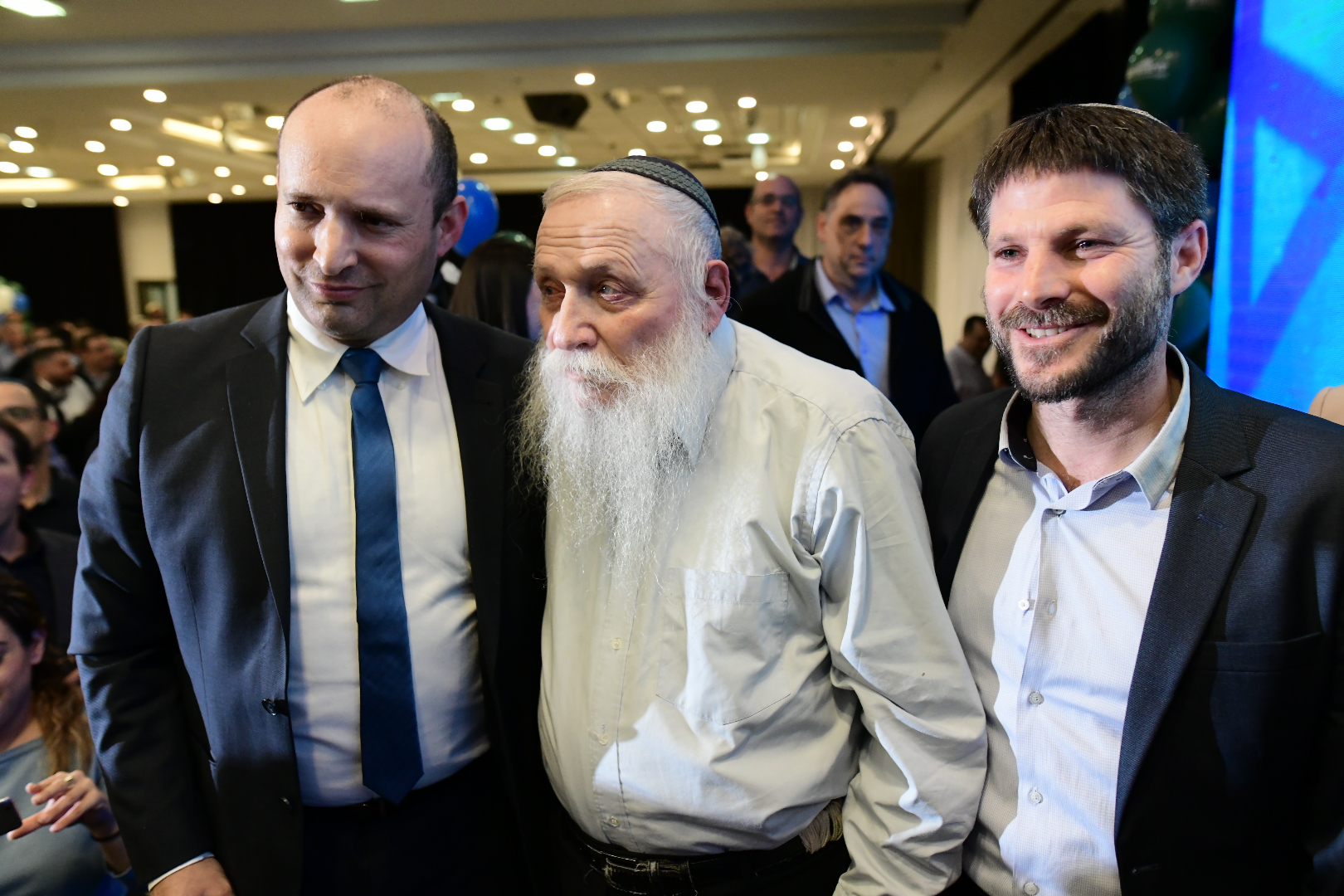
Rabbi Haim Druckman (L) Naftali Bennett (C) and Bezalel Smotrich attend the campaign launch of the right-wing Yamina party, ahead of the Israeli general elections, February 12, 2020. (Tomer Neuberg/FLASH90)

In 1983, Druckman broke off from the more centrist Mafdal and helped form a right-wing religious Zionist party, Morasha, which performed poorly in the following election. In 1986, Druckman left Morasha and rejoined Mafdal. Two years later, he dropped out of formal politics but remained a vocal, active figure in the national discourse, particularly during the signing of the Oslo Accords. Druckman appeared on stage during a now-infamous rally against then-prime minister Yitzhak Rabin a month before Rabin’s assassination.

Druckman returned to the Knesset in 1999, serving the full four-year term during the heart of the Second Intifada, before retiring from official political life in 2003.

For years, he served as the spiritual leader of the Jewish Home party under Bennett, before switching to publicly support Smotrich’s far-right Religous Zionism party ahead of the March 2021 elections.

Conversion controversy

Beginning in the mid-1990s, following the wave of immigration from the Soviet Union, Druckman became deeply involved in the issue of conversion to Judaism, serving as the chief rabbinic judge, or Av Beit Din, on a conversion court and leading a government commission that advocated performing more lenient conversions for minors. In 2004, he was appointed head of the State Conversion Authority, a body within the Prime Minister’s Office that oversees conversions in Israel.

His more moderate stances on conversion put Druckman deeply at odds with the far more stringent positions of ultra-Orthodox rabbis. This long-simmering disagreement came to a head in 2007 when a rabbinic judge hearing a divorce case involving a woman who had converted in Druckman’s court ruled that her conversion was invalid and the Druckman and the other judges on the conversion court were “sinners and heretics.” When the woman appealed this to the High Rabbinical Court, the judges not only upheld the lower court’s ruling but expanded it, nullifying all conversions performed by Druckman in the previous nine years and declaring him a disqualified judge.

This dramatic ruling affected thousands of people who converted through Druckman. It officially remained in place for four years until the High Court of Justice overturned the rabbinic court’s ruling.

Though it was ultimately for naught, Druckman was a reluctant but eventual supporter of the outgoing government’s conversion reforms, which in the end failed to pass before the coalition fell apart earlier this year.

A murky history of defending the indefensible

As a staunch believer in and leader of the settlement movement, Druckman often spoke out against the eviction of West Bank outposts by the military, saying that religious soldiers should try to get out of performing such operations and outright refuse if necessary.

Druckman voiced his views ahead of Israel’s 2005 Disengagement, when the government evacuated all settlements in the Gaza Strip and a number of them in the northern West Bank, signing a letter along with a number of other religious Zionist rabbis claiming that Jewish law forbade “a Jew from taking part in or in any way assisting in the dismantling of a settlement or an outpost in the land of Israel.” Druckman made similar remarks in 2010, though he somewhat softened his language, leaving it unclear if he believed soldiers should explicitly refuse an order to evict a settlement.

Unlike some of his more zealous contemporaries, Druckman generally tried to strike a balance between his more religious sensibilities and the realities of living in a democratic country. He opposed a religious ruling that forbade Jews from renting apartments and homes to Arab Israelis but said it was justified to refuse to rent to Arabs in some cases.

Rabbi Chaim Druckman attends the campaign launch of the right-wing Yamina party, ahead of the Israeli general elections, February 12, 2020. (Tomer Neuberg/Flash90)

Druckman often defended Jewish extremists, including those convicted of violent crimes against Palestinians. In 1988, when he was a Knesset member, Druckman sent a letter of support to a member of the Jewish Underground terrorist group upon his release from prison, after serving a four-year sentence for his role in a deadly terror attack on the Islamic College in Hebron in 1983 that left three Palestinian students dead and dozens wounded. In 2012, Druckman arranged a send-off party for a Zvi Strock, the son of now-Religious Zionism MK Orit Strock, who was convicted of torturing a Palestinian teenager five years prior. More recently, in 2019, he led a campaign to raise money to pay the legal fees of a settler youth who was indicted for killing a Palestinian mother of eight.

Druckman also stood by rabbis accused of sexual assault. He was chastised by the state attorney in 1999 for failing to report multiple cases of sexual abuse by the dean of Netiv Meir Yeshiva, Ze’ev Kopolevitch, who was later convicted of performing indecent acts on his students.

Though Druckman in 2012 acknowledged he should have reported the matter to police, he again came to the defense of another rabbi convicted of sexual abuse, the charismatic Moti Elon, in 2013. Even after Elon was found guilty, Druckman brought the disgraced rabbi to speak at his Or Etzion Yeshiva for years, until finally in 2019, after years of criticism, he decided to stop inviting him, saying in a public letter that Elon should no longer appear in public. In recent months, Druckman was dismissive of rape allegations against Rabbi Zvi Tau, calling them “gossip.”

Druckman is survived by his wife of 65 years, Sarah, a doctor, one of the first religious women to graduate from Hebrew University’s medical program.

The two have nine children, including one adopted daughter and a daughter with Down syndrome. They have scores of grandchildren and great-grandchildren.

Adblock test (Why?)


"politic" - Google News
December 26, 2022 at 03:01AM
https://ift.tt/HT0MsSa

Rabbi Chaim Druckman, spiritual leader of political religious Zionism, dies at 90 - The Times of Israel
"politic" - Google News
https://ift.tt/LX9A2Z6
https://ift.tt/nfO6bsG

Search

Featured Post

Politics - The Boston Globe

unitedstatepolitics.blogspot.com Adblock test (Why?) "politic" - Google News February 01, 2024 at 03:47AM https://ift.tt...

Postingan Populer