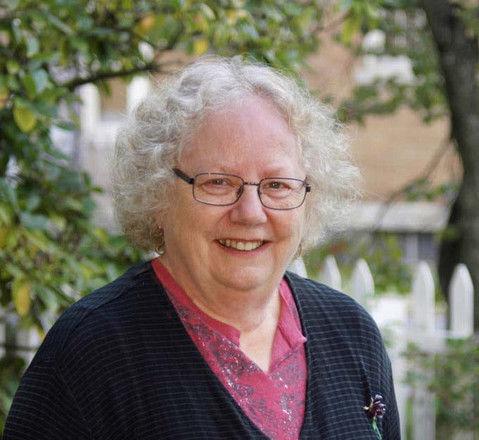
This may be the most radical thing I have written for publication to date: When I was a little girl, I thought of politics as a good thing, and in some ways I still do.
My early role model was my oldest female first cousin, the daughter of my mother’s oldest sister and her husband. She lived with her older half-brother and parents on a farm about 45 minutes outside of Detroit.
At least once a month my parents, younger sister and I traveled country roads to visit them from our home in the city. Sometimes one or more friends would come along with us, and other cousins would meet us there.
My memories are of a strong, straight-talking, kind and generous young woman who was willing to share her toys and games with my sister, our friends and other cousins, and me, when she went off to college.
I was entranced by her field of study: political science.
I did not understand until decades later that her father was a prominent Italian anarchist who lived in an American commune before meeting my aunt, became active in Democratic politics in Ann Arbor and would later write a book related to the seminal case of Sacco and Vanzetti.
I thought that the loud and boisterous discussions held around the dining room table by aunts and uncles on both sides of my family were the most natural thing in the world, and maybe they were.
From an early age, when TV was new and just had three channels, I watched the evening news and the political conventions with interest. I was fascinated by current affairs and, as a teenager, subscribed to the Sunday New York Times even though the papers piled up in a corner of my room when I could not keep up with reading them.
My mother took my sister and me to meet a governor, Soapy Williams. When I was in the sixth grade, just before moving out west, we visited the D.C. office of Martha Griffith, our congresswoman whom my mother knew personally.
We also had a tour of the White House that was arranged by Wilbur Cohen, who my aunt and uncle knew from Ann Arbor. The family story was that he left a peaceful academic career to fight for 11 years for the passage of Medicare and Medicaid.
He eventually became secretary of health, education, and welfare during the Johnson administration and, in retirement, was the leader of a group to protect Social Security.
My early experiences lead me to major in political science, with a focus on political theory. I learned a kind of critical thinking in the service of politics that has informed my life ever since.
Fast forward to the present: I am still in awe of my friends who grew up as the children of legislators here, also of my younger son, who served for three and a half years as a statehouse reporter. They all have a kind of consciousness and grace that I always feel I can learn from.
I have also had the benefit of watching a number of candidates and legislators up close. Those politicians who I most admire continue to meet the ideals of strength, straight talk, kindness and generosity that I first saw exemplified by my cousin.
I understand that my concept of politics is not commonly shared or always practiced. I recently encountered dynamics of attacking and scapegoating by people I considered to be allies but turned against me when I tried to stand up to their tactics.
When I explained to my ex-husband what happened, his only comment was: “That’s politics for you.”
For just a hot moment I thought, yes it is, and I just need to get out of it all and go on with my life.
Then I realized that, no, it does not have to be this way. Politics are an integral part of my life that I value and want to keep working to invest in.
So, what does it take to build on the kind of politics that I value and most want to see?
We need to start by believing in ourselves and our capacity to at least try to make a difference to the good.
Then find like-minded people who we can work with and support, and who will support us in turn.
Figure out what interests we are most passionate about, what we most want to see happen, and how best to pursue the changes that we most want to see.
Actively seek out and listen to different points of view and develop relationships that allow us to negotiate our differences to arrive at the best possible solutions.
Be willing to take the risks of being an outlier in the face of injustice.
Confront our own limitations and biases and take care of ourselves in a way that allows us to treat others well and be the kind of change that we want to see.
I know from my own personal struggles that none of these things are easy to do.
No one promised us a rose garden. At the same time, one of the keys to enduring is to take the time to keep smelling the roses.
I just looked up the dictionary definitions of politics. The ones I saw presented a mixed bag, pointing out the good and not so good connotations of the word. I understand that this is the reality of what we are dealing with.
At the same time, I choose to go with the good connotations that go back to my childhood. I hold tight to the memories of my cousin as a role model and my aunts and uncles debating endlessly around the table. They are almost all gone now, but I know now that they each went out from there to do what they could to make the world a better place.
I recognize too that they did not always get it right. As with many other families, there were personal histories and dysfunctions that created challenges for them and others and sometimes got in their way.
I still feel strongly from where I sit now that they lived good lives in the process. I look at those of who remain and see a legacy of service that continues though the rest of us who knew them and beyond to even younger generations.
I suspect that a lot of us can mine our personal histories to find narratives similar to this one. The memories of these times, along with the current demonstrations of these same kinds of ideals, can continue to serve as a touchstone for each one of us.
We can each envision and actively promote politics, and politicians, to be the best they can be.
"politic" - Google News
August 28, 2021 at 04:30AM
https://ift.tt/3mEhpAa
Betty Rivard: Political engagement can be a good thing - Charleston Gazette-Mail
"politic" - Google News
https://ift.tt/3c2OaPk
https://ift.tt/2Wls1p6

/cloudfront-us-east-1.images.arcpublishing.com/bostonglobe/VNG7YMZTRWJ5WBFTJ5NVETPCQI.jpg)


No comments:
Post a Comment