Former New York Gov. Andrew Cuomo (D) slammed the New York and Georgia investigations into former President Trump as being part of a “cancer in our body politic,” arguing they are politically motivated.
Cuomo told John Catsimatidis, who hosts the talk radio show “The Cats Roundtable,” in an interview on WABC 770 that he expects Trump will be indicted in Manhattan next week. He said he “doesn’t understand” why Manhattan District Attorney Alvin Bragg (D) is “putting such an emphasis” on the case investigating a hush money payment made to adult film star Stormy Daniels ahead of the 2016 presidential election.
Cuomo argued that the case should be over a possible misdemeanor, but also that it should be a federal case instead of a state one.
The case arose from a $130,000 payment that former Trump attorney Michael Cohen made to Daniels for her to remain silent about an alleged affair she had with Trump. Cohen said he made the payment at Trump’s direction and was reimbursed for it.
Cohen pleaded guilty to federal charges including one campaign finance violation stemming from the payment in 2018. But the Justice Department declined to prosecute Trump for the payment despite Cohen’s accusation.
Trump has acknowledged reimbursing Cohen but denied the affair occurred. He has said the reimbursement was unrelated to campaign funds.
Former Manhattan District Attorney Cyrus Vance Jr. began a local investigation into Trump over the payment before his term ended and Bragg took over.
Cuomo said a campaign finance violation case would be a federal case, but that type of case is necessary for it to be a felony instead of a misdemeanor. He said prosecutors bringing “partisan” cases confirms people’s “cynicism.”
“I don’t believe a Democratic prosecutor just happens to be attacking a Republican. I don’t believe a Republican prosecutor just happens to be attacking a Democrat. I think it’s all politics, and I think that’s what the people of this country are saying,” he said.
Cuomo said he does not believe that what he characterized as Bragg, New York Attorney General Letitia James (D) and Fulton County District Attorney Fani Willis (D) going after Trump is a coincidence. James is suing Trump and his three adult children over possible financial crimes from the Trump Organization following a multiyear investigation, while Willis is investigating Trump’s alleged attempts to interfere with the election in Georgia in 2020.
“And I think it’s feeds the cynicism, and that’s the cancer in our body politic right now,” Cuomo said.
Cuomo resigned from office in 2021 after an investigation led by James found he sexually harassed 11 women. Another investigation also found Cuomo’s administration intentionally undercounted the number of COVID-19 deaths in nursing homes by as much as 50 percent.
Cuomo has denied the allegations that he sexually harassed anyone. Five district attorneys in the state also declined to file charges against Cuomo over the allegations, saying that they did not reach enough of a legal basis to prosecute.
Investigators also chose not to file any charges against Cuomo for the nursing home situation.
A Cuomo spokesperson told The Hill in a statement that James’s report was a “sham” and noted that prosecutors did not move forward with any case from either investigation.
“There’s never been a there there but there was unfortunately plenty of politics,” they said.
"politic" - Google News
March 25, 2023 at 08:16PM
https://ift.tt/n9Ev2by
Andrew Cuomo slams NY, Georgia investigations into Trump as feeding ‘cancer in our body politic’ - Yahoo! Voices
"politic" - Google News
https://ift.tt/wFqcso9
https://ift.tt/WD7Uq0T
Secretive talks in the waning days of a campaign. Furtive phone calls. Ardent public denials.
American history is full of October surprises — late revelations, sometimes engineered by an opponent, that shock the trajectory of a presidential election and that candidates dread. In 1880, a forged letter ostensibly written by James A. Garfield claimed he wanted more immigration from China, a position so unpopular it nearly cost him the election. Weeks before the 1940 election, Franklin D. Roosevelt’s press secretary kneed a Black police officer in the groin, just as the president was trying to woo skeptical Black voters. (Roosevelt’s response made history: He appointed the first Black general and created the Tuskegee Airmen.)
But the scandal that has ensnared Donald J. Trump, the paying of hush money to a pornographic film star in 2016, is in a rare class: an attempt not to bring to light an election-altering event, but to suppress one.
The payoff to Stormy Daniels that has a Manhattan grand jury weighing criminal charges against Mr. Trump can trace its lineage to at least two other episodes foiling an October surprise. The first was in 1968, when aides to Richard M. Nixon pressed the South Vietnamese government to thwart peace talks in the closing days of that election. The second was in 1980. Fresh revelations have emerged that allies of Ronald Reagan may well have labored to delay the release of American hostages from Iran until after the defeat of Jimmy Carter.
Richard M. Nixon at the end of his presidential campaign in 1968.Agence France-Presse — Getty Images
The tortured debate over precisely which election law might have been violated in 2016 is missing the broader point — all three events might have changed the course of history.
“There have been three cases at a minimum,” said Gary Sick, a former national security aide to President Carter who for more than two decades has been pursuing his case that the Reagan campaign in 1980 delayed the release of the hostages from Iran. “And if you had the stomach for it, you’d have to say it worked.”
The potential criminal charges against Mr. Trump for his role in the passing of hush money to Ms. Daniels — falsifying business records to cover up the payment and a possible election law violation — may seem trivial when compared to the prior efforts to fend off a history-altering October surprise.
“Hold on,” Anna Chennault, Mr. Nixon’s emissary to the South Vietnamese, told Saigon government officials, as she pressed them to boycott the Paris peace talks. “We are gonna win.”
But the chicaneries of 1968 and 1980 were left to historians and partisans to sort out and debate decades later. What separates the allegations against Mr. Trump is that they could make him the first former president to be indicted by a grand jury, forcing him to answer for charges in a court of law.
President Lyndon B. Johnson announced a halt to the bombing of North Vietnam shortly before the presidential election in 1968.Bettmann/Getty Images
The concept of an October surprise has been around American politics since at least 1838, when federal prosecutors announced plans to charge top Whig Party officials with “most stupendous and atrocious fraud” for paying Pennsylvanians to vote in New York for their candidates.
Two weeks before the 1888 election, Republicans published a letter from the British ambassador to the United States suggesting that the English favored Grover Cleveland, the Democratic candidate. It galvanized Irish American voters, and Mr. Cleveland lost the presidency to Benjamin Harrison.
Just days before the 2000 election, Thomas J. Connolly, a defense lawyer and former Democratic candidate for governor in Maine, confirmed that George W. Bush had been arrested for driving while intoxicated in the state in 1976. Some have said it cost Mr. Bush just enough votes to turn a narrow popular-vote victory into one of the most contested presidential elections in American history.
What links the allegations of 1968, 1980 and 2016 is the fear that such a surprise would happen. In all three cases, those accused of perpetrating the skulduggery palpably worried that it would.
How Times reporters cover politics.We rely on our journalists to be independent observers. So while Times staff members may vote, they are not allowed to endorse or campaign for candidates or political causes. This includes participating in marches or rallies in support of a movement or giving money to, or raising money for, any political candidate or election cause.
“It is probably as old as campaigning itself,” said John Dean, the Nixon White House lawyer whose testimony before the congressional Watergate committees helped bring to light perhaps the most famous campaign dirty trick of all time. “I’m sure that when campaigns learn of negative stories, they do all they can to suppress them.”
The accusations against Mr. Trump are of a different scale than 1968 or 1980. No Americans were left to languish in captivity. No armies remained on the battlefield longer than necessary. No civilians died in napalm conflagrations. Indeed, the passing of hush money to Ms. Daniels is hardly the worst accusation leveled against a president who was impeached for withholding military aid to Ukraine to extract a political favor, and impeached again for inciting a riot designed to overturn a lawful election that he lost.
But because the 2016 election was so close, the suppression of a late-breaking sex scandal just may have delivered the White House to one of American history’s most divisive leaders. Mr. Trump lost the popular vote by 2.1 percentage points, and won the presidency by securing victories in Michigan, Pennsylvania and Wisconsin by a combined 78,652 votes, a smaller total than a sellout crowd at MetLife Stadium in East Rutherford, N.J.
The plane carrying freed American hostages arriving at the Frankfurt airport. The hostages had been held in Iran for 444 days.Jean-Louis Atlan/Sygma, via Getty Images
Mr. Trump’s opponent, Hillary Clinton, suffered her own surprise when just days before the 2016 election, the F.B.I. director, James B. Comey, reopened a closed investigation into emails she sent on a private server when she was secretary of state. Given the margin, that alone may have cost Mrs. Clinton the White House.
Ms. Daniels’s claim that she had sex with Mr. Trump in 2006 while his wife, Melania, was nursing their only baby had been floating around since 2011, seemingly raising few fears in Trump world. But in early October 2016, that changed when The Washington Post published the “Access Hollywood” tape, in which Mr. Trump described in lewd terms how he groped women.
Amid the ensuing furor and defections from some Republican leaders, the effort to buy Ms. Daniels’s silence went into overdrive. Mr. Trump’s personal lawyer, Michael D. Cohen, and others feared that a second punch, landing just after the “Access Hollywood” outrage was dissipating, could knock their pugilistic boss out of the presidential race and expose them to legal action.
“It could look awfully bad for everyone,” Dylan Howard, the editor of The National Enquirer, wrote in a text to Mr. Cohen, noting that if Ms. Daniels went public, their work to cover up her account of a sexual encounter might also become known.
The 1980 election is remembered as a landslide victory, hardly one that seemed vulnerable to a late-breaking course change. But in fact, aides and allies of Mr. Reagan openly feared the release of the hostages in the campaign’s final weeks could re-elect Mr. Carter, so much so that the term “October surprise” is often attributed to the Reagan camp’s trepidations.
“All I know is there’s concern, not just with us but I think generally amongst the electorate, well, this Carter’s a politically tough fellow, he’ll do anything to get re-elected, and let’s be prepared for some October surprise,” Mr. Reagan’s running mate, George H.W. Bush, said at the time.
Ronald Reagan and his campaign feared an October surprise from President Jimmy Carter in the 1980 election.Sara Krulwich/The New York Times
Gerald Rafshoon, who was Mr. Carter’s White House communications director and campaign media adviser, said in an interview that he was confident the release of the hostages would have secured the president’s re-election. The polls had been tightening that fall amid rising optimism about the captives’ release. Then Mr. Carter’s position collapsed.
“If the little farmer can’t handle a two-bit ayatollah,” Mr. Rafshoon recalled one woman telling him, “I’ll take my chances on the cowboy.”
He added: “It’s not that I hold any grudges about those sons of bitches. I’ve gotten on with my life, and so has Jimmy.”
Mr. Sick is not so sure a hostage release would have had much impact. “It would certainly have changed some votes, but would Carter have won? He only won one state,” he said. “People who run campaigns get very paranoid and talk themselves into these things.”
The election of 1968 is a closer call.
Ken Hughes, a researcher at the Miller Center of the University of Virginia, whose book “Chasing Shadows” chronicled the Nixon campaign’s efforts to impede peace talks, said Mr. Nixon had a strong lead in the polls over Mr. Humphrey in mid-September. By mid-October, Mr. Nixon’s lead was down to eight percentage points. Then, days before the election, President Lyndon B. Johnson ordered a halt to the bombing of North Vietnam, and the news media began reporting chatter of looming talks to end the war.
Again, the candidate who went on to win showed his fears, which were based on Mr. Nixon’s conviction that Democratic dirty tricks in 1960 had denied him the presidency. “Keep Anna Chennault working on SVN,” or South Vietnam, Mr. Nixon implored, according to the notes of a top aide, H.R. Haldeman.
On the eve of the election, The Christian Science Monitor was preparing an article on the efforts of the Nixon campaign to thwart the peace talks. Mr. Johnson convened a conference call with his security cabinet to seek advice on whether to confirm the story, which he knew to be true from F.B.I. and C.I.A. wiretaps.
“Some elements of the story are so shocking in their nature that I’m wondering whether it would be good for the country to disclose the story and then possibly have a certain individual elected,” his secretary of defense, Clark Clifford, said of Mr. Nixon on a recorded call. “It could cast his whole administration under such doubt that I would think it would be inimical to our country’s interests.”
"politic" - Google News
March 26, 2023 at 12:14AM
https://ift.tt/WBIiPKr
Donald Trump, and the Sordid Tradition of Suppressing October Surprises - The New York Times
"politic" - Google News
https://ift.tt/wFqcso9
https://ift.tt/WD7Uq0T
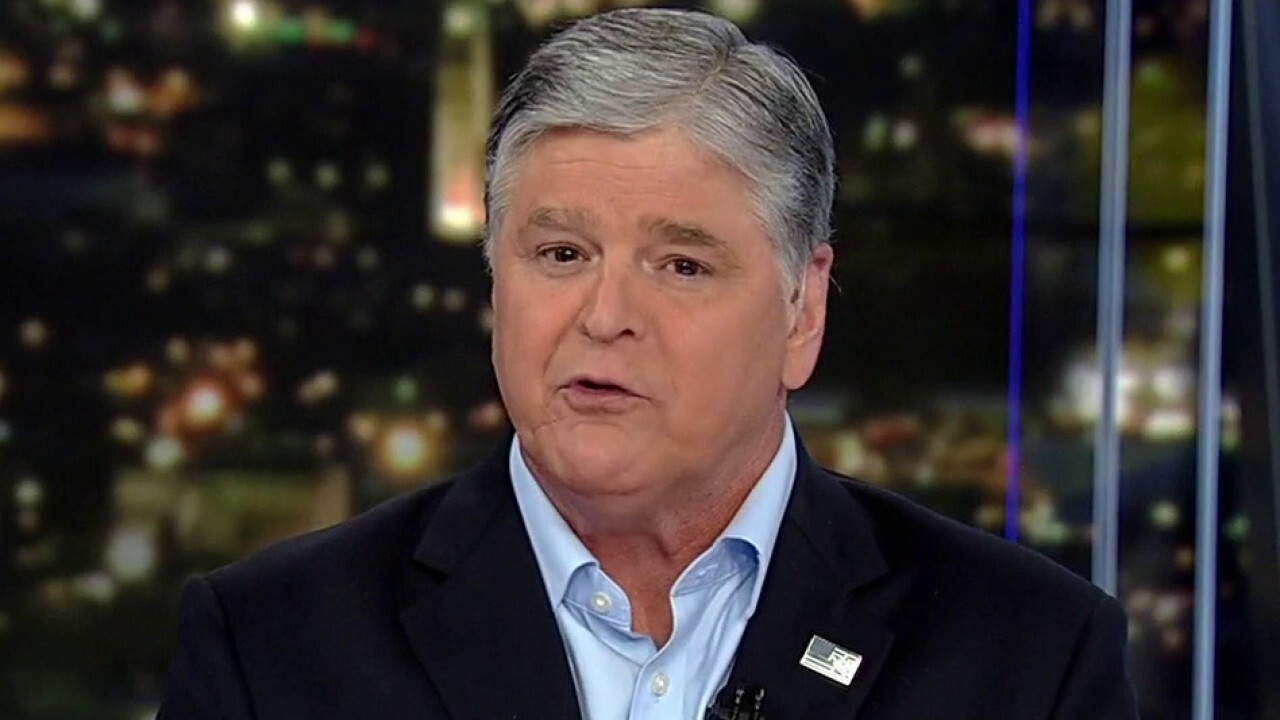
Fox News host Sean Hannity discussed the latest developments in the possible indictment of former President Donald Trump and new challenges the Manhattan DA Alvin Bragg is facing.
SEAN HANNITY:As you might have noticed, former President Trump was not indicted today. In fact, this morning's grand jury proceedings in New York City – they were canceled. Now, according to FoxNews.com, there is now "major dissension" at the DA's office with many speaking out against Alvin Bragg's political charade. And get this. One source telling Fox News that Bragg is having trouble convincing a grand jury on potential charges because of the weakness of the case. And what is spectacular about that…. Think about this. The grand jurors – The defense does not get a say in a grand jury proceeding. Nothing. So in other words, they have zero opportunity to present their side at all. That's where you get the saying you can indict a ham sandwich. Right. All right. So make no mistake, this is a pathetically weak case, maybe the weakest, most convoluted case ever brought before agrand jury. And a quick reminder, by the way, this is Alvin Bragg campaigning on a promise to go after one man, Trump, one company, the Trump company, and one family, the Trump family.
In America, justice is supposed to be blind. In America, prosecutors are supposed to investigate crimes, not people. Show me the man, I'll show you the crime. That was the official or unofficial motto of the former Soviet Union and Stalin, not the U.S.. But apparently that's news toAlvin Bragg. And still it's no longer certain that Trump will even be charged. The winds are changing rapidly. And sources, by the way, telling Fox News, quote, "There remains a real chance that Bragg does not choose to indict the former president."
Today, House Speaker Kevin McCarthy (R-Calif.) sought to downplay a potential criminal case related to a 2016 hush-money payment by Donald Trump, saying it involved “personal money” and shouldn’t be prosecuted under the statute of limitations. He made the comments at a retreat in Orlando, where House Republicans have been peppered with questions about a potential indictment of Trump, which could come in New York as early as this week. Trump would be the first former U.S. president to be indicted.
In Washington, President Biden’s schedule includes a White House conference on land preservation and the presentation of awards for the arts and humanities. Recipients include Bruce Springsteen, Gladys Knight and Julia Louis-Dreyfus.
"politic" - Google News
March 22, 2023 at 05:32AM
https://ift.tt/iNSsrAw
Post Politics Now: McCarthy downplays possible hush-money case against Trump - The Washington Post
"politic" - Google News
https://ift.tt/Ascn4iH
https://ift.tt/tb84sGd
In part 2 of this installment of the FiveThirtyEight Politics podcast, the crew looks back at the bailout of American banks during the 2007-’08 financial crisis.
Boris Johnson faces a battle for his political future on Wednesday after a dossier setting out his defence to the Partygate scandal raised fresh questions about his knowledge of what was happening in Downing Street during the Covid lockdowns.
Giving evidence before the cross-party privileges committee, Johnson will insist he misled the House of Commons unintentionally and that his assurances to MPs that Covid rules had been followed had been made in “good faith”.
In his 52-page written evidence released ahead of Wednesday’s hearing, Johnson said that he would “never have dreamed” of intentionally misleading the Commons as he underwent final preparations for an intense grilling, which he hopes will exonerate him from claims he lied to parliament.
“I accept that the House of Commons was misled by my statements that the rules and guidance had been followed completely at No 10,” he wrote. “But when the statements were made, they were made in good faith and on the basis of what I honestly knew and believed at the time.”
The stakes for Johnson could not be higher. If the committee decides he “recklessly” misled MPs he faces being suspended from parliament. A suspension of 10 sitting days or more triggers a recall petition, which could lead to a byelection in his west London seat.
Although Johnson’s allies have dismissed the privileges committee inquiry as “a witch-hunt”, many Conservative MPs are dismayed that he has been, in the words of one, “blowing up” Rishi Sunak’s attempts to get the government back on track after a chaotic year.
The prime minister has said he will allow Tory MPs to make decisions “as individuals”, giving them a free vote on any sanctions imposed on Johnson when the committee publishes its final report after Easter, but any vote could threaten to split the party.
The committee, chaired by the veteran Labour MP Harriet Harman, but which has a Conservative majority, said in its interim report that Johnson may have misled parliament on four occasions, and that he and aides almost certainly knew at the time they were breaking rules.
They said the evidence “strongly suggests” breaches of guidance should have been “obvious” to the then prime minister at the time of the gatherings as he drew up the rules and announced them.
In his written evidence, Johnson responded: “If it was ‘obvious’ to me that the rules and guidance were not being followed, it would have been equally obvious to dozens of others who also attended the gatherings I did.” He said most of them did not consider these events to have broken the rules either.
He accepted that his denials to parliament had turned out to be inaccurate but said that he corrected the record at the “earliest opportunity”. It took him six months to do so, after the senior civil servant Sue Gray had published her final report.
Johnson’s defence, prepared by a legal team headed by the barrister Lord Pannick KC, has been funded by the taxpayer at a cost of up to £220,000. His lawyer will be permitted to sit alongside him during the hearing, but not to answer on his behalf.
In the document, he repeatedly pointed the finger of blame at his Downing Street aides. Although he said there was “nothing reckless or unreasonable” about relying on the assurances of his advisers, he accepted “it is clear now, those assurances were wrong”.
He also highlighted what his supporters regard as extenuating circumstances, with officials “working together around the clock to fight Covid” in the “old, cramped London townhouse” of No 10. Critics have pointed out that NHS staff on the frontline of fighting the pandemic got no such special dispensation.
Johnson suggested the committee had no “smoking gun” that indicated he had intentionally misled MPs, writing: “There is not a single document that indicates that I received any warning or advice that any event broke or may have broken the rules of guidance.”
The only exception, he said, was the assertions of his “discredited” former chief adviser Dominic Cummings, which were not supported by any documentation, and should be ignored because Cummings had done everything possible to remove him from power.
In a blog post on Tuesday, Cummings said the former prime minister would try to “lie his way to safety” during the hearing, indicating that he did know that the parties at No 10 were in breach of the rules.
Johnson criticised the “partisan tone and content” of the interim report, and accused the committee of going beyond its “remit” to consider breaches of guidance as well as law, arguing this was “obviously inappropriate, impermissible, and unfair”.
The committee has published four previously unseen photographs of Downing Street gatherings featuring bottles of alcohol, concluding there had been a “culture of drinking” that had persisted even as restrictions were put in place. It is expected to publish more evidence on Wednesday morning.
In his defence, Johnson argued that it was “implausible” he would have allowed the official photographer to take pictures of events at No 10, which show staff breaching social distancing rules, if he felt they were evidence of law-breaking.
His team pointed to eight parts of Johnson’s dossier they believe could help him prove his innocence. These included a witness who recalled him describing one event as “the most unsocially distanced gathering in the UK right now”, but then praised the former prime minister for his own behaviour.
The witness allegedly gave further evidence saying Johnson had “a glass of water in his hand, made a short speech and then went up to his flat” and “was the most sensible person there to be honest”. However, they did confirm his presence at the event.
The document revealed that Johnson’s initial reaction to the first media approach, from the Daily Mirror, to the No 10 press office in November 2021 about a law-breaking party was that it was “some kind of try-on”.
When the story broke, he said he was surprised at its impact. “I did not anticipate that this would be a big story,” he admitted in the dossier. The so-called Abba party in the No 10 flat on 13 November 2020 was barely mentioned in his written evidence.
Johnson said he did not accept that he “must have seen something” when social gatherings were taking place in No 10 as he headed up to his flat in the evening. “I do not recollect seeing or hearing anything that could be described as a party,” he added.
However, later in the report he conceded: “I accept that I could see into the press office on my way to the flat, although my attention is often elsewhere when I am returning to the flat.”
Johnson did admit calling one of the events a “party”. Explaining his decision for using the word, he said: “I used ‘party’ as shorthand because that is how it was being referred to in the media.”
When footage emerged of Johnson’s press secretary, Allegra Stratton, joking about a gathering in No 10, he said it caused him “immediate concern” because of the “impression that it gave”, even though he believed it was within the rules. He announced the inquiry which was later led by Gray.
Johnson, who spent the day before the hearing with his legal advisers, accepted that “hindsight is a wonderful thing”, and said he wished he had thought more about how the public would have felt about mid-pandemic parties at the heart of government.
The Covid-19 Bereaved Families for Justice said Johnson’s claim to have acted in good faith was “sickening”, and it was “obvious” that he had deliberately misled MPs and so should stand down.
The Metropolitan police issued 126 fines for Partygate breaches, including one each to Johnson and his then chancellor, Sunak, although the former prime minister still claims not to understand their reasoning.
"politic" - Google News
March 22, 2023 at 06:36AM
https://ift.tt/UOItiEg
Boris Johnson faces fight for political future at Partygate hearing - The Guardian
"politic" - Google News
https://ift.tt/Ascn4iH
https://ift.tt/tb84sGd




/cloudfront-us-east-1.images.arcpublishing.com/bostonglobe/VNG7YMZTRWJ5WBFTJ5NVETPCQI.jpg)


